
BCMaterials Fortnightly Seminar #70: Daniel Salazar
DANIEL SALAZAR
(BCMATERIALS)
Tuning hysteresis in metamagnetic shape memory alloys for refrigeration applications
One of the challenges of modern societies consists in to increase the equipment energy efficiency, with the aim of reducing the energy consumption. In this sense, the magnetic refrigeration, a solid-state technology based in the magnetocaloric effect (MCE), attracts large interest because it is considered a feasible substitute of the conventional air-compressed refrigerant systems due to, among other advantages, its superior efficiency (of up to 60% of Carnot's cycle). However, to be commercially engaging, this technology still needs cheap materials with enhanced refrigerant properties. Among the studied materials, metamagnetic shape memory alloys-MSMA (mainly, Heusler-type Ni-Mn-based alloys) represent a new kind of multifunctional (smart) materials which develop exotic properties as magneto-deformation effect, giant magnetoresistance and inverse magnetocaloric effect as a consequence of a magneto-structural transformation [1]. These technologically relevant properties are strongly related to magnetic and structural instabilities and are due to a decrease of ferromagnetism induced by martensitic transformation (MT).
Recent results of the magnetic properties and the direct measurement of the MCE obtained in MSMA are presented in this work. In order to have a wide view of the mechanisms that affect the MCE response, several NiMnIn-based MSMA were studied in bulk and in ribbon shape, analysing the magnetocaloric response associated to the MT and the magnetic phase transition in the austenite phase by estimating the magnetic entropy change, ∆SM, from magnetization measurements, and measuring directly the adiabatic temperature change, ∆Tad. [2].
References- Álvarez-Alonso, C.O. Aguilar-Ortiz, J.P. Camarillo, D. Salazar, H. Flores-Zuñiga,, V.A. Chernenko, App. Phys. Lett. 109 (2016) 212402.
- Álvarez-Alonso, J. López-García, G. Daniel-Perez, D. Salazar, P. Lázpita, J.P. Camarillo, H. Flores-Zuñiga, D. Rios-Jara, J.L. Sánchez-Llamazares, and V.A. Chernenko, Key Eng. Mater. 644 (2015) 215.
Related news
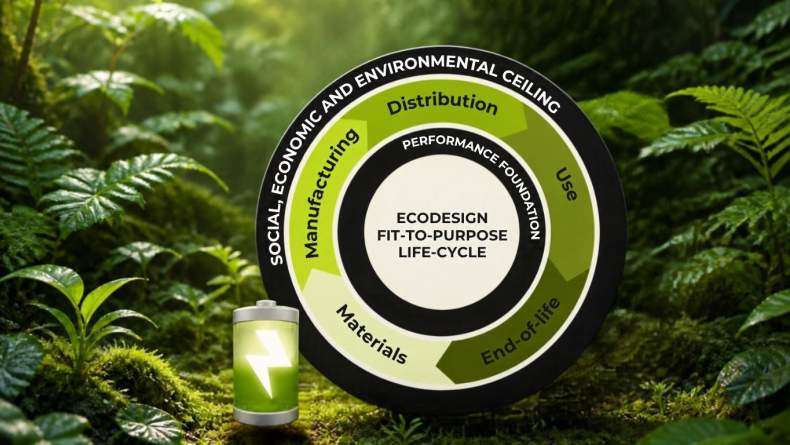
New Article in Zientzia Kaiera: Portable Batteries that Respect Planetary Limits
Digitalisation has shortened the lifespan of devices and driven up electronic waste: 53.6 million tonnes in 2019, according to the United Nations, with 110 million forecast for 2050. Only 17.4% of…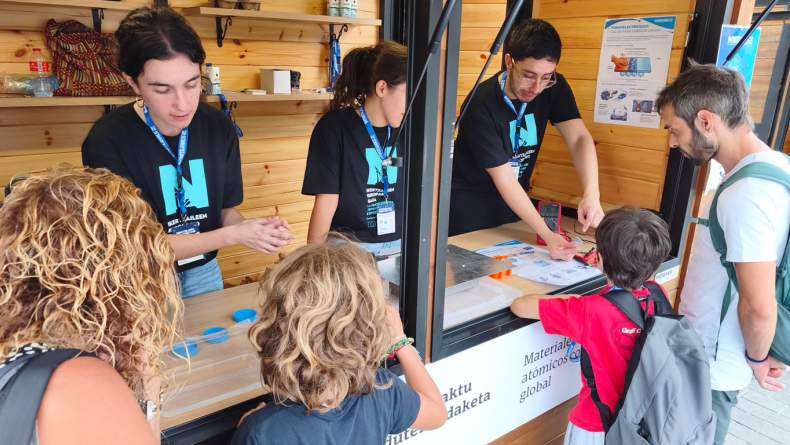
Science and Fun at Bilbao’s European Researchers’ Night
On 25 September, BCMaterials took part in a new edition of the European Researchers’ Night, organised by the University of the Basque Country at El Arenal in Bilbao. Through a series of fun…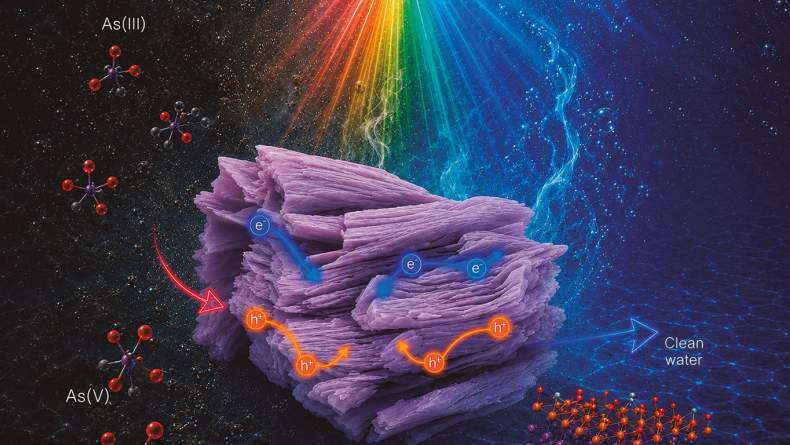
BCMaterials Research Earns Front Cover of Journal of Materials Chemistry A
A study led by BCMaterials researcher Maibelin Rosales, together with Senentxu Lanceros-Méndez, Javier del Campo, and Jorge Saiz, has been published in Journal of Materials Chemistry A and featured…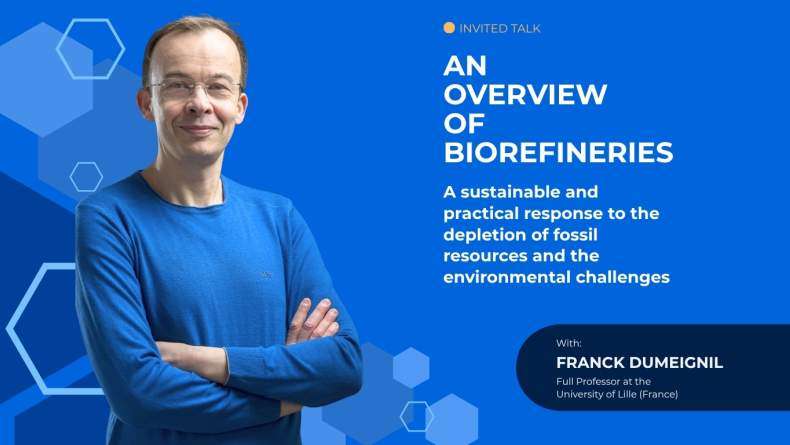
Invited Talk by Franck Dumeignil on Biorefineries (October 1)
On October 1, Franck Dumeignil, Full Professor at the University of Lille (France), will give an invited talk at BCMaterials entitled 'An Overview of Biorefineries'. The lecture will take place in…