
Three New Visitor Researchers at BCMaterials

 Three new visitors have begun their research stay at BCMaterials in early April: Rita Policia, Luca Andreo and Mahdi Gassara.
Rita Policia, coming from Universidade do Minho in Portugal, will work on printable electroluminescent and electrochromic materials and devices. Rita will stay in the center until 30th June.
Luca Andreo, who will develop his work at BcMaterials until September, will work on Metal Organic Frameworks with structural and ancillary metallo-ligands as heterogeneous catalysts and photosensitizers. Luca Andreo comes from Universià degli Studi di Torino (Italy).
Computational and experimental validation of perovskite materials for energy application is the matter of study of Madhi Gassara during his stay in our center. Madhi, Pre-Doctorial researcher of Faculty of Sciences of the University of Sfax, in Tunisia, will develop a four-month visit until the end of July.
Related news
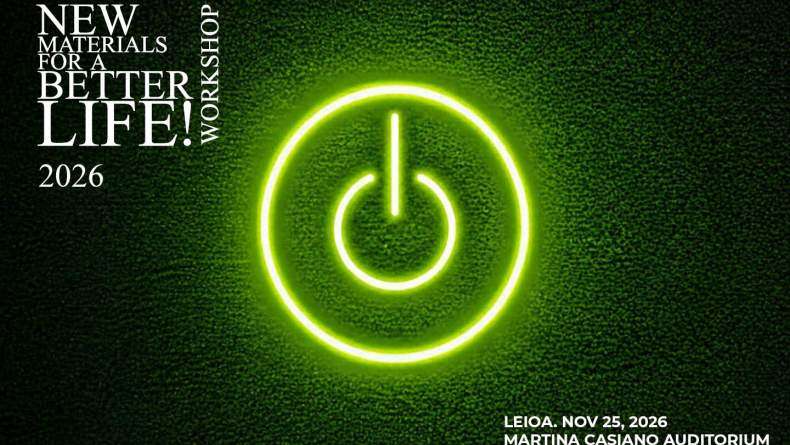
BCMaterials’ Annual Workshop Puts Catalysis for the Green Transition in the Spotlight
BCMaterials, the Basque Center for Materials, Applications and Nanostructures, will hold the new edition of its annual workshop “New Materials for a Better Life” on Wednesday, 25 November 2026, from…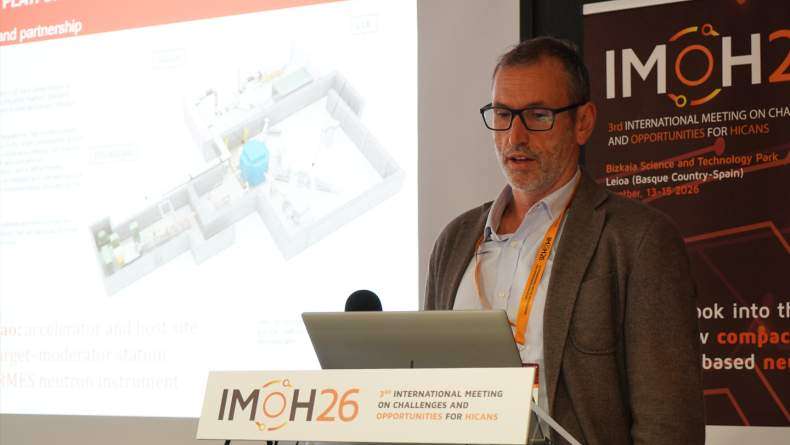
IMoH 2026 Brings the International Compact Neutron Source Community Together at BCMaterials
Around one hundred neutron science specialists from a dozen countries in Europe and North America met in Leioa from 13 to 15 October for the third edition of the International Meeting on Challenges…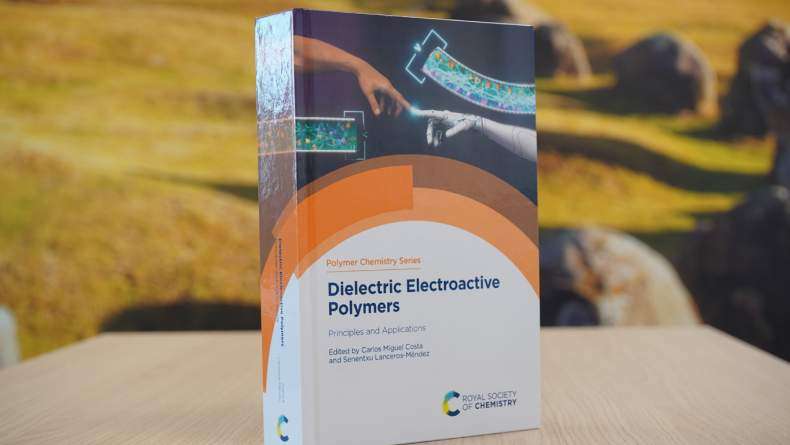
New BCMaterials book on advances in dielectric electroactive polymers
The Royal Society of Chemistry has published “Dielectric Electroactive Polymers: Principles and Applications”, a volume co-edited by Senentxu Lanceros-Méndez, Scientific Director of BCMaterials, and…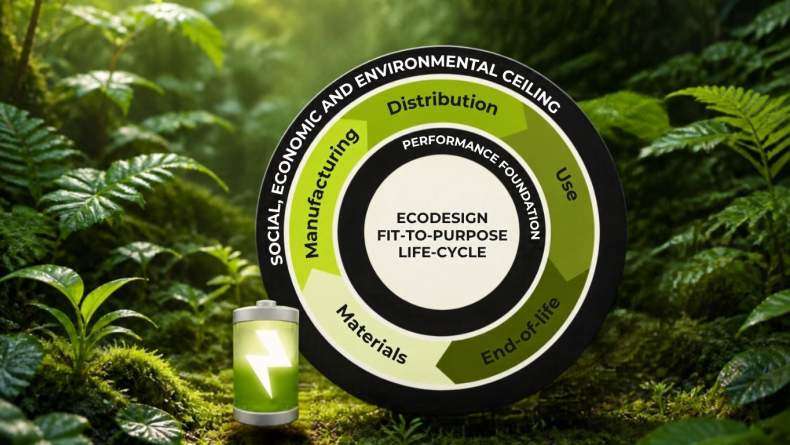
New Article in Zientzia Kaiera: Portable Batteries that Respect Planetary Limits
Digitalisation has shortened the lifespan of devices and driven up electronic waste: 53.6 million tonnes in 2019, according to the United Nations, with 110 million forecast for 2050. Only 17.4% of…