
New article on 'Mapping Ignorance' about carbon dots
BCMaterials has made a new contribution to Mapping Ignorance, the science communication blog published by the Chair of Scientific Culture at the University of the Basque Country (EHU). The article, entitled "All that glows is not a carbon dot: biobased lighting materials from waste", explores research on carbon dots carried out by BCMaterials researchers Gabriel Fonseca, Jorge Saiz and Senentxu Lanceros-Méndez.
Carbon dots are luminescent materials consisting of carbon nanoparticles smaller than 10 nanometres that are attracting growing interest in materials science. They are characterised by their tunable light emission, photostability and low toxicity. Furthermore, they can be produced from inexpensive, renewable sources, such as agricultural and food waste, linking them to the circular economy.
Applications in biomedicine, energy and beyond
Thanks to these properties, carbon dots are being investigated for a wide range of applications. In biomedicine, these include fluorescent markers for imaging cells and tissues, drug delivery and light-activated therapies. In energy and lighting, they are being explored to improve solar cell performance, convert solar energy into fuels through photocatalysis and manufacture light-emitting diodes (LEDs). They are also being studied as sensors capable of detecting heavy metals or antibiotics in water, and as inks and security markings to prevent counterfeiting. Although their potential is promising, considerable research is still needed to fully exploit the capabilities of carbon dots.
Carbon dots and quantum dots
Many of the functions of carbon dots overlap with those of quantum dots, semiconductor nanocrystals whose emission colour depends on their size. Their discovery and synthesis were recognised with the 2023 Nobel Prize in Chemistry. Quantum dots are already used in television and computer screens, certain LED lamps and biological tissue imaging, while carbon dots are being proposed as a more environmentally friendly alternative.
Although quantum dots are much more advanced in terms of technological development and commercial applications, carbon dots offer the advantage of a lower environmental impact. Quantum dots are often based on heavy metals such as cadmium. In addition, carbon dots can be produced using simple, inexpensive methods, are easily dispersed in water and have surfaces that can be modified for specific applications. These characteristics make them particularly attractive for biomedicine and applications in which the materials may eventually enter the environment.
Purification: a key factor
However, as the authors point out, synthesising carbon dots from biomass or small molecules presents a challenge related to purification. The synthesis reaction also produces other molecules, many of which are highly fluorescent. The researchers therefore recognised the need for thorough purification, considering the possibility that the fluorescence attributed to carbon dots might actually originate from these by-products.
The study describes the procedure used to address this issue. In this case, the biomass came from damaged grapes supplied by a local winery. The researchers applied a filtration process followed by dialysis, allowing small molecules to pass through while retaining the nanoparticles. Their analyses revealed fluorescent molecules that were not carbon dots at all. Once purified, the carbon dots emitted blue or green-yellow light, depending on the solvents used during their synthesis and resuspension.
As a proof of concept, the authors mixed the carbon dots with a resin and 3D-printed a QR code that was invisible under normal lighting but readable under ultraviolet light, demonstrating a potential anti-counterfeiting application.
In conclusion, the authors reaffirm their initial hypothesis: thorough purification is essential before the properties attributed to these nanomaterials can be considered reliable.
Read the full article: https://mappingignorance.org/2026/11/10/all-that-glows-is-not-a-carbon-dot-biobased-lighting-materials-from-waste/
Related news
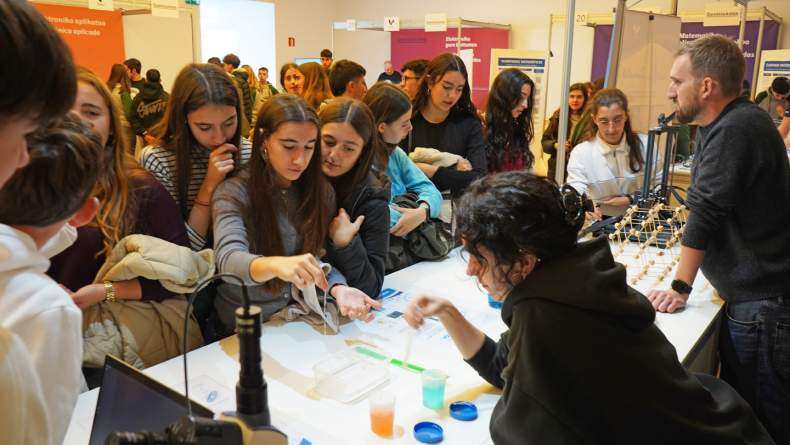
BCMaterials Brings Its Materials for a Better Life to Zientzia Astea
BCMaterials took part in a new edition of EHU's Zientzia Astea (Science Week), held from 3 to 8 November. As usual, our centre hosted one of the science stands that remained active throughout the…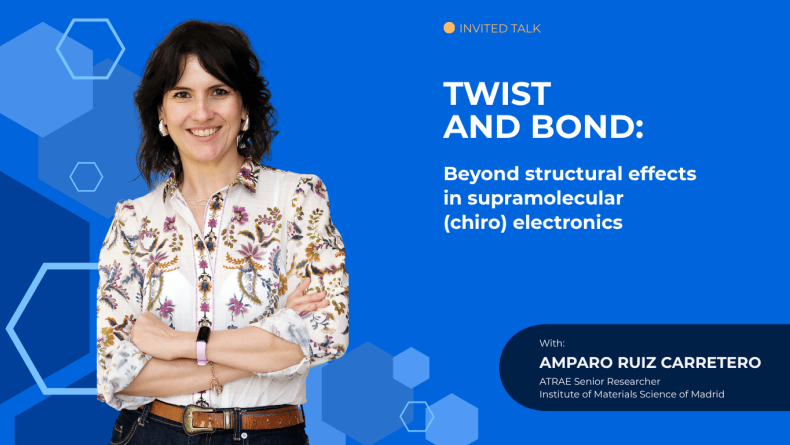
Invited Talk by Amparo Ruiz Carretero on Supramolecular Chiral Electronics (November 23)
On Monday, November 23, Amparo Ruiz Carretero, ATRAE Senior Researcher at the Institute of Materials Science of Madrid (ICMM-CSIC), will give an invited talk at BCMaterials entitled ‘Twist and bond:…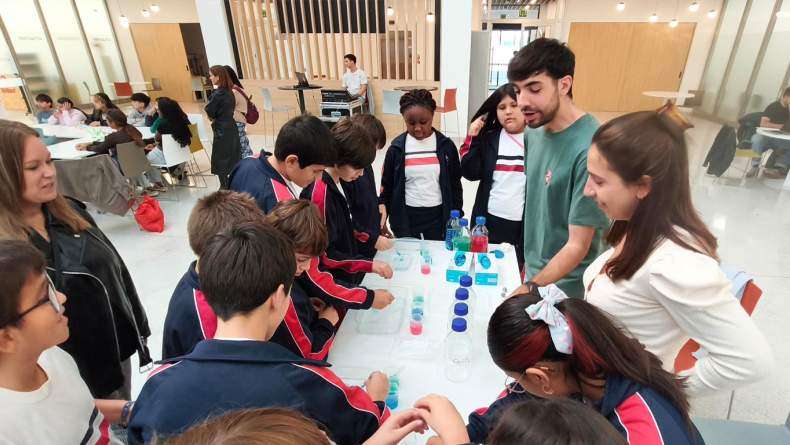
BCMaterials Brings MOFs and Hydrogels to the BeZientzia 2026 Science Fair
BCMaterials took part on 26 and 27 October in BeZientzia, a science fair held at the Ensanche building in Bilbao. It brought together the five BERC research centres of Bizkaia: Achucarro, BC3, BCAM,…
BCMaterials’ Annual Workshop Puts Catalysis for the Green Transition in the Spotlight
BCMaterials, the Basque Center for Materials, Applications and Nanostructures, will hold the new edition of its annual workshop “New Materials for a Better Life” on Wednesday, 25 November 2026, from…