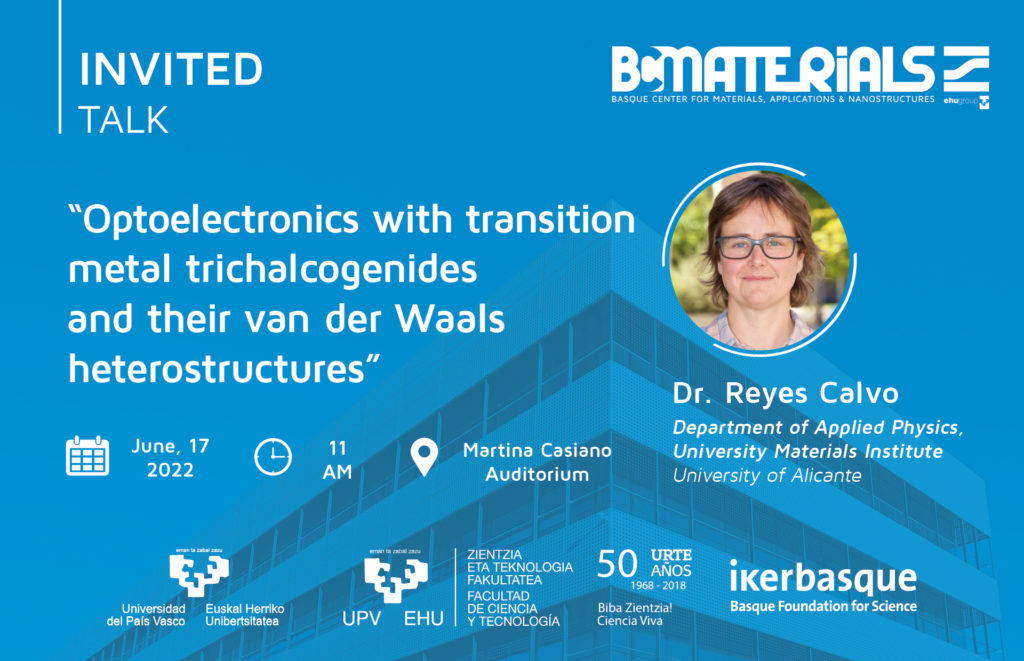
On 17th June, we will have a new Invited Talk with Dr. Reyes Calvo, from the Department of Applied Physics and the University Materials Institute of the University of Alicante.
The talk’s title is: “Optoelectronics with transition metal trichalcogenides and their van der Waals heterostructures”
On 17th June, we will have a new Invited Talk with Dr. Reyes Calvo, from the Department of Applied Physics and the University Materials Institute of the University of Alicante.
The talk’s title is: “Optoelectronics with transition metal trichalcogenides and their van der Waals heterostructures”
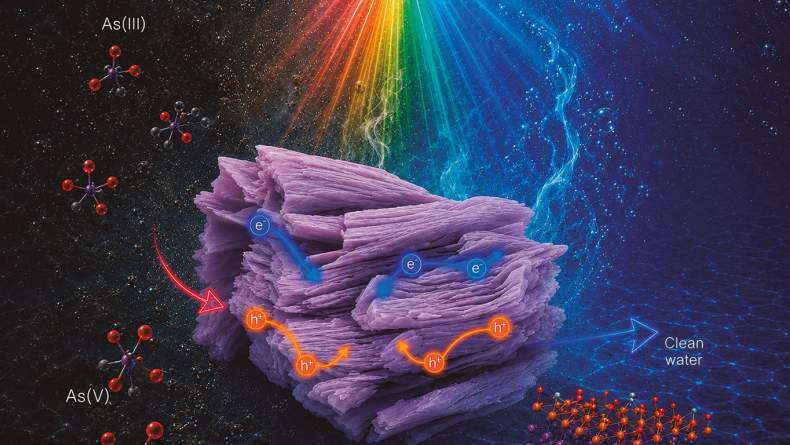
The family of transition metal trichalcogenides has recently attracted interest as they offer competitive advantages when compared to other semiconducting and/or magnetic van der Waals materials. FePS3 was for example the first 2D-material shown to host magnetic order at the monolayer limit. In this work, we highlight some of the remarkable properties of FePS3 as a key material by itself or as part of van der Waals heterostructures for future investigations on photoconductivity and opto-spintronics at the 2D limit. First, van der Waals materials with efficient response over a broadband optical spectral range are key to widen the energy window of nanoscale optoelectronic devices. In this context, our results feature FePS3 as an appealing narrow-gap p-type semiconductor with an efficient broadband photo-response, a high refractive index, and a remarkable resilience against air and light exposure.
On the other hand, single-layer semiconducting transition metal dichalcogenides (2H-TMDs) display robust excitonic photoluminescence emission, which can be improved by controlled changes to their environment. Van der Waals semiconductor heterostructures provide versatility and new functionality to the design of optoelectronic devices. Here, we take advantage of the properties of FePS3 to build heterostructures with n-type single layer MoS2, where efficient electrical photo-response and robust photoluminescent light emission coexist. We observe an enhancement of the photoluminescence of single-layer MoS2 on top of van der Waals FePS3. This arises from a strong depletion of carriers in the MoS2 layer, which is strongly modulated by the thickness of the underneath FePS3. We find also that the formed p-n junction at the interface between FePS3 and MoS2 behaves as an efficient, broad–range photodiode particularly suitable for UV photodetection. We explore the interplay between photocurrent and photoluminescence in these heterostructures and demonstrate how light emission can be electrically controlled by moderate changes in the applied bias voltage across the junction.
The event will take place at Martina Casiano Auditorium at 11 AM.