
PhD Results #7

BOSCO RODÍGUEZ
(BCMATERIALS)
Solid-state refrigeration is seen as a promisingly alternative to the less efficient conventional vapour-expansion refrigeration. Magnetocaloric materials are one of the best candidates for this magnetic refrigeration since they have a thermal behaviour towards an applied magnetic field. The aim of this work is to study magnetocaloric materials based on shape memory alloys (SMA) and its potential application to the solid state refrigeration. The most viable synthesis method for metamagnetic alloys with shape memory effect based on NiMnCoSn suitable for ink fabrication will be studied, as a preliminary step for an additive manufacturing process for flexible electronics. The materials to be fabricated will be heat treated and characterized magnetically and structurally. Also, a printable ink will be fabricated using the metallic powder obtained from a grinded ribbons of the synthetized alloy with the best magnetic properties. This alloy has to suffer a martensitic transformation at a temperature near to room temperature, to have low hysteresis and a change in adiabatic temperature (∆T_ad) of the order of one kelvin upon the variation of external magnetic field.
ANDER GARCÍA
(BCMATERIALS)
All-inkjet-printed organic thin-film field effect transistors
Transistors are basic components for integrated circuits and switches, and thus the basis for most of the electronics, especially consumer electronics available nowadays. They are considered as the most important electronic device and the key enabler of the digital revolution. Although traditionally fabricated through lithography processes, the possibility of manufacturing them by means of printing technologies has gained interest during the last several years, due to their characteristics such as high-throughput, large area and low-cost production. Organic field effect transistors use an organic component as the semiconductor layer (OSCs), thus enabling bendability and flexibility of the devices. In this seminar, I will briefly explain the operation principles of field effect transistors (FETs) and then discuss the differences between typical FETs and thin-film FETs (TFTs). Finally, I will present different possible topologies for these devices, and the challenges faced when manufacturing them making use of additive manufacturing technologies, in particular inkjet printing.Related news
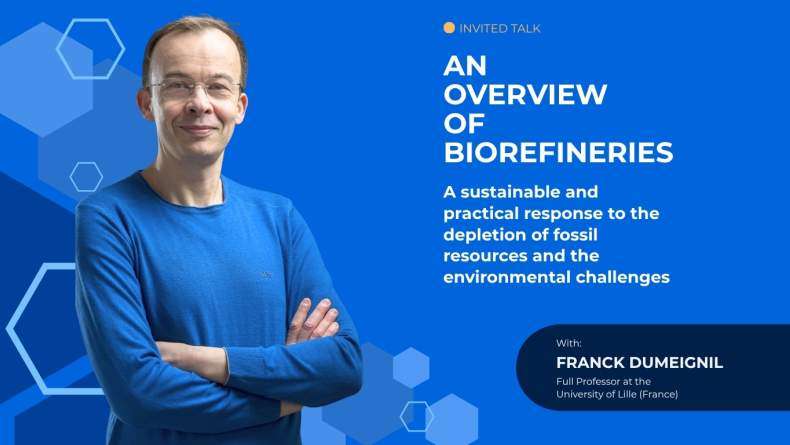
Invited Talk by Franck Dumeignil on Biorefineries (October 1)
On October 1, Franck Dumeignil, Full Professor at the University of Lille (France), will give an invited talk at BCMaterials entitled 'An Overview of Biorefineries'. The lecture will take place in…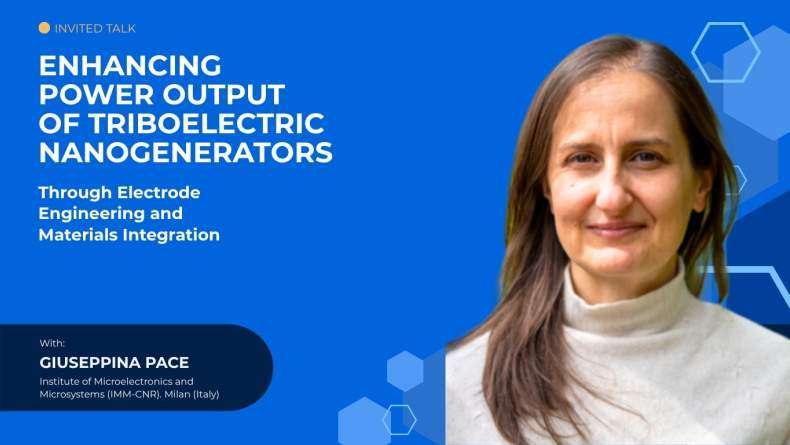
Invited Talk by Giuseppina Pace on Triboelectric Nanogenerators (September 24)
Next Thursday, September 24, Giuseppina Pace, researcher at the Institute of Microelectronics and Microsystems of the National Research Council of Italy (IMM-CNR) in Milan, will give an invited…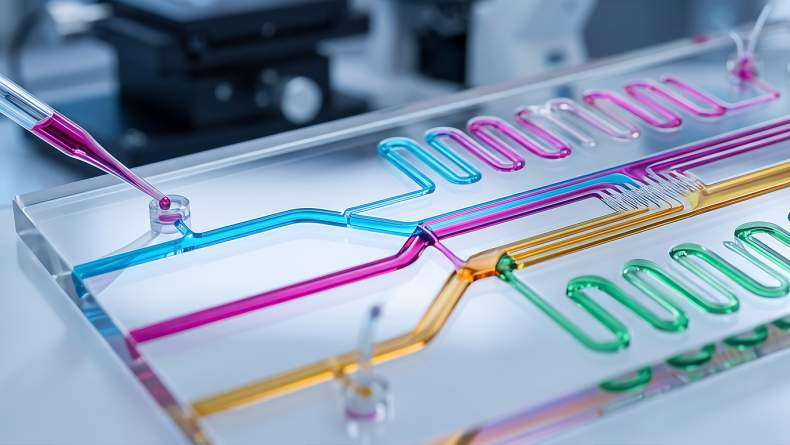
BCMaterials to Develop Five New ‘Generación de Conocimiento’ Projects
BCMaterials will lead or participate in five new projects funded under the Spanish Ministry of Science, Universities and Innovation ‘Generación de Conocimiento’ (‘Knowledge Generation’) call. The…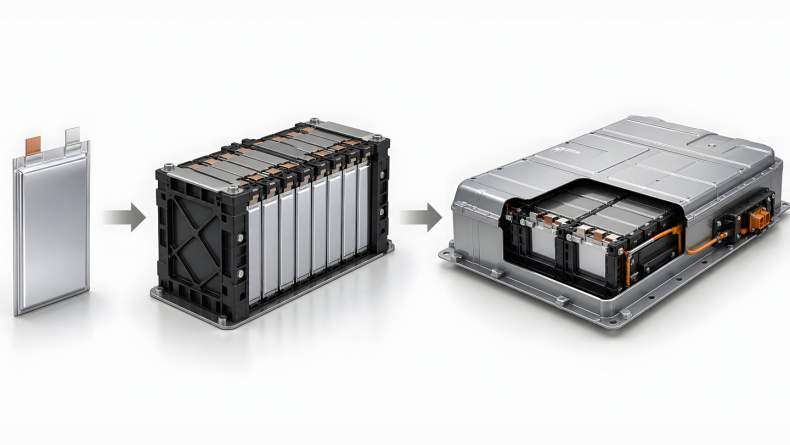
Six New Research Projects under the Elkartek 2026 Programme
BCMaterials will participate in six new projects funded by the Basque Government under the Elkartek 2026 Programme. The projects cover the centre’s four main research areas: environmental materials,…