
PhD Results #7

BOSCO RODÍGUEZ
(BCMATERIALS)
Solid-state refrigeration is seen as a promisingly alternative to the less efficient conventional vapour-expansion refrigeration. Magnetocaloric materials are one of the best candidates for this magnetic refrigeration since they have a thermal behaviour towards an applied magnetic field. The aim of this work is to study magnetocaloric materials based on shape memory alloys (SMA) and its potential application to the solid state refrigeration. The most viable synthesis method for metamagnetic alloys with shape memory effect based on NiMnCoSn suitable for ink fabrication will be studied, as a preliminary step for an additive manufacturing process for flexible electronics. The materials to be fabricated will be heat treated and characterized magnetically and structurally. Also, a printable ink will be fabricated using the metallic powder obtained from a grinded ribbons of the synthetized alloy with the best magnetic properties. This alloy has to suffer a martensitic transformation at a temperature near to room temperature, to have low hysteresis and a change in adiabatic temperature (∆T_ad) of the order of one kelvin upon the variation of external magnetic field.
ANDER GARCÍA
(BCMATERIALS)
All-inkjet-printed organic thin-film field effect transistors
Transistors are basic components for integrated circuits and switches, and thus the basis for most of the electronics, especially consumer electronics available nowadays. They are considered as the most important electronic device and the key enabler of the digital revolution. Although traditionally fabricated through lithography processes, the possibility of manufacturing them by means of printing technologies has gained interest during the last several years, due to their characteristics such as high-throughput, large area and low-cost production. Organic field effect transistors use an organic component as the semiconductor layer (OSCs), thus enabling bendability and flexibility of the devices. In this seminar, I will briefly explain the operation principles of field effect transistors (FETs) and then discuss the differences between typical FETs and thin-film FETs (TFTs). Finally, I will present different possible topologies for these devices, and the challenges faced when manufacturing them making use of additive manufacturing technologies, in particular inkjet printing.Related news
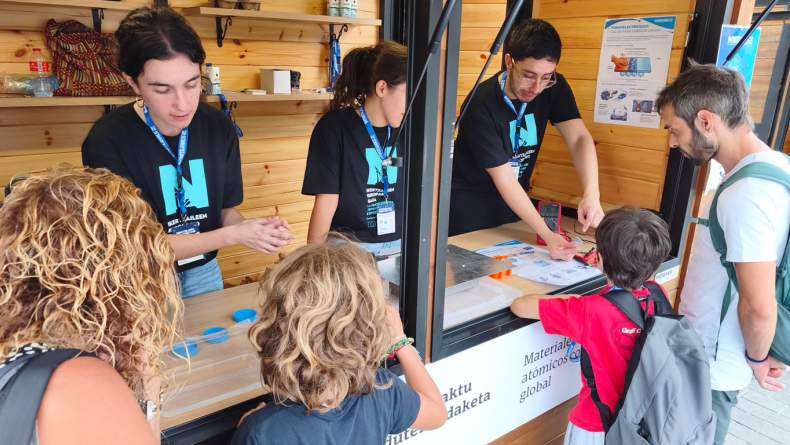
Zientzia eta dibertsioa Bilboko Ikertzaileen Europako Gauean
Joan den irailaren 25ean, BCMaterialsek Ikertzaileen Europako Gauaren edizio berri batean parte hartu zuen. Euskal Herriko Unibertsitateak antolatutako ekimena Bilboko Arenalean egin zen. Adin…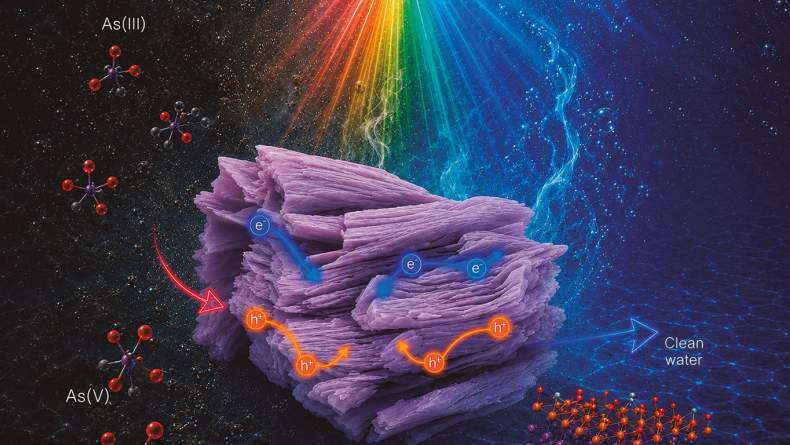
BCMaterials-en ikerketa, Journal of Materials Chemistry A aldizkariaren azalea
Maibelin Rosales BCMaterials-eko ikertzaileak gidatutako ikerketa bat, Senentxu Lanceros-Méndez, Javier del Campo eta Jorge Saiz ikertzaileekin batera egina, Journal of Materials Chemistry A…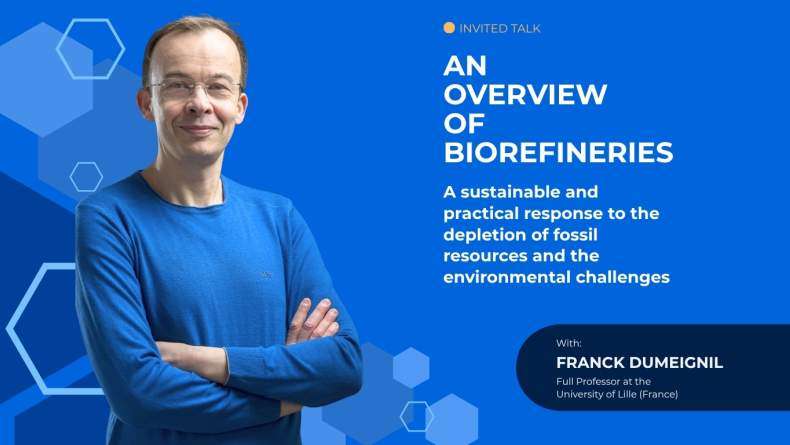
Hitzaldi gonbidatua Franck Dumeignilekin biorrefinerietaz (urriak 1)
Datorren ostegunean, urriaren 1ean, Franck Dumeignil, Lilleko Unibertsitateko (Frantzia) katedradunak, 'An Overview of Biorefineries' hitzaldia aurkeztuko du BCMaterials-en. Hitzaldia EHUko Leioako…
Hitzaldi gonbidatua Giuseppina Pacerekin nanogeneratzaile triboelektrikoei buruz (irailak 24)
Datorren ostegunean, irailaren 24an, Giuseppina Pace, Italiako Ikerketa Nazionalaren Kontseiluko Mikroelektronika eta Mikrosistemen Institutuko (IMM-CNR, Milan) ikertzaileak, 'Enhancing Power Output…