
Heavy rare earth free, free rare earth and rare earth free magnets – vision and reality
Heavy rare earth free, free rare earth and rare earth free magnets – vision and reality
KONSTANTIN SKOKOV
Institute for Materials Science, FG Functional Materials Technische Universität Darmstadt, Darmstadt, Germany
It is commonly understood that among the intermetallic phases used for permanent magnets, practically none can fully realize its potential based on the intrinsic magnetic properties. In this talk, different reasons leading to this limitation, known as the Brown paradox will be discussed, and some possible ways of overcoming it will be proposed. As an example, the intrinsic magnetic properties of (Nd1-xCex)2(Fe1−yCoy)14B single crystals will be compared with the extrinsic characteristics of sintered and hot compacted magnets made from the very same alloys.
The pressing need to reduce the consumption of rare earths (RE) in the permanent-magnet industry has rekindled the interest in 3d ferromagnets. Achieving a very strong magnetic anisotropy in a 3d material without rare earths elements is a difficult, but not an impossible task. It is difficult because there is no general recipe (necessary condition) for a strong anisotropy in a band magnet. Several strategies can be pursued in this situation. One of them is to re-examine the less studied 3d compounds, somewhat neglected since the discovery of the Nd–Fe–B magnets 30 years ago. Some of the ‘already known’ 3d compounds have been never obtained in single-crystalline form; therefore, their magnetic anisotropy cannot be regarded as reliably known. In this talk an intrinsic and extrinsic magnetic properties of (FeCo)2B, MnAlGe, MnBi, Fe3Sn and Fe2Ge single crystals will be shown and discussed.
Additive Manufacturing or 3D printing technology has recently become the subject of intense worldwide attention. In fact, being a cutting-edge method of digitized manufacturing, the 3D printing has been successfully used for many industrial applications, demonstrating a large number of advantages. Nevertheless, today, the 3D-printing technology faces a new challenge - the additive manufacturing of high-energy permanent magnets. Indeed, together with offering an efficient way of fabricating complex magnetic systems with minimum material waste and technically acceptable mechanical properties, the additive manufacturing should also provide very good functional properties of the printed permanent magnets, namely the remanent magnetization Br and coercivity Hc, and this ambition goal has not yet been achieved. In this talk, some possible strategies leading to developing of high coercivity in our 3D printed NdFeB magnets will be discuss.
BIO Dr Konstantin Skokov received his PhD in Physics and Mathematics in 1998 from the Tver State University, where he worked as a lecturer and later as an associate professor from 1999 to 2008. From 2008 to 2012, he participated as a researcher of the Leibniz Institute IFW Dresden in the European project SSEEC (Solid State Energy Efficient Cooling), with the aim to develop a high-efficiency heat pump and an air conditioner based on a magnetic refrigeration cycle. After that, he started in his current position as a senior researcher at the Functional Materials Group of the Institute for Material Science at the Technische Universität Darmstadt. With more than 150 papers published in refereed journals and several invited talks at international conferences, his research interests are related to magnetic functional materials as Rare-Earth and Rare-Earth-free permanent magnets, new materials for magnetocaloric application and energy conversion and the design and developing of unique scientific instruments for advanced characterization of novel magnetic materials among others.
Related news
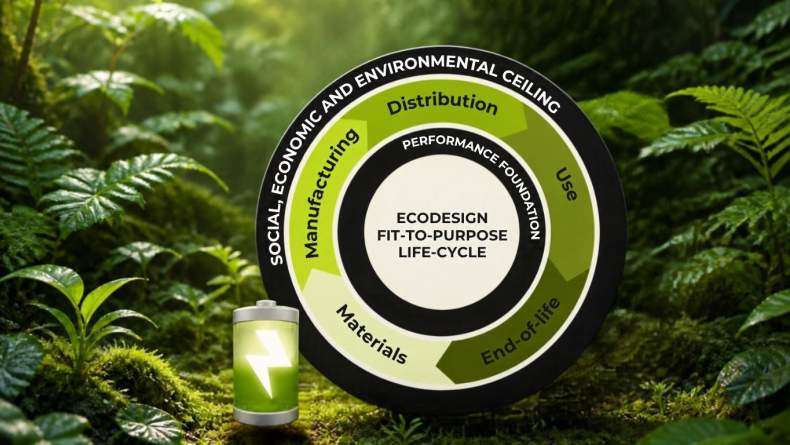
New Article in Zientzia Kaiera: Portable Batteries that Respect Planetary Limits
Digitalisation has shortened the lifespan of devices and driven up electronic waste: 53.6 million tonnes in 2019, according to the United Nations, with 110 million forecast for 2050. Only 17.4% of…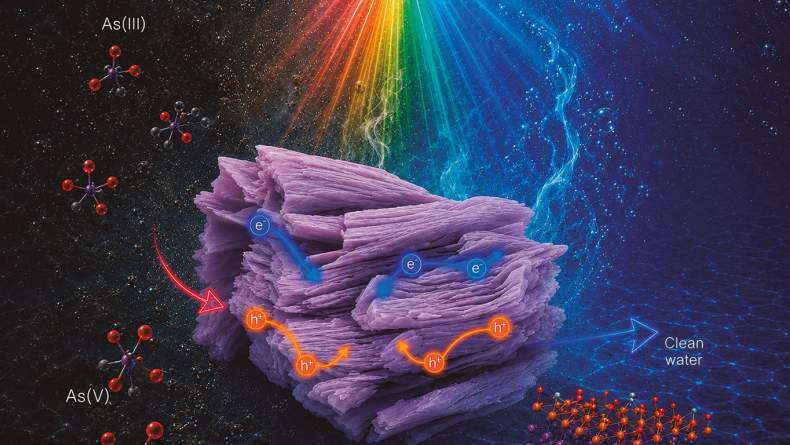
BCMaterials Research Earns Front Cover of Journal of Materials Chemistry A
A study led by BCMaterials researcher Maibelin Rosales, together with Senentxu Lanceros-Méndez, Javier del Campo, and Jorge Saiz, has been published in Journal of Materials Chemistry A and featured…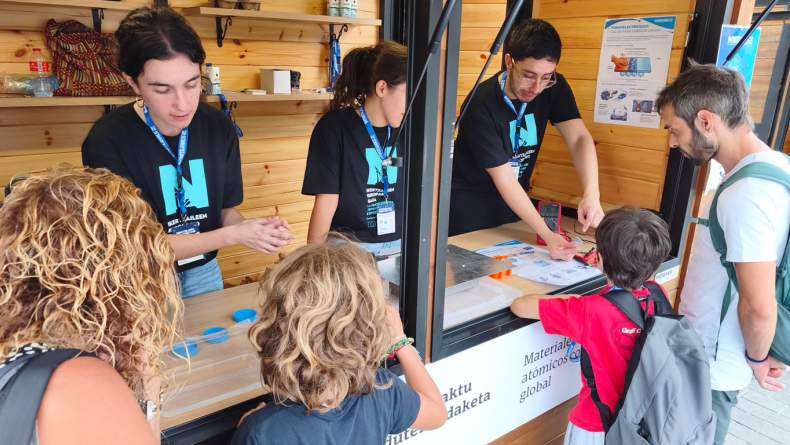
Science and Fun at Bilbao’s European Researchers’ Night
On 25 September, BCMaterials took part in a new edition of the European Researchers’ Night, organised by the University of the Basque Country at El Arenal in Bilbao. Through a series of fun…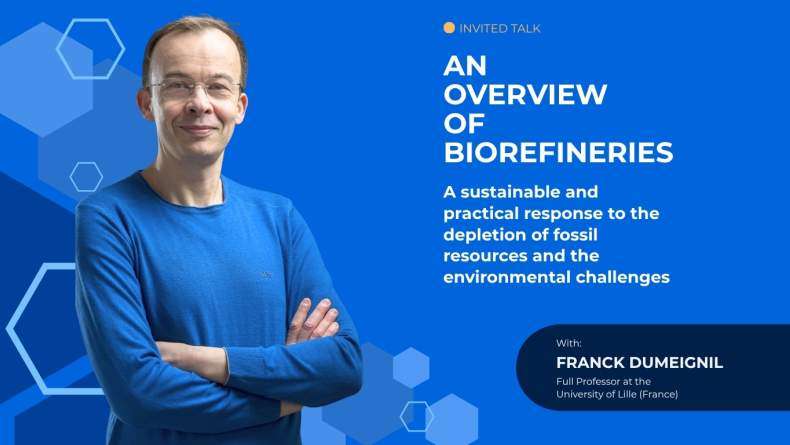
Invited Talk by Franck Dumeignil on Biorefineries (October 1)
On October 1, Franck Dumeignil, Full Professor at the University of Lille (France), will give an invited talk at BCMaterials entitled 'An Overview of Biorefineries'. The lecture will take place in…