
BCMaterials Fortnightly Seminar #76 Eduardo Fernández - Roberto Fernández

EDUARDO FERNÁNDEZ
(BCMATERIALS)
GMI sensors in flexible substrates
TBA
ROBERTO FERNÁNDEZ
(BCMATERIALS)
Composite silver vanadium oxide hydrogels and nano-films for environmental remediation and antimicrobial coatings
Nanostructured silver vanadium oxides (SVO) and vanadium oxides (VO), and concretely β-AgVO3 nanoribbons have received considerable attention in the last decade. One of the most amazing consequences of the crystallization of this 1D nano-structures is that β-AgVO3 nano-ribbons can self-assembled into inorganic hydrogels, establishing a 3D non-covalent cross linked framework, which traps water within its pores.
Herein, we report a facile and fast method for the synthesis of nanostructured SVO and slightly reduced VO hydrogel composites with the (β-AgVO3)@(V5+1.6V4+0.4O4.8) formula, hereafter SVO@VO. Moreover, the pollutant sorption capacity, nano-thin film deposition, and antimicrobial activity will be described.
Depending on the concentration of the initial hydrogel, after drying it, several different nano and mesoporous structures are obtained. The mesoporous structure of xerogels is a key point if their potential applications are considered. The capture capacity of the hydrogels and xerogels against several dyes and heavy metals has been proved, with sorption capacities as large as 150 mg/gr for positive dyes, and 600 mg/gr reactive capture of iodine form water. More interestingly, depending on the presence of vanadium oxide nanoribbons on the hydrogels there is a selective adsorption of certain negative charged dyes. As the silver vanadium oxides have been proved to be very effective antibacterial agents we have processed the hydrogels as thin films following different approaches. First, section of controlled thickness of hydrogels have been dried at 80ºC on cellulose filters to obtain regular thin films of 10 µm. Giving a step forward, the hydrogels has been sprayed in glass supports. The thickness of the SVO@VO films has been controlled by accumulative spraying steps, obtaining thin films with thickness from 1 µm to 200 nm. Antimicrobial activity against gram positive and gram negative strains have been proved both in powdered samples and in 10 microns thin films.
Related news
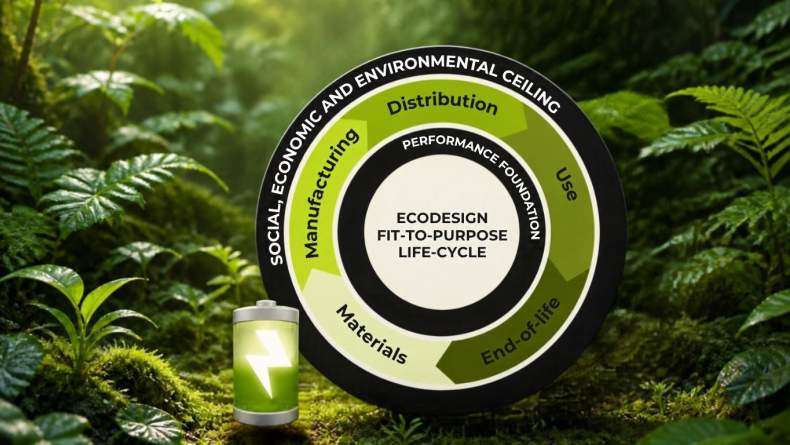
New Article in Zientzia Kaiera: Portable Batteries that Respect Planetary Limits
Digitalisation has shortened the lifespan of devices and driven up electronic waste: 53.6 million tonnes in 2019, according to the United Nations, with 110 million forecast for 2050. Only 17.4% of…
Science and Fun at Bilbao’s European Researchers’ Night
On 25 September, BCMaterials took part in a new edition of the European Researchers’ Night, organised by the University of the Basque Country at El Arenal in Bilbao. Through a series of fun…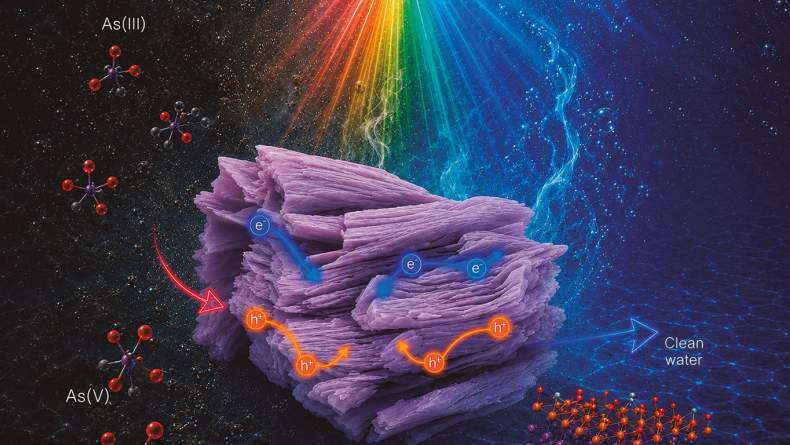
BCMaterials Research Earns Front Cover of Journal of Materials Chemistry A
A study led by BCMaterials researcher Maibelin Rosales, together with Senentxu Lanceros-Méndez, Javier del Campo, and Jorge Saiz, has been published in Journal of Materials Chemistry A and featured…
Invited Talk by Franck Dumeignil on Biorefineries (October 1)
On October 1, Franck Dumeignil, Full Professor at the University of Lille (France), will give an invited talk at BCMaterials entitled 'An Overview of Biorefineries'. The lecture will take place in…