
BCMaterials Research Earns Front Cover of Journal of Materials Chemistry A
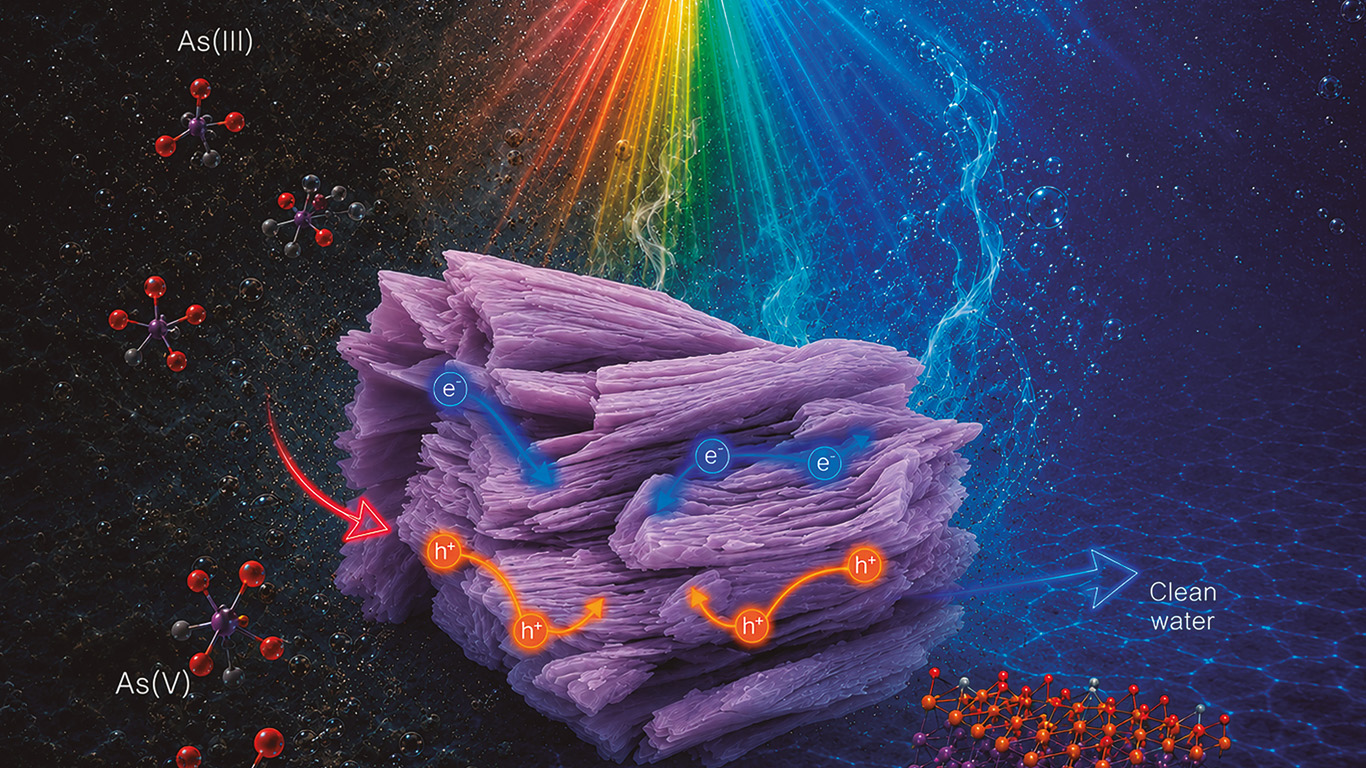
A study led by BCMaterials researcher Maibelin Rosales, together with Senentxu Lanceros-Méndez, Javier del Campo, and Jorge Saiz, has been published in Journal of Materials Chemistry A and featured on the issue's front cover.
The work, carried out with researchers Babak Anasori and Brian C. Wyatt (Purdue University / Argonne National Laboratory) alongside Andreas Rosenkranz, Andreina García, Dario F. Zambrano and Camilo Zolezzi (Universidad de Chile), tackles one of the world's most pressing water-safety problems: arsenic contamination in drinking water.
The team developed multilayer Mo-based MXene nanosheets, engineered with different numbers of titanium layers (Mo₂TiC₂ and Mo₂Ti₂C₃). These materials combine two functions in one: they absorb sunlight to generate reactive oxygen species that oxidize toxic arsenite [As(III)] into the far less hazardous arsenate [As(V)], while simultaneously converting light into localized heat.
The key finding is that these two effects work together: the photothermal heating boosts the mobility of charge carriers, accelerates the photochemical reaction and lowers the activation energy barrier of the oxidation process, making the whole process more efficient than light or heat alone could achieve. The double Ti-layer material, Mo₂Ti₂C₃, proved especially effective, achieving up to 98.5% arsenic oxidation under irradiation and a photothermal conversion efficiency of 95%.
Beyond arsenic treatment, this "photo-thermo-catalytic" strategy opens a new design pathway for solar-powered materials that don't rely on conventional semiconductors, offering a promising, sustainable route toward next-generation water remediation technologies.
Link to the article: https://doi.org/10.1039/d6ta02732f
Related news
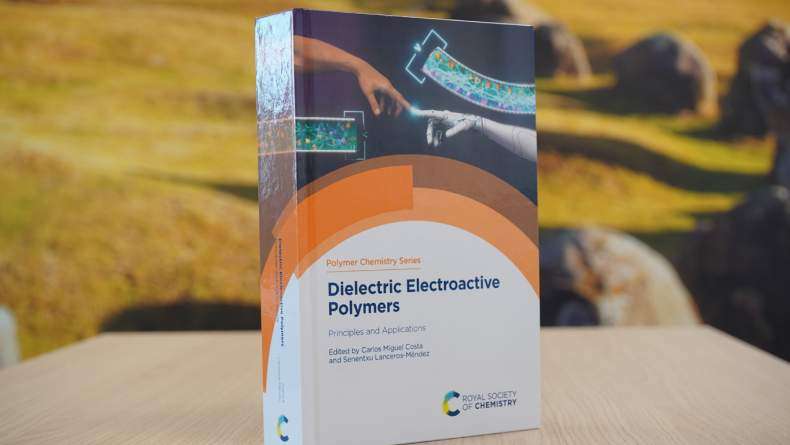
New BCMaterials book on advances in dielectric electroactive polymers
The Royal Society of Chemistry has published “Dielectric Electroactive Polymers: Principles and Applications”, a volume co-edited by Senentxu Lanceros-Méndez, Scientific Director of BCMaterials, and…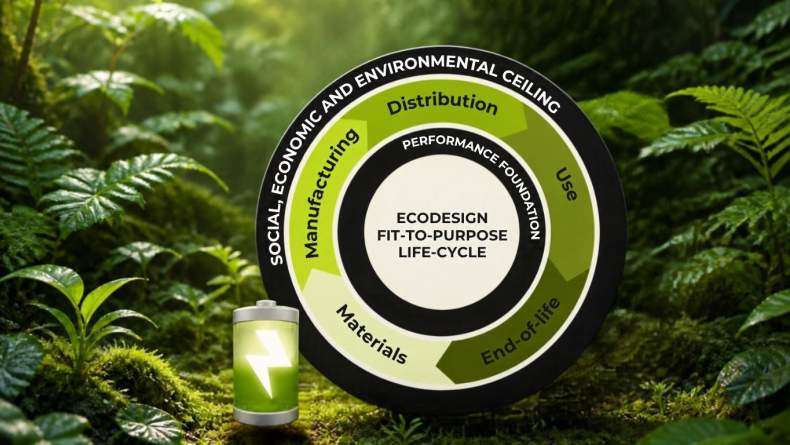
New Article in Zientzia Kaiera: Portable Batteries that Respect Planetary Limits
Digitalisation has shortened the lifespan of devices and driven up electronic waste: 53.6 million tonnes in 2019, according to the United Nations, with 110 million forecast for 2050. Only 17.4% of…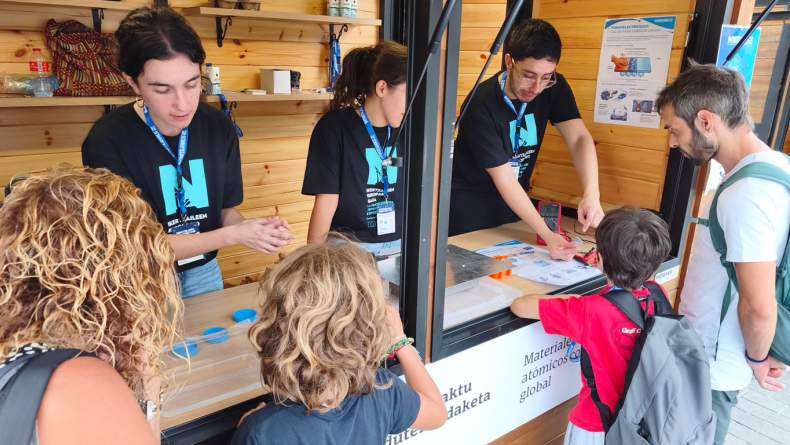
Science and Fun at Bilbao’s European Researchers’ Night
On 25 September, BCMaterials took part in a new edition of the European Researchers’ Night, organised by the University of the Basque Country at El Arenal in Bilbao. Through a series of fun…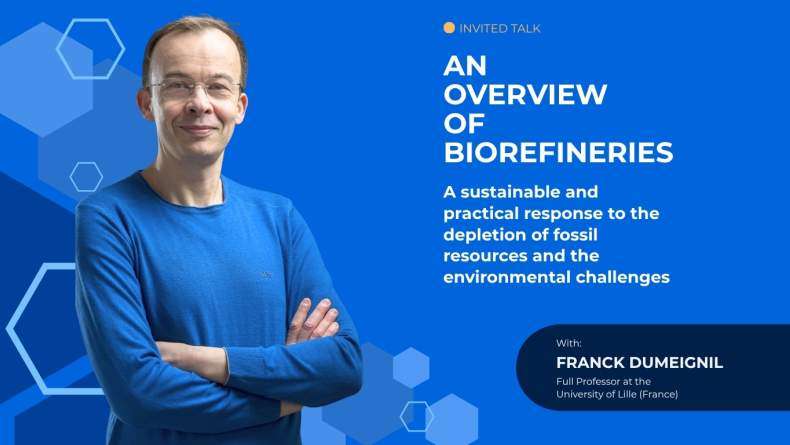
Invited Talk by Franck Dumeignil on Biorefineries (October 1)
On October 1, Franck Dumeignil, Full Professor at the University of Lille (France), will give an invited talk at BCMaterials entitled 'An Overview of Biorefineries'. The lecture will take place in…