
BCMaterials Fortnightly Seminars #41

MAITE GOIRIENA
(BCMaterials)
FABRICATION AND CHARACTERIZATION OF SUBSTRATE-FREE SUB-100 NM PERMALLOY DISCS FOR BIOLOGICAL APPLICATIONS
Permalloy discs in a vortex spin configuration show promising properties for a wide range of biomedical applications, as it has been impressively demonstrated through the destruction of cancer cells by the magneto-mechanical action of Permalloy microdiscs. Moreover, discs in smaller dimensions (nanometres) can, under certain conditions, cross the external membrane and move to the inside of the cell. Disc-shaped structures are also being explored for biomedical applications, established for conventional nanoparticles, as demonstrated experimentally with micron-sized discs. Here, Permalloy discs have been fabricated by two different lithography techniques with the aim of obtaining disc-shaped structures that can be used in solution for biomedical applications. For that purpose, the structures must be released from the substrate once they are fabricated. Firstly, hole-mask colloidal lithography was optimized to prepare discs down to 60 nm in diameter. The technique uses self-assembled polystyrene spheres drop-cast on a PMMA layer to produce a pattern of holes that are filled with sputtered Permalloy. The novelty is that the substrate was previously covered with a germanium thin film onto which the whole process was realized. The prepared nanodiscs are released by chemically etching the Ge film. Secondly, Permalloy microdiscs, 2 micron in diameter, have been prepared by traditional optical lithography for comparison of fabrication challenges. The photoresist is patterned by UV-light forming pillars onto which Permalloy is evaporated. Microdiscs are easily released by dissolving the photoresist with acetone. The quantity of discs prepared in both methods is great enough to be useful for biological experiments: 45 x 109 nanodiscs and 50 x 106 microdiscs on a 2 inches wafer. The disc-shaped structures are magnetically characterized on the chip and after lifting off into water. Measurements in fluid demonstrate that vortex state properties are retained. These results show the feasibility of manufacturing sub-100 nm vortex particles for biological applications.OIHANE ARRIORTUA
(BCMaterials)
FUNCTIONALIZATION AND STUDY OF MAGNETITE NANOPARTICLES FOR APPLICATION IN MAGNETIC HYPERTHERMIA THERAPIES
A huge number of works have already reported great successes in producing magnetite nanoparticles by chemical methods in the most diverse morphologies, sizes and surface properties. Despite this, the use of these systems for clinical treatments is not as developed. If any customer demands nowadays a magnetic core keeping high magnetization values and suitable for use in humans, probably would not find a very optimistic response. Additionally, the role of the particle size and its functionalization on the performance of certain biomedical applications, in particular hyperthermia, remains obscure from the experimental point of view. Furthermore, these systems require having a high biocompatibility difficult to obtain. The fulfillment of these challenges would provide key contributions in a wide application area related with magnetite nanoparticles. The seed mediated protocol applied to the growing of nanoparticles synthesized by thermal decomposition have been proposed and used before to prepare magnetite nanoparticles of a specific size of 18 nm, whose magnetic properties were in agreement with expectations. In this sense one of the major aims of this work is to show how the refinement of this synthetic approach can be actually used to tune the size close to 20 nm, producing nanoparticles with a very high crystallinity, small surface effects and magnetization values close to bulk magnetite, also showing promising values of SAR absorption from AC fields of colloidal nanoparticles. Moreover, it´s possible to stabilize the nanoparticles in physiological medium by coating with amphiphilic polymers and deliver them to a certain tumoral tissue by means of a specific bioconjugation with peptidic molecules of the RGD type in order to apply these nanoparticles for the destruction of cancerous tissues in vivo assays. To achieve this, we proceeded to a magnetic hyperthermia treatment in rat models with hepatic tumor implants. Thus, in some cases, it was obtained a higher percentage of tumor destruction than originally estimated.Related news
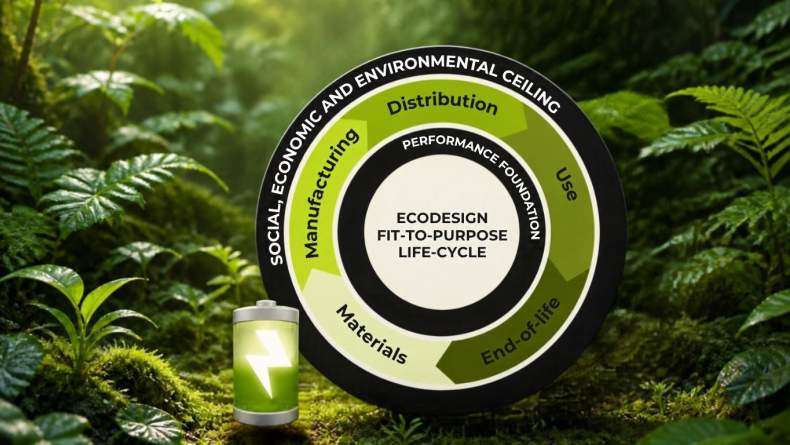
New Article in Zientzia Kaiera: Portable Batteries that Respect Planetary Limits
Digitalisation has shortened the lifespan of devices and driven up electronic waste: 53.6 million tonnes in 2019, according to the United Nations, with 110 million forecast for 2050. Only 17.4% of…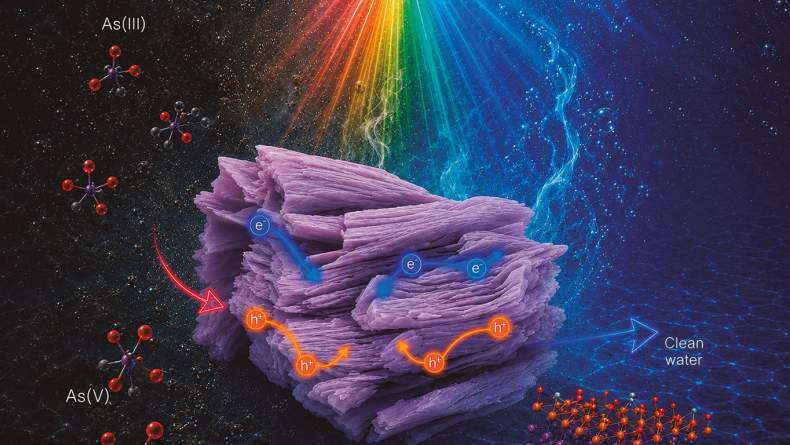
BCMaterials Research Earns Front Cover of Journal of Materials Chemistry A
A study led by BCMaterials researcher Maibelin Rosales, together with Senentxu Lanceros-Méndez, Javier del Campo, and Jorge Saiz, has been published in Journal of Materials Chemistry A and featured…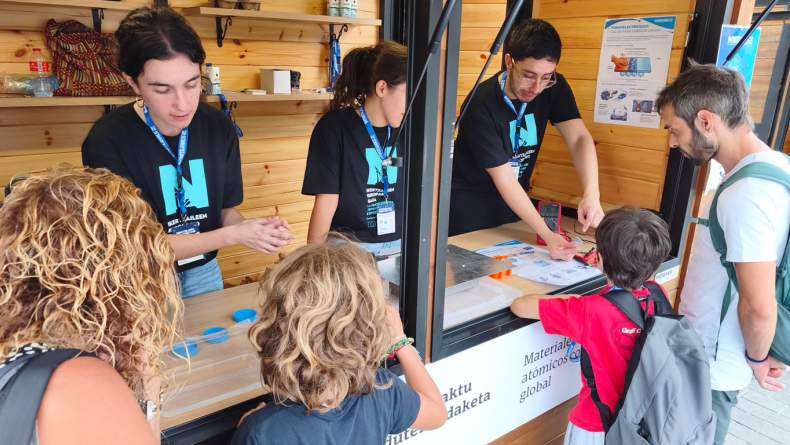
Science and Fun at Bilbao’s European Researchers’ Night
On 25 September, BCMaterials took part in a new edition of the European Researchers’ Night, organised by the University of the Basque Country at El Arenal in Bilbao. Through a series of fun…
Invited Talk by Franck Dumeignil on Biorefineries (October 1)
On October 1, Franck Dumeignil, Full Professor at the University of Lille (France), will give an invited talk at BCMaterials entitled 'An Overview of Biorefineries'. The lecture will take place in…