
BCMaterials Fortnightly Seminars #22

“Hybrid materials based on PVDF (Polyvinylidene fluoride)”
Netzahualpille Hernández
(Universidad Autónoma de Nuevo León - México)
The fabrication of nanocomposites based on mixed oxide nanoparticles (MON) and polyvinylidenefluoride (PVDF) is reported. In order to obtain these nanocomposites, first, MON were synthesized by a modified combustion method and hydrothemal method. Then, dissolutions of MON and PVDF were used to obtained fibers from an electrospinning approach. High-resolution transmission electron microscopy (HRTEM) and scanning electron microscope (SEM) were employed to investigate the size and morphology of MON and composite structures. Powders of MON have a single phase, X-ray diffraction (XRD) confirming a rhombohedra derived symmetry with spatial group R3c for BFO derived materials, spinel structure with cubic Fd3m symmetry for CFO and perovskite structure with tetragonal P4mm symmetry for PZT. In addition, HRTEM and SEM results indicated that nanocomposites are mainly composed by fibers mostly aligned that contain agglomerated nanoparticles of MON. Finally, it was found that nanocomposites containing BFO derived materials shows remnant magnetization and high dielectric constant with low conductivities. These hybrid materials have potential applications in multiferroic devices.
“Magnetocaloric effect in metamagnetic shape memory alloys”
Javier López
(UPV/EHU – Master BCMaterials)
One of the challenges of modern societies consists in to increase the equipment energy efficiency, with the aim of reducing the energy consumption. In this sense, the magnetic refrigeration, a solid-state technology based in the magnetocaloric (MC) effect, attracts large interest because it is considered a feasible substitute of the conventional air-compressed refrigerant systems due to, among other advantages, its superior efficiency (of up to 60% of Carnot's cycle). However, to be commercially engaging, this technology still needs cheap materials with enhanced refrigerant properties. Among the studied materials, metamagnetic shape memory alloys (mainly, Heusler-type Ni-Mn-based alloys) occupy a honor place because, together with striking properties as shape memory effect and superelasticity, present large magnetocaloric effect due to the sharp change of the magnetization associated to the magnetostructural martensitic transformation.
In this talk, I will present our recent studies of the magnetocaloric effect in Ni-Mn-In, Ni-Mn-In-Cr and Ni-Mn-In-Cu alloys; these alloys present a martensitic transformation close to room temperature from the high-temperature high symmetry parent austenite phase, to the low-temperature lower symmetry martensite phase, which results in a direct adiabatic temperature change. Besides, the austenite phase undergoes a ferro-to-paramagnetic transformation that has associated an inverse adiabatic temperature change.
Related news
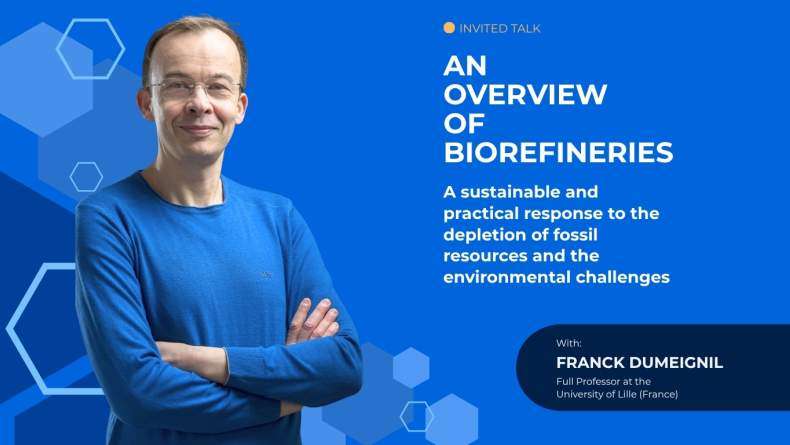
Invited Talk by Franck Dumeignil on Biorefineries (October 1)
On October 1, Franck Dumeignil, Full Professor at the University of Lille (France), will give an invited talk at BCMaterials entitled 'An Overview of Biorefineries'. The lecture will take place in…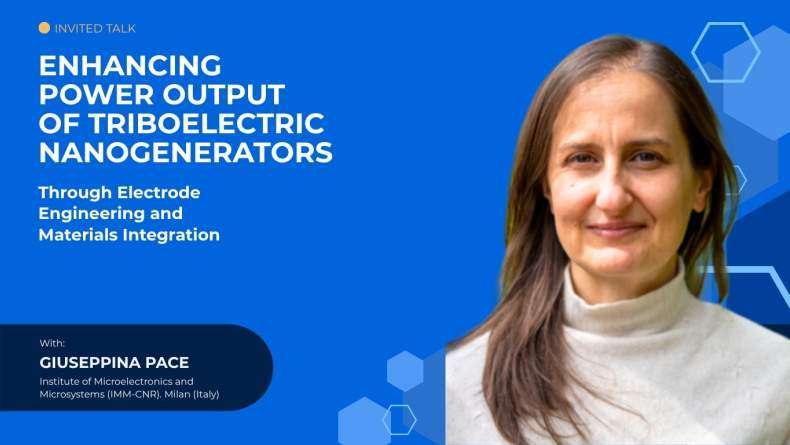
Invited Talk by Giuseppina Pace on Triboelectric Nanogenerators (September 24)
Next Thursday, September 24, Giuseppina Pace, researcher at the Institute of Microelectronics and Microsystems of the National Research Council of Italy (IMM-CNR) in Milan, will give an invited…
BCMaterials to Develop Five New ‘Generación de Conocimiento’ Projects
BCMaterials will lead or participate in five new projects funded under the Spanish Ministry of Science, Universities and Innovation ‘Generación de Conocimiento’ (‘Knowledge Generation’) call. The…
Six New Research Projects under the Elkartek 2026 Programme
BCMaterials will participate in six new projects funded by the Basque Government under the Elkartek 2026 Programme. The projects cover the centre’s four main research areas: environmental materials,…