
Ivan K. Schuller conference: 35 Years of Magnetic Heterostructures

Ivan K. Schuller
Physics Department and Center for Advanced Nanoscience. University of California-San Diego.
 Hybrid heterostructured materials allow the development of new material properties by creative uses of proximity effects. When two dissimilar materials are in close physical proximity the properties of each one may be radically modified and occasionally a completely new material emerges. In the area of magnetism, controlling the magnetic properties of ferromagnetic thin films without magnetic fields is an on-going challenge with multiple technological implications for low-energy memory and logic devices. All these are based on basic discoveries, which provide the scientific foundation for important applications. Of course like with all basic research discoveries it is difficult to predict where and when these will make it into applications.
Roughly 35 years ago the development of metallic (magnetic in particular) superlattices started a quest to engineer novel properties unlike existing in naturally occurring materials. This has lead to a many studies related to metallic superlattices and led eventually to the development of a whole new field of spintronics. After a brief motivation and historic background I will describe some of the most recent developments in the field. Interesting magnetic proximity effects arise when ferromagnets (FM) are in contact with antiferromagnets (AFM), such as the shift of the hysteresis loop along the field axis. In this "exchange biased" configuration, a variety of unusual phenomena arise unlike in any other magnetic system; i) the reversal of the FM becomes asymmetric, ii) large exchange bias appears in nominally fully compensated surfaces, iii) positive exchange bias emerges for certain classes of bilayers, iv) at fast time scales (<300psec) the reversal is anomalous, and v) the phenomenon is affected by the bulk magnetic structure of the AFM. Another interesting possibility arises when ferromagnets are in proximity to materials that undergo metal-insulator and structural phase transitions. In this case, the coercivities and magnetizations of the ferromagnetic films grown on different oxides oxides are strongly affected by the phase transition in the oxide. Both of these phenomena have presently existing and future potential applications in the spintronics, sensors, magnetic recording and transformers areas. Work supported by US-DOE and US-AFOSR
Hybrid heterostructured materials allow the development of new material properties by creative uses of proximity effects. When two dissimilar materials are in close physical proximity the properties of each one may be radically modified and occasionally a completely new material emerges. In the area of magnetism, controlling the magnetic properties of ferromagnetic thin films without magnetic fields is an on-going challenge with multiple technological implications for low-energy memory and logic devices. All these are based on basic discoveries, which provide the scientific foundation for important applications. Of course like with all basic research discoveries it is difficult to predict where and when these will make it into applications.
Roughly 35 years ago the development of metallic (magnetic in particular) superlattices started a quest to engineer novel properties unlike existing in naturally occurring materials. This has lead to a many studies related to metallic superlattices and led eventually to the development of a whole new field of spintronics. After a brief motivation and historic background I will describe some of the most recent developments in the field. Interesting magnetic proximity effects arise when ferromagnets (FM) are in contact with antiferromagnets (AFM), such as the shift of the hysteresis loop along the field axis. In this "exchange biased" configuration, a variety of unusual phenomena arise unlike in any other magnetic system; i) the reversal of the FM becomes asymmetric, ii) large exchange bias appears in nominally fully compensated surfaces, iii) positive exchange bias emerges for certain classes of bilayers, iv) at fast time scales (<300psec) the reversal is anomalous, and v) the phenomenon is affected by the bulk magnetic structure of the AFM. Another interesting possibility arises when ferromagnets are in proximity to materials that undergo metal-insulator and structural phase transitions. In this case, the coercivities and magnetizations of the ferromagnetic films grown on different oxides oxides are strongly affected by the phase transition in the oxide. Both of these phenomena have presently existing and future potential applications in the spintronics, sensors, magnetic recording and transformers areas. Work supported by US-DOE and US-AFOSR
Related news
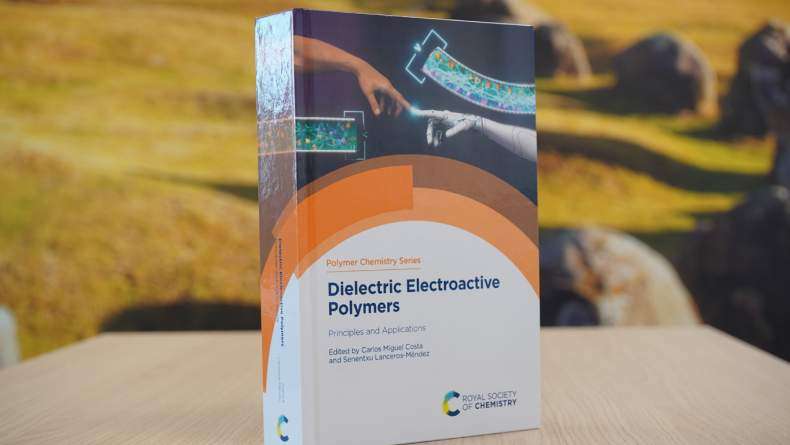
BCMaterials-en liburu berri batek polimero elektroaktibo dielektrikoen inguruan
Royal Society of Chemistry argitaletxeak “Dielectric Electroactive Polymers: Principles and Applications” liburua argitaratu du, Polymer Chemistry Series bildumaren barruan. BCMaterialseko zuzendari…
Artikulu berria Zientzia Kaieran: planetaren mugak errespetatzen dituzten bateria eramangarriak
Digitalizazioak gailuen bizitza baliagarria laburtu eta hondakin elektronikoak areagotu ditu: 53,6 milioi tona 2019an, Nazio Batuen arabera, eta 110 milioi tona aurreikusten dira 2050erako.…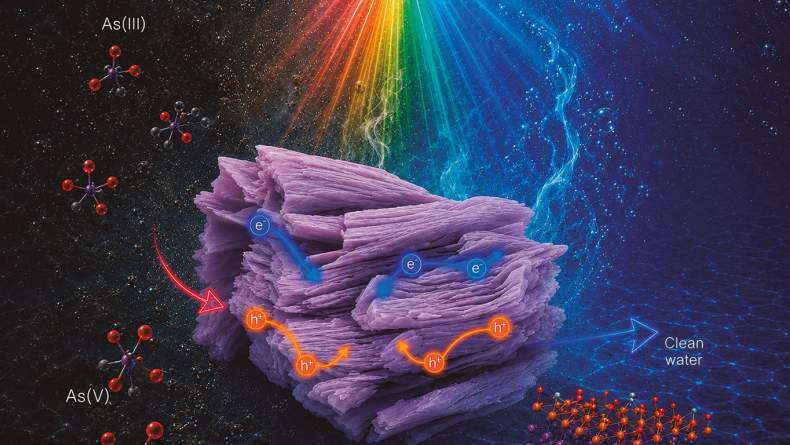
BCMaterials-en ikerketa, Journal of Materials Chemistry A aldizkariaren azalea
Maibelin Rosales BCMaterials-eko ikertzaileak gidatutako ikerketa bat, Senentxu Lanceros-Méndez, Javier del Campo eta Jorge Saiz ikertzaileekin batera egina, Journal of Materials Chemistry A…
Zientzia eta dibertsioa Bilboko Ikertzaileen Europako Gauean
Joan den irailaren 25ean, BCMaterialsek Ikertzaileen Europako Gauaren edizio berri batean parte hartu zuen. Euskal Herriko Unibertsitateak antolatutako ekimena Bilboko Arenalean egin zen. Adin…