
BCMaterials Webinar: One-Sun Lee
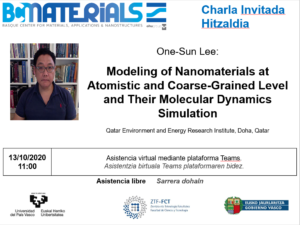
Modeling of Nanomaterials at Atomistic and Coarse-Grained Level and Their Molecular Dynamics Simulation:
One-Sun Lee, Qatar Environment and Energy Research Institute, Doha, Qatar
Computational model development becomes essential for studying materials. For efficient model development, the technical details of modeling vary according to the size and time scales of the system. A brief description of the procedures of atomistic and coarse-grained model development and their molecular dynamics simulation will be presented. As an example, a model development procedure of a peptide amphiphile (PA) will be introduced. PAs are amphiphilic molecules that consist of a hydrophobic alkyl chain that is attached to a peptide and they show various biological functionality - promote the growth of blood vessels and healing of critical wounds, bone and cartilage regeneration, axon regeneration in spinal cord injury, etc - according to the peptide sequence. Upon an appropriate adjustment of pH and salt concentration, the PAs self-assemble into various morphologies depending on choice of residues and alkane, and an enhanced biological activity of self-assembled PA was observed compared with individual PA. However, the atomic structure of self-assembled PA is not known, and this has proven to be a hindrance in understanding how this system functions. To investigate the structure of self-assembled PAs, we performed an atomistic molecular dynamics simulation of PAs in physiological aqueous conditions and obtained a cylindrical nanofiber structure. Based on the atomistic model of PA, we also developed a coarse-grained (CG) model of PA to investigate the self-assembly processes. Using CG model of PA, we obtained a spontaneous self-assembly procedure starting from a homogeneous mixture of PAs to fibers in which the PA molecules first form spherical micelles, and then micelles form a three-dimensional network via van der Waals interactions.

Related news
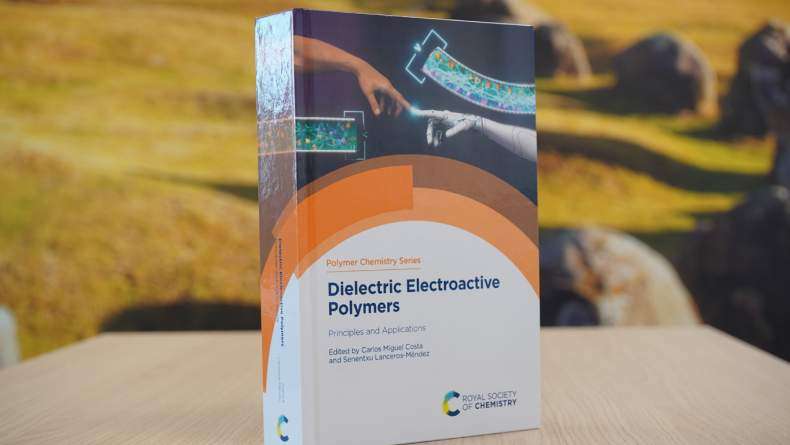
BCMaterials-en liburu berri batek polimero elektroaktibo dielektrikoen inguruan
Royal Society of Chemistry argitaletxeak “Dielectric Electroactive Polymers: Principles and Applications” liburua argitaratu du, Polymer Chemistry Series bildumaren barruan. BCMaterialseko zuzendari…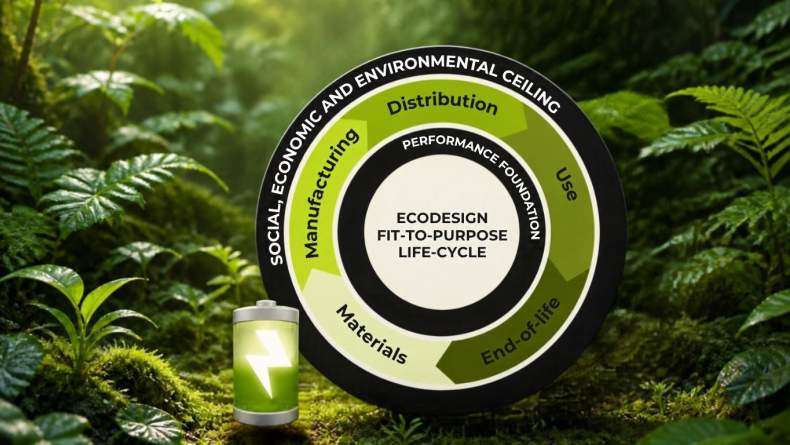
Artikulu berria Zientzia Kaieran: planetaren mugak errespetatzen dituzten bateria eramangarriak
Digitalizazioak gailuen bizitza baliagarria laburtu eta hondakin elektronikoak areagotu ditu: 53,6 milioi tona 2019an, Nazio Batuen arabera, eta 110 milioi tona aurreikusten dira 2050erako.…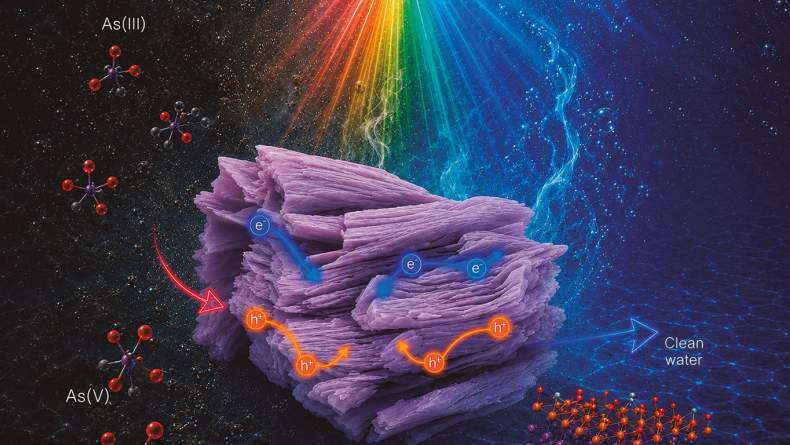
BCMaterials-en ikerketa, Journal of Materials Chemistry A aldizkariaren azalea
Maibelin Rosales BCMaterials-eko ikertzaileak gidatutako ikerketa bat, Senentxu Lanceros-Méndez, Javier del Campo eta Jorge Saiz ikertzaileekin batera egina, Journal of Materials Chemistry A…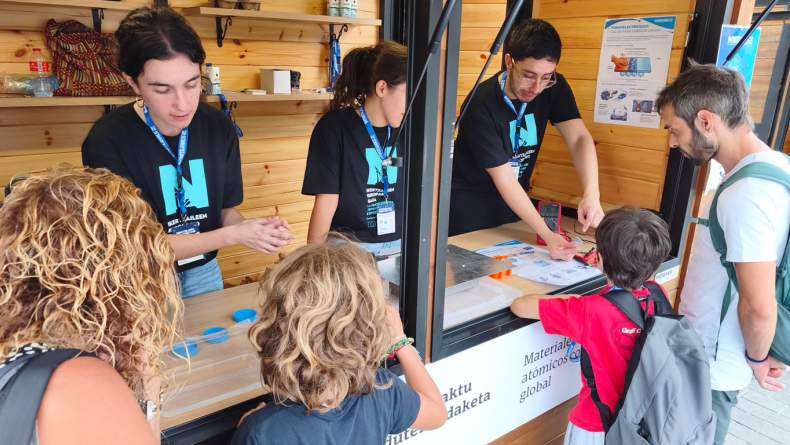
Zientzia eta dibertsioa Bilboko Ikertzaileen Europako Gauean
Joan den irailaren 25ean, BCMaterialsek Ikertzaileen Europako Gauaren edizio berri batean parte hartu zuen. Euskal Herriko Unibertsitateak antolatutako ekimena Bilboko Arenalean egin zen. Adin…