
BCMaterials Fortnightly Seminar #88 Irati Rodrigo - Roberto Fernández
IRATI RODRIGO
(BCMATERIALS)
Characterization of the electromagnetic applicator for magnetic hyperthermia experiments.
Magnetic hyperthermia is a cancer therapy, where magnetic nanoparticles (MNP) placed inside the tumour act as heat sources activated by an externally applied magnetic field. These nanoparticles increase the temperature of the tumour cells causing the destruction of the tumour. One of the most important parameters of MNP used in magnetic hyperthermia is their specific absorption rate (SAR), which is the absorbed energy per unit of nanoparticle mass. Our group has developed an accurate AC magnetometer, which allow the quantification of SAR. This magnetometer calculates the SAR measuring the dynamic magnetization with two pick up coils. SAR is obtained from the integral of the dynamic magnetization vs the applied magnetic field (generated by an inductor). This AC magnetometer works in a wide frequency range of AC magnetic field (149–1030 kHz) and with large field intensity: up to 35 kA m−1 at low frequencies and up to 22 kA m−1 at high frequencies (above 1 MHz). The main aim of this these is to design and built a new AC magnetometer that will work in higher field intensities and add a temperature controller of the sample. This will allow us to measures SAR in different temperature, which is very important to study new non invasive thermometry methods in order to measure the temperature of the tissue during the treatment. Previously, it has been shown the design and implementation of the main inductor (which generates the magnetic field necessary for the hyperthermia) and the resonant circuit (which allow us to work in a frequency range). During this talk, it will be shown the characterisation of the main inductor and the resonant circuit, from the impedance to the experimental magnetic field.
ROBERTO FERNÁNDEZ
(BCMATERIALS)
Thermal activation of charge carriers in ionic and electronic semiconductor β-AgIVVO3 and β-AgIVVO3@VV1.6VIV0.4O4.8 composite xerogels.
Thermal dependence of electric properties for pure β-AgIVVO3 and composite β-AgIVVO3@VV1.6VIV0.4O4.8 xerogels were studied by means of impedance spectroscopy. β-AgIVVO3 xerogels show a complex electronic response with temperature, showing a protonic conduction near room temperature, and an ionic conduction at high temperatures. In fact, hydroxyl or water molecules covalently bonded to the silver vanadium oxide nanoribbons surface play a crucial role as ion charge carriers, since their removal above 300ºC, suppress the ionic conduction in the β-AgIVVO3 xerogels. For the composite xerogels, an electric conduction behavior is observed, with a thermal charge carrier activation during the heating cycles. We are currently studying the impact of the covalently bonded hydroxyl or water molecules, as well as the vanadium mixed valence in the electric properties of composite hydrogels, but preliminary studies suggest that both play a crucial role as electron carriers.Related news
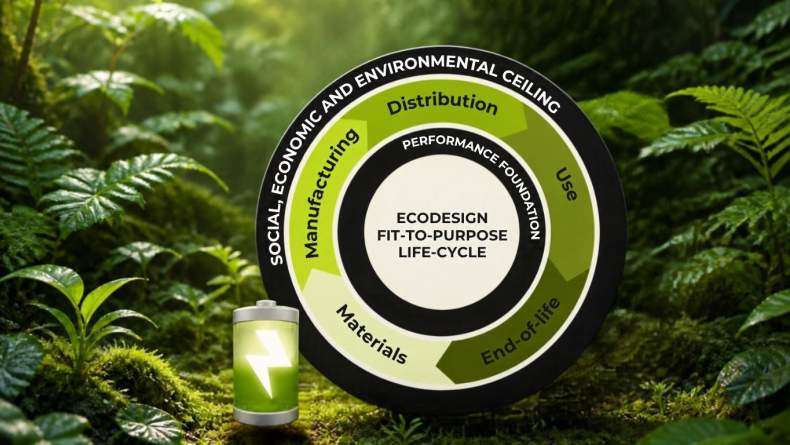
Artikulu berria Zientzia Kaieran: planetaren mugak errespetatzen dituzten bateria eramangarriak
Digitalizazioak gailuen bizitza baliagarria laburtu eta hondakin elektronikoak areagotu ditu: 53,6 milioi tona 2019an, Nazio Batuen arabera, eta 110 milioi tona aurreikusten dira 2050erako.…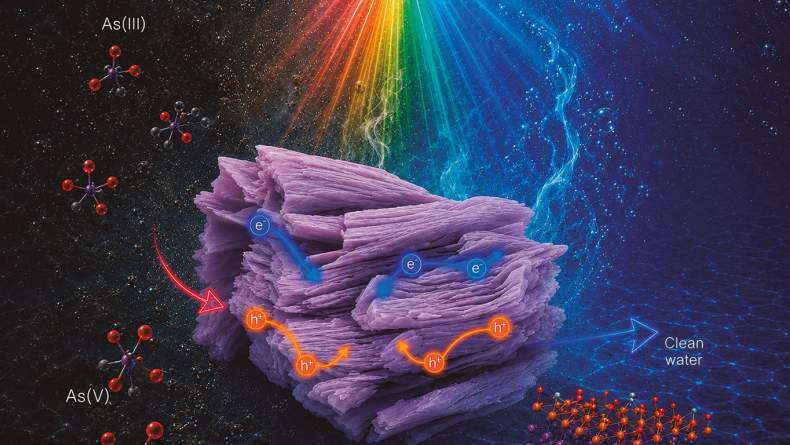
BCMaterials-en ikerketa, Journal of Materials Chemistry A aldizkariaren azalea
Maibelin Rosales BCMaterials-eko ikertzaileak gidatutako ikerketa bat, Senentxu Lanceros-Méndez, Javier del Campo eta Jorge Saiz ikertzaileekin batera egina, Journal of Materials Chemistry A…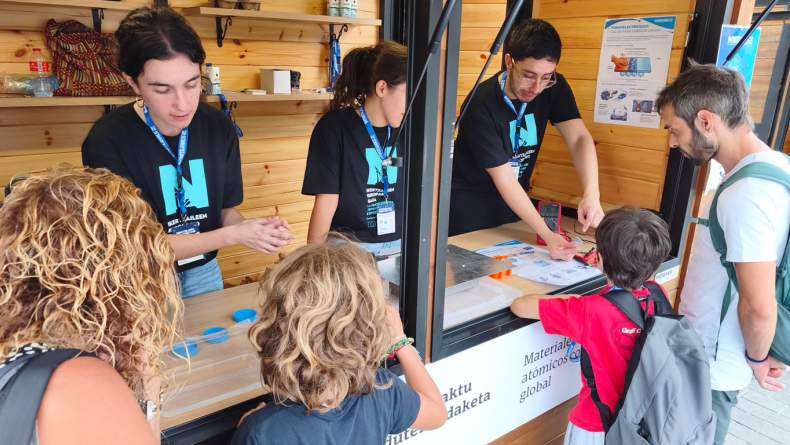
Zientzia eta dibertsioa Bilboko Ikertzaileen Europako Gauean
Joan den irailaren 25ean, BCMaterialsek Ikertzaileen Europako Gauaren edizio berri batean parte hartu zuen. Euskal Herriko Unibertsitateak antolatutako ekimena Bilboko Arenalean egin zen. Adin…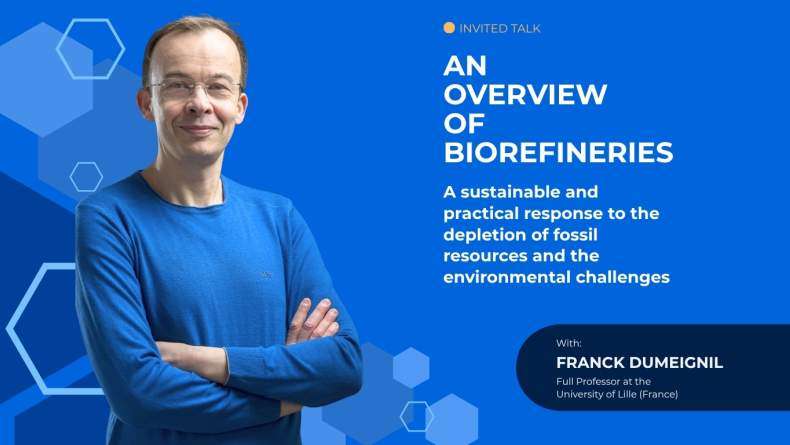
Hitzaldi gonbidatua Franck Dumeignilekin biorrefinerietaz (urriak 1)
Datorren ostegunean, urriaren 1ean, Franck Dumeignil, Lilleko Unibertsitateko (Frantzia) katedradunak, 'An Overview of Biorefineries' hitzaldia aurkeztuko du BCMaterials-en. Hitzaldia EHUko Leioako…