
BCMaterials Fortnightly Seminar #74 Mónica Gómez - Naroa Iglesias

MÓNICA GÓMEZ
(BCMATERIALS)
Characterization and stabilization of the ThMn12 phase for NdFe11Ti compounds
Rare earths are currently used in the most powerful permanent magnets, but China controls the market of these elements, hence the attempts are concentrated nowadays in order to reduce the content of rare earth in these permanent magnets, preserving its magnetic properties. The aim of this work is to obtain a sample of NdFe11Ti with the tetragonal structure ThMn12. The samples were prepared by induction melting and arc melting, with a subsequent heat treatments at certain temperatures. Finally a structural and magnetic characterization of the samples was carried out. The structural characterization was performed through X-ray diffraction and SEM, and it gave us information about the different phases within the samples. The magnetic characterization gave us the value of some important parameters like saturation magnetization or Curie temperature. From the obtained results, it was determined which was the sample that presented the best homogeneity of the phase 1:12
NAROA IGLESIAS
(BCMATERIALS)
Generation and characterization of Fe3M materials (M =Sn, Ge, Ga) for use as permanent magnets
The permanent magnet industry intends to reach 18800 billion dollars in production by 2018, but this type of industry has a problema; the use of rare earths. We research new phases for permament magnets reducing or removing the content of rare earths. In this work, we have studied as been generated the material to be studied by mechanical alloying of the initial materials; this is, the compounds Fe3Sn and Fe5Sn. Once the alloy mechanical, it made DSC (differenrial scannying calorymetry) and thermodifractogam to observe the structure of the sample and his crystallinity. After realice DSC, we do thermal treatment of several prepared samples. In this case, the quantity put in the glass tube (0,5g) and the treatment time (18 hours) was the same, but the temperature changed, varying in the range of 400ºC -1000ºC. All the samples less two were encapsulated in argon, the remaining two in vacuum. After the termal treatment, we do XRD (X-ray Diffraction) to those samples, to know the best treatment and see if the structure obtained was correct; the hexagonal structure. In this case, the best thermal treatment was to 800ºC. We did another treatment time knowing the best temperature, but the time in this case was 18 hours. Other this, I do VSM (vibrating simple magnetometer) to obtain macroscopic magnetic properties, what are, saturation magnetization and Curie temperatura. To finished, it made Mössbauer spectra to 800ºC 48h sample, because with this sample obtained higher porcentage of Fe3Sn andsmall content of bcc-Fe.
Related news
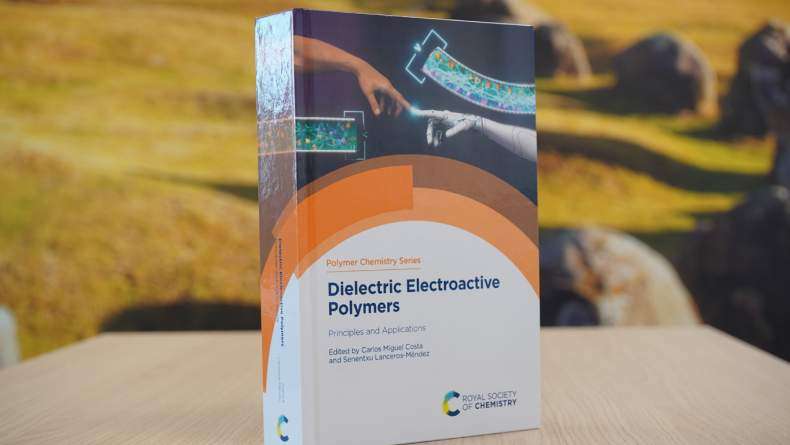
BCMaterials-en liburu berri batek polimero elektroaktibo dielektrikoen inguruan
Royal Society of Chemistry argitaletxeak “Dielectric Electroactive Polymers: Principles and Applications” liburua argitaratu du, Polymer Chemistry Series bildumaren barruan. BCMaterialseko zuzendari…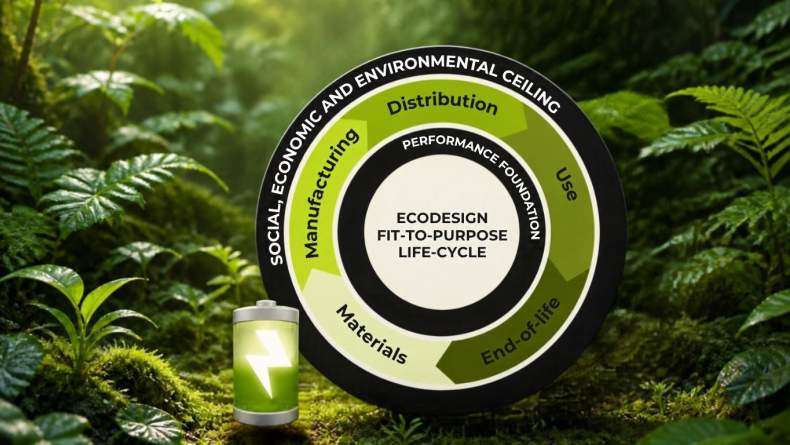
Artikulu berria Zientzia Kaieran: planetaren mugak errespetatzen dituzten bateria eramangarriak
Digitalizazioak gailuen bizitza baliagarria laburtu eta hondakin elektronikoak areagotu ditu: 53,6 milioi tona 2019an, Nazio Batuen arabera, eta 110 milioi tona aurreikusten dira 2050erako.…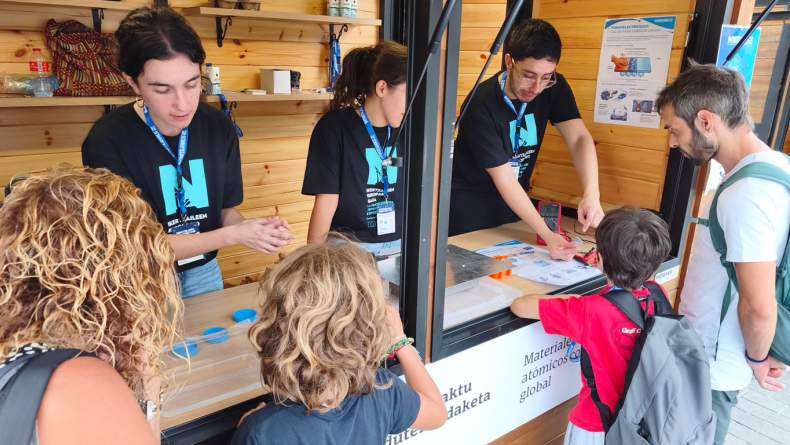
Zientzia eta dibertsioa Bilboko Ikertzaileen Europako Gauean
Joan den irailaren 25ean, BCMaterialsek Ikertzaileen Europako Gauaren edizio berri batean parte hartu zuen. Euskal Herriko Unibertsitateak antolatutako ekimena Bilboko Arenalean egin zen. Adin…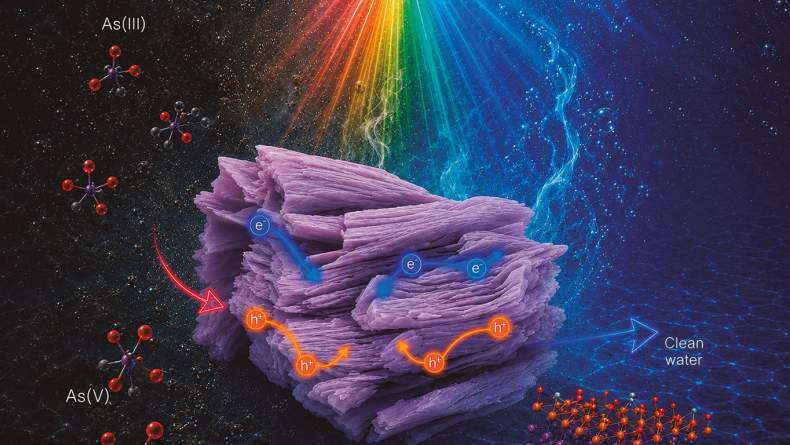
BCMaterials-en ikerketa, Journal of Materials Chemistry A aldizkariaren azalea
Maibelin Rosales BCMaterials-eko ikertzaileak gidatutako ikerketa bat, Senentxu Lanceros-Méndez, Javier del Campo eta Jorge Saiz ikertzaileekin batera egina, Journal of Materials Chemistry A…