
BCMaterials Fortnightly Seminar #67: Javier Alonso & Ariane Sagasti
JAVIER ALONSO
(BCMATERIALS)
Superparamagnetic iron oxide nanodiscs for hyperthermia therapy: Does size matter?
For the final realization of magnetic nanoparticles (MNPs) mediated hyperthermia as a viable clinical therapy for cancer treatment, it is necessary to devise novel approaches in order to improve the heating efficiency or Specific Loss Parameter (SLP) of these MNPs. Recently, it has been shown that magnetic nanodiscs with enhanced shape anisotropy, diameters around 200 nm (25 nm thick), and vortex magnetic domain structure exhibit very high SLP values. Despite their high heating efficiency, biomedical applications of these nanodiscs could not be hassle-free due to their relatively big size. Therefore, in this work, we have studied how the heating efficiency of the nanodiscs changes upon size reduction (∼12 nm diameter and ∼3 nm thickness). In addition, we have compared these results with those obtained for more typically studied spherical nanoparticles of similar volume. Transmission Electron microscopy, Atomic Force Microscopy and X-ray Diffraction confirm the disc shape of our MNPs and that they are mostly composed of iron oxide (Fe3O4 or γ-Fe2O3) phase. Magnetometry indicates that the nanodiscs do not exhibit a vortex magnetic domain structure, but still present a superparamagnetic-like behaviour, with zero magnetization in the absence of field at room temperature (ideal for biomedical applications) and enhanced effective anisotropy as compared to the spherical nanoparticles. Finally, calorimetric methods based magnetic hyperthermia experiments indicate that the SLP values for these small nanodiscs are much lower than those reported for the bigger disc-shaped nanoparticles, but these superparamagnetic nanodiscs act as better heating mediators than the spherical nanoparticles of similar volume.ARIANE SAGASTI
(BCMATERIALS)
Corrosion resistant metallic glasses for biosensing applications
In the last years, the use of metallic glasses in the form of ribbons as magnetoelastic resonant platforms for sensing biological and/or chemical agents, has received increased attention because they allow remote "query and answer", among others advantages. In many cases such detection must be performed in water or aggressive media, where corrosion produces a subsequent degradation of magnetic properties and sensing capacity. Fe-rich, Fe-Co-Si-B metallic glasses show outstanding magnetic and magnetoelastic properties, but high tendency to corrosion. It is already well established that addition of Ni, Cr, Zr and other elements can improve greatly the corrosion resistance of metallic glasses at the expenses of some magnetic performance degradation. In this work we report the fabrication by melt-spinning, magnetic and magnetoelastic characterization and corrosion behavior study (by potentiodynamic methods) of Fe-Ni and Fe-Ni-Cr metallic glass ribbons. Values of magnetization, magnetostriction and DE effect values, as well as corrosion potential, current density, and polarization resistance, are given and discussed in terms of Ni and Cr content. The well known, commercial metallic glass with high corrosion resistance, Metglas 2826MB®(Fe40Ni38Mo4B18), widely used for such biological and chemical detection purposes, has been also fully characterized and used as reference for the results obtained in our Fe-Ni-Cr ribbons.Related news
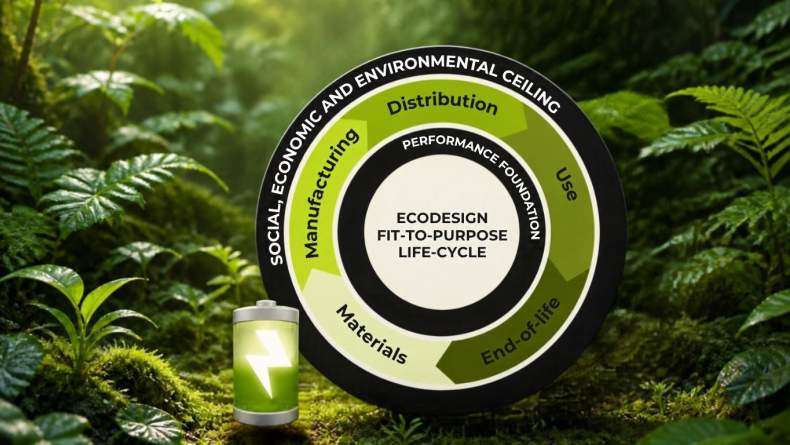
Artikulu berria Zientzia Kaieran: planetaren mugak errespetatzen dituzten bateria eramangarriak
Digitalizazioak gailuen bizitza baliagarria laburtu eta hondakin elektronikoak areagotu ditu: 53,6 milioi tona 2019an, Nazio Batuen arabera, eta 110 milioi tona aurreikusten dira 2050erako.…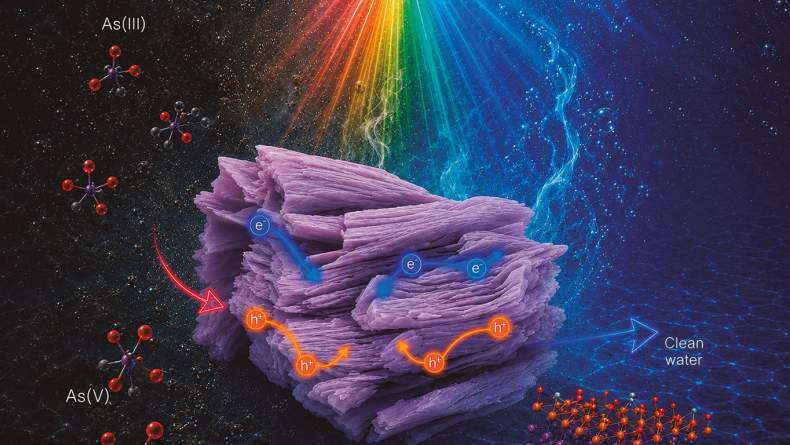
BCMaterials-en ikerketa, Journal of Materials Chemistry A aldizkariaren azalea
Maibelin Rosales BCMaterials-eko ikertzaileak gidatutako ikerketa bat, Senentxu Lanceros-Méndez, Javier del Campo eta Jorge Saiz ikertzaileekin batera egina, Journal of Materials Chemistry A…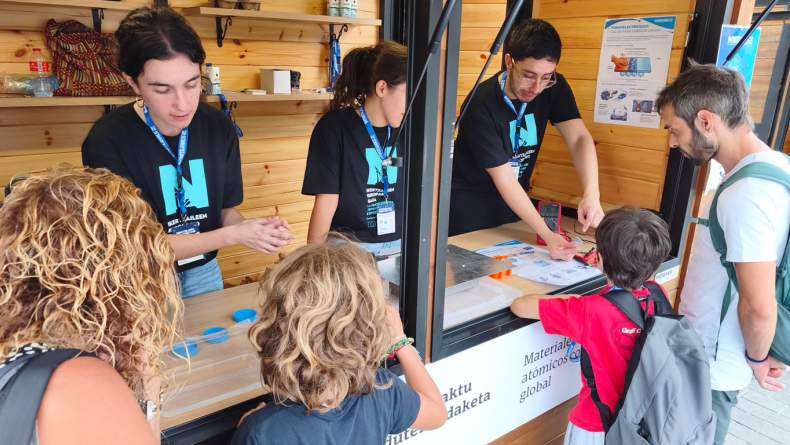
Zientzia eta dibertsioa Bilboko Ikertzaileen Europako Gauean
Joan den irailaren 25ean, BCMaterialsek Ikertzaileen Europako Gauaren edizio berri batean parte hartu zuen. Euskal Herriko Unibertsitateak antolatutako ekimena Bilboko Arenalean egin zen. Adin…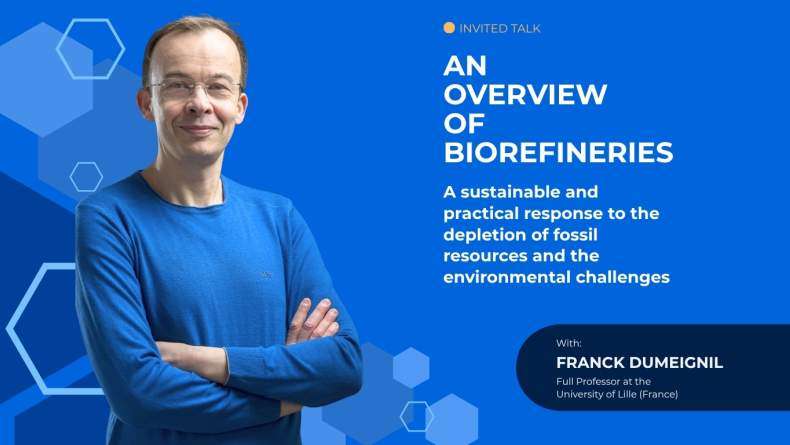
Hitzaldi gonbidatua Franck Dumeignilekin biorrefinerietaz (urriak 1)
Datorren ostegunean, urriaren 1ean, Franck Dumeignil, Lilleko Unibertsitateko (Frantzia) katedradunak, 'An Overview of Biorefineries' hitzaldia aurkeztuko du BCMaterials-en. Hitzaldia EHUko Leioako…