
BCMaterials Fortnightly Seminar #62: Catarina Lopes & Eduardo Fernández

CATARINA LOPES
(BCMATERIALS)
Fabrication of pure β-PVDF film in a 3D shape
Polymer piezoelectric materials are currently the focus of many interests, due to its capacity to combine lightless and flexibility with the generation of an electrical response under a mechanical deformation (and the inverse). Particularly, Poly(vinilidene fluoride) - PVDF- is the polymer of choice for an increasing number of applications since it has the best all-around electroactive properties. However, PVDF is a polymorph polymer and the crystallization in the b-phase, the one that present piezoelectric properties, only occurs under specific conditions. Currently it is impossible to obtain pure b-PVDF directly from the melt, what is the source of some problems in printing processes or in the polymer coating of irregular surfaces. In this work, this problematic will be addressed and a new technique for the crystallization of a pure b-PVDF film with a 3D shape in the b-phase is going to be described.EDUARDO FERNÁNDEZ
(BCMATERIALS)
Block Copolymers Hierarchical Templating of BiFeO3/CoFe2O4 Multiferroic Nanocomposite
In a vertically aligned nanocomposite oxide thin film, two co-deposited, immiscible oxide phases grow epitaxial on a single crystal substrate to form a two-phase columnar structure such as a checkerboard, a labyrinth, or pillars of one phase embedded in a matrix of the other phase. Oxide nanocomposite films can show multi-functionality arising from the properties and geometries of the phases, and strain mediated coupling between the two phases can lead to magneto- electric behavior when one phase is ferroelectric (BiFeO3) and the other ferromagnetic (CoFe2O4). In order to use multiferroic columnar nanostructures in device applications, it is necessary to control the location of the pillars on the substrate. Templating the ferromagnetic pillar locations can be performed by Electron beam lithography (EBL) ion milling, but is restricted to small-area fabrication. It can be also done into large areas by lift-off process with hard masks made from EBL-patterned gold or from anodic aluminum oxide to create ferromagnetic nuclei with a 200-300 nm period. Block copolymers Self-assembled block copolymer thin films offer a next-generation nanolithography method that could overcome the cost and resolution challenges facing current UV photolithography technology.Related news
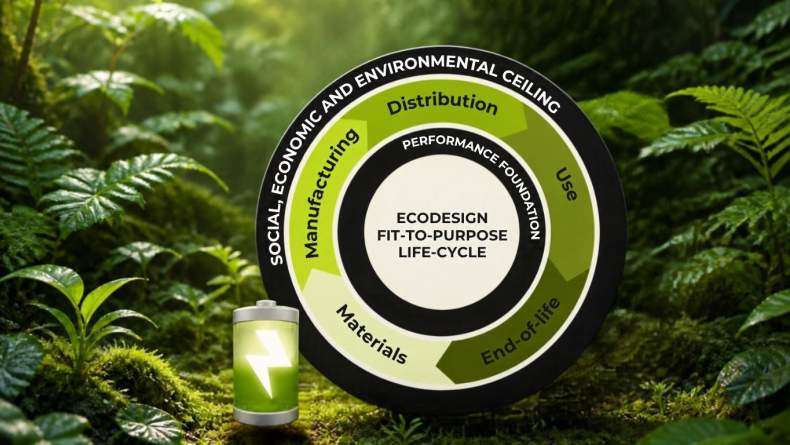
Artikulu berria Zientzia Kaieran: planetaren mugak errespetatzen dituzten bateria eramangarriak
Digitalizazioak gailuen bizitza baliagarria laburtu eta hondakin elektronikoak areagotu ditu: 53,6 milioi tona 2019an, Nazio Batuen arabera, eta 110 milioi tona aurreikusten dira 2050erako.…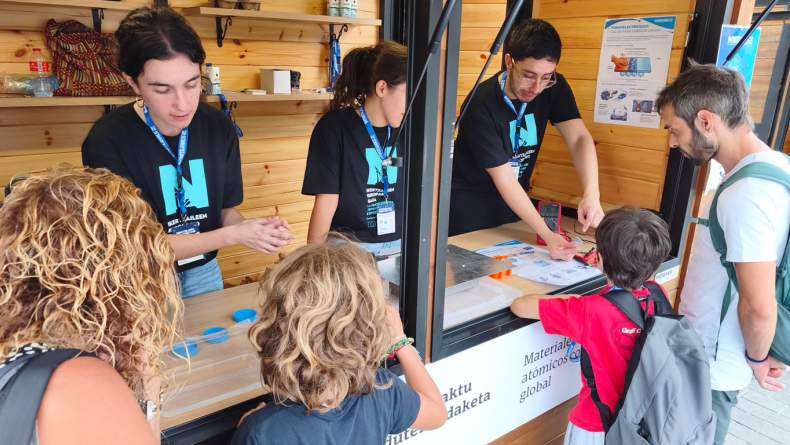
Zientzia eta dibertsioa Bilboko Ikertzaileen Europako Gauean
Joan den irailaren 25ean, BCMaterialsek Ikertzaileen Europako Gauaren edizio berri batean parte hartu zuen. Euskal Herriko Unibertsitateak antolatutako ekimena Bilboko Arenalean egin zen. Adin…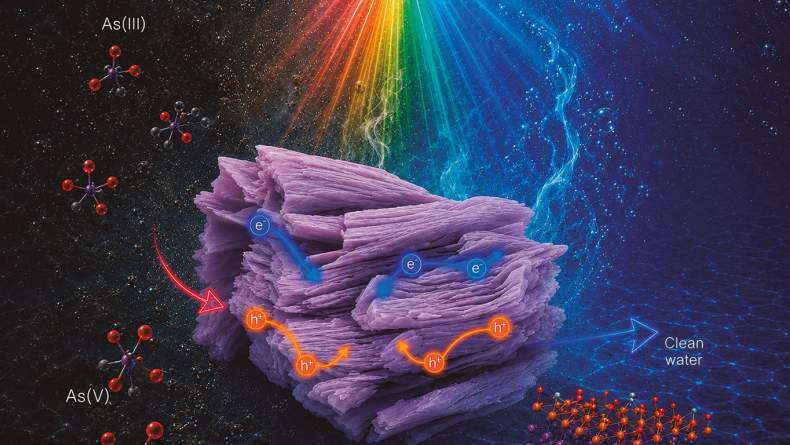
BCMaterials-en ikerketa, Journal of Materials Chemistry A aldizkariaren azalea
Maibelin Rosales BCMaterials-eko ikertzaileak gidatutako ikerketa bat, Senentxu Lanceros-Méndez, Javier del Campo eta Jorge Saiz ikertzaileekin batera egina, Journal of Materials Chemistry A…
Hitzaldi gonbidatua Franck Dumeignilekin biorrefinerietaz (urriak 1)
Datorren ostegunean, urriaren 1ean, Franck Dumeignil, Lilleko Unibertsitateko (Frantzia) katedradunak, 'An Overview of Biorefineries' hitzaldia aurkeztuko du BCMaterials-en. Hitzaldia EHUko Leioako…