
Computational Chemistry for Colloidal Semiconductor Nanocrystals by Ivan Infante
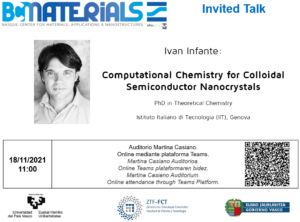
We are pleased to announce the invited talk given by Dr. Ivan Infante, at the Istituto Italiano di Tecnologia (IIT), Genova, entitled “Computational Chemistry for Colloidal Semiconductor Nanocrystals”.
While experimental protocols aimed at the synthesis and characterization of colloidal semiconductor nanocrystals are now well established, theoretical calculations of the same materials still present many challenges. Some of these are: the compromise in the size of the modelled systems, which have to be large enough to avoid too strong quantum confinement effects but small enough to be described computationally; the construction of a nanocrystal model system that represent closely that found in the experiment, and the possibility of adding surface ligands that increase dramatically the computational requirements. A successful methodology to tackle some of the above issues is Density Functional Theory (DFT), which scales cubically with the number of atoms, but that in recent years was capable to provide important insights in the electronic structure and geometry of several colloidal nanocrystals of up to 3nm in size. However, a strong limitation of DFT is the high computational cost, which prevent on the one hand the inclusion of solvent and ligand molecules as in the experiments and on the other, performing long timescale simulations to study rare events like ligand binding at the surface, trap formation rates and phonon induced non-radiative quenching. To address these chemico-physical processes, the field moved to computationally cheaper alternatives such as those based on classical force fields. These methods however have also important drawbacks, such as the development of accurate force-field parameters and more importantly the lack of information on the electronic structure of the material studied. In this framework, novel machine-learning techniques are poised to bridge the gap between DFT and classical force fields to enable DFT quality simulations on colloidal nanocrystals also for long timescale events. In this talk I will therefore discuss the most important achievements obtained in the semiconductor nanocrystal field by theoretical methodologies and an outlook of future developments. The talk will be on November 18th at 11:00. The event is free and open for everybody, it will be at the Martina Casiano Auditorium and also online via TEAMS with the following link: https://teams.microsoft.com/l/meetup-join/19%3ameeting_NmM0ZTBmNjctMjVjOC00ZDc3LTkxYWEtYmQ3NTkxZGQxYjU0%40thread.v2/0?context=%7b%22Tid%22%3a%222f54ab68-83af-4d70-8895-a0d1e95ec899%22%2c%22Oid%22%3a%227778b4e1-e06d-485b-b530-cf013d4e9498%22%2c%22IsBroadcastMeeting%22%3atrue%7d&btype=a&role=a Do not miss it!
Related news
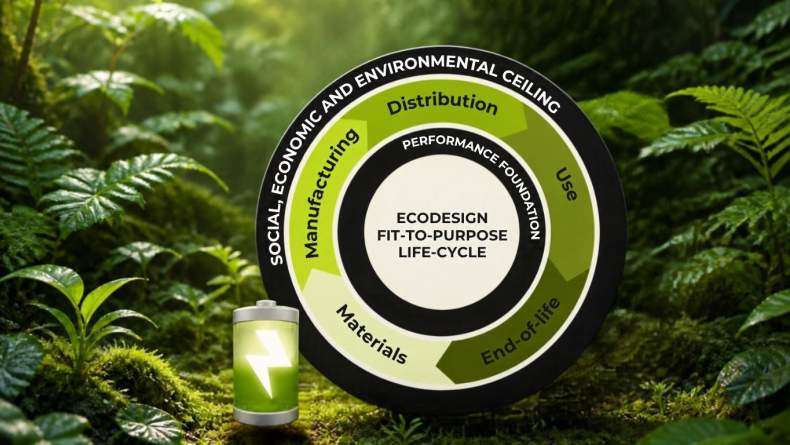
Artikulu berria Zientzia Kaieran: planetaren mugak errespetatzen dituzten bateria eramangarriak
Digitalizazioak gailuen bizitza baliagarria laburtu eta hondakin elektronikoak areagotu ditu: 53,6 milioi tona 2019an, Nazio Batuen arabera, eta 110 milioi tona aurreikusten dira 2050erako.…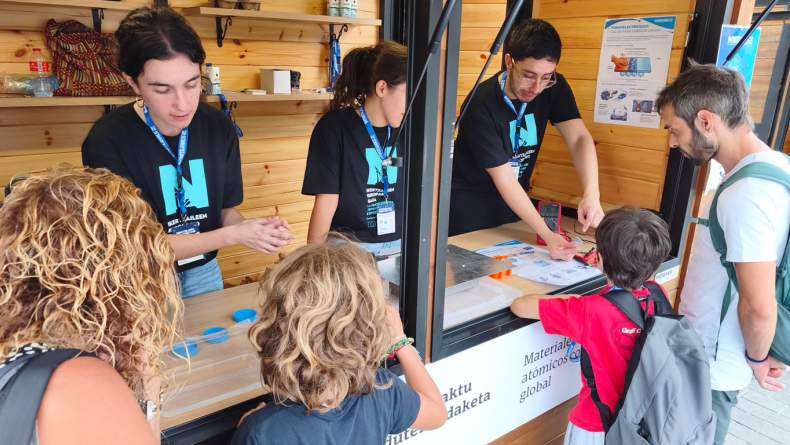
Zientzia eta dibertsioa Bilboko Ikertzaileen Europako Gauean
Joan den irailaren 25ean, BCMaterialsek Ikertzaileen Europako Gauaren edizio berri batean parte hartu zuen. Euskal Herriko Unibertsitateak antolatutako ekimena Bilboko Arenalean egin zen. Adin…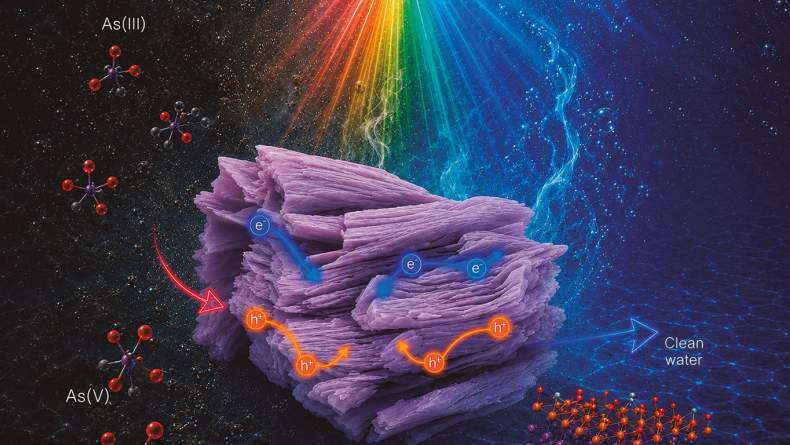
BCMaterials-en ikerketa, Journal of Materials Chemistry A aldizkariaren azalea
Maibelin Rosales BCMaterials-eko ikertzaileak gidatutako ikerketa bat, Senentxu Lanceros-Méndez, Javier del Campo eta Jorge Saiz ikertzaileekin batera egina, Journal of Materials Chemistry A…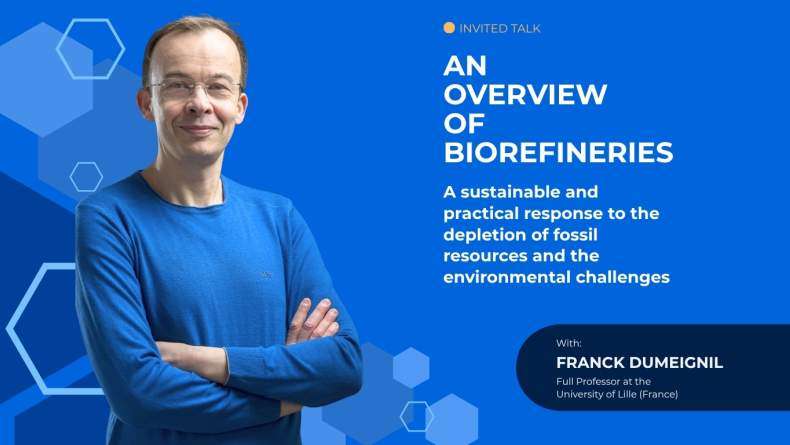
Hitzaldi gonbidatua Franck Dumeignilekin biorrefinerietaz (urriak 1)
Datorren ostegunean, urriaren 1ean, Franck Dumeignil, Lilleko Unibertsitateko (Frantzia) katedradunak, 'An Overview of Biorefineries' hitzaldia aurkeztuko du BCMaterials-en. Hitzaldia EHUko Leioako…