
BCMaterials talk at Universite? de Versailles Saint-Quentin-en-Yvelines – CNRS
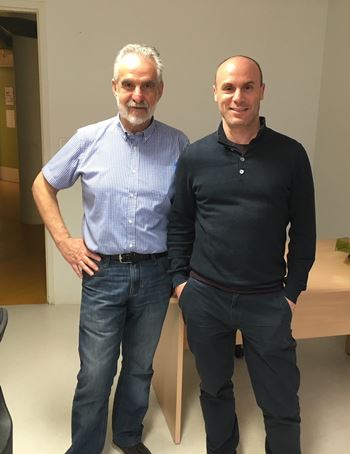
[caption id="attachment_21134" align="alignright" width="279"] Manu Barandiaran and David Schmool, Director of the Groupe d'étude de la matière condensée (GEMaC)[/caption]
Manu Barandiaran , former director of BCMaterials, was on past week at the Université de Versailles Saint-Quentin-en-Yvelines – CNRS, talking about Magnetic Materials research at BCMaterials.
Magnetic shape memory alloys (MSMAs), such as the Heusler compound Ni2MnGa and off-stoichiometric alloys, couple the martensitic transformation (MT) with ferromagnetism, enabling outstanding effects like magnetically induced strains, up to 12%, high frequency response and large power density, of great interest for magnetic actuators. Some other MSMA, as Ni-Mn-X (X=In, Sn, Sb), also display large magnetocaloric and magnetoresistance effects, with possible applications in magnetic refrigeration, sensors, etc. A review of recent work on these alloys is presented, for bulk and single crystal as well as thin films and nanopillars. The later provide promising evidence for thermal and magnetic actuation at the nanoscale.
Search for alternatives to current available materials, which do not contain critical elements as Rare Earths (RE), is a priority in the European Union and worldwide. Some recent results on lean or no RE containing compounds for high energy Permanent Magnets will be also presented. This work is part of the ongoing EU H2020 project: Novel, critical materials free, high anisotropy phases for permanent magnets, by design
Manu Barandiaran and David Schmool, Director of the Groupe d'étude de la matière condensée (GEMaC)[/caption]
Manu Barandiaran , former director of BCMaterials, was on past week at the Université de Versailles Saint-Quentin-en-Yvelines – CNRS, talking about Magnetic Materials research at BCMaterials.
Magnetic shape memory alloys (MSMAs), such as the Heusler compound Ni2MnGa and off-stoichiometric alloys, couple the martensitic transformation (MT) with ferromagnetism, enabling outstanding effects like magnetically induced strains, up to 12%, high frequency response and large power density, of great interest for magnetic actuators. Some other MSMA, as Ni-Mn-X (X=In, Sn, Sb), also display large magnetocaloric and magnetoresistance effects, with possible applications in magnetic refrigeration, sensors, etc. A review of recent work on these alloys is presented, for bulk and single crystal as well as thin films and nanopillars. The later provide promising evidence for thermal and magnetic actuation at the nanoscale.
Search for alternatives to current available materials, which do not contain critical elements as Rare Earths (RE), is a priority in the European Union and worldwide. Some recent results on lean or no RE containing compounds for high energy Permanent Magnets will be also presented. This work is part of the ongoing EU H2020 project: Novel, critical materials free, high anisotropy phases for permanent magnets, by design
Manu Barandiaran and David Schmool, Director of the Groupe d'étude de la matière condensée (GEMaC)[/caption]
Manu Barandiaran , former director of BCMaterials, was on past week at the Université de Versailles Saint-Quentin-en-Yvelines – CNRS, talking about Magnetic Materials research at BCMaterials.
Magnetic shape memory alloys (MSMAs), such as the Heusler compound Ni2MnGa and off-stoichiometric alloys, couple the martensitic transformation (MT) with ferromagnetism, enabling outstanding effects like magnetically induced strains, up to 12%, high frequency response and large power density, of great interest for magnetic actuators. Some other MSMA, as Ni-Mn-X (X=In, Sn, Sb), also display large magnetocaloric and magnetoresistance effects, with possible applications in magnetic refrigeration, sensors, etc. A review of recent work on these alloys is presented, for bulk and single crystal as well as thin films and nanopillars. The later provide promising evidence for thermal and magnetic actuation at the nanoscale.
Search for alternatives to current available materials, which do not contain critical elements as Rare Earths (RE), is a priority in the European Union and worldwide. Some recent results on lean or no RE containing compounds for high energy Permanent Magnets will be also presented. This work is part of the ongoing EU H2020 project: Novel, critical materials free, high anisotropy phases for permanent magnets, by designRelated news
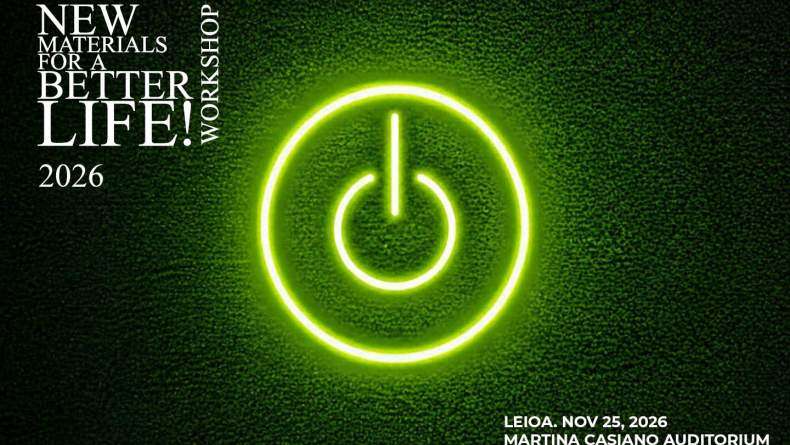
El workshop anual de BCMaterials pone el foco en la catálisis para la transición verde
BCMaterials, el Basque Center for Materials, Applications and Nanostructures, celebrará la nueva edición de su workshop anual “New Materials for a Better Life” el miércoles 25 de noviembre de 2026,...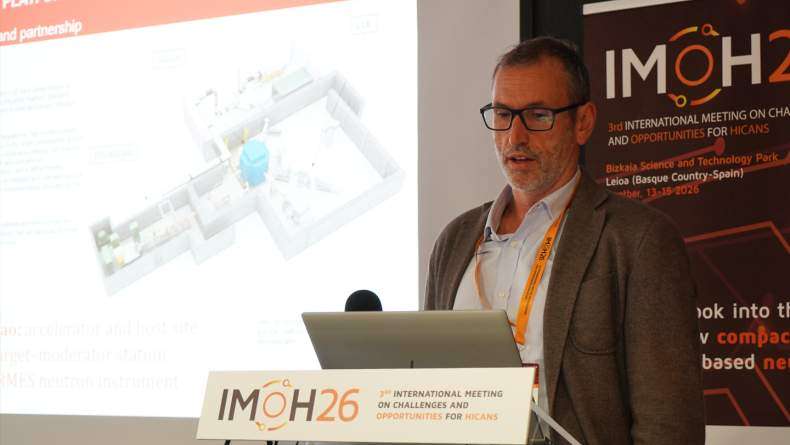
IMoH 2026 reúne en BCMaterials a la comunidad internacional de fuentes compactas de neutrones
Cerca de un centenar de especialistas en ciencia de neutrones, procedentes de una docena de países de Europa y Norteamérica, se reunieron del 13 al 15 de octubre en Leioa en la tercera edición del...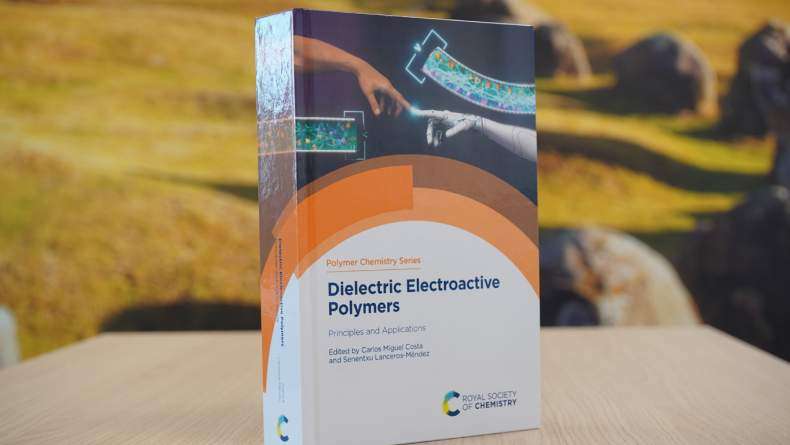
Nuevo libro de BCMaterials sobre avances en polímeros electroactivos dieléctricos
La Royal Society of Chemistry ha publicado "Dielectric Electroactive Polymers: Principles and Applications", un volumen coeditado por Senentxu Lanceros-Méndez, director científico de BCMaterials, y...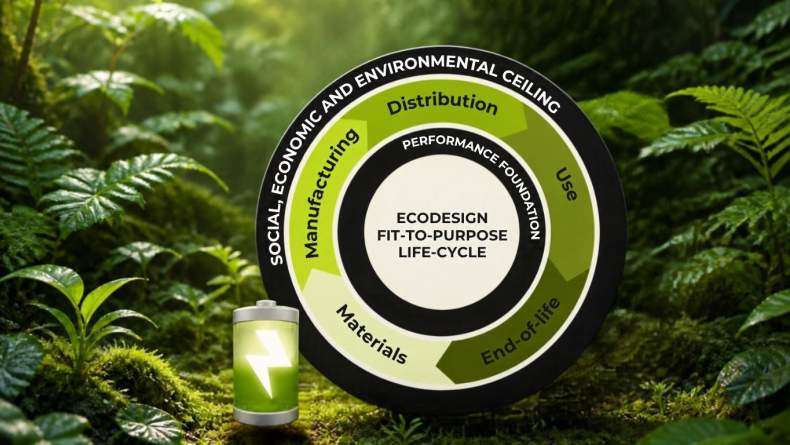
Nuevo artículo en Zientzia Kaiera: baterías portátiles respetuosas con los límites del planeta
La digitalización ha acortado la vida útil de los dispositivos y ha disparado los residuos electrónicos: 53,6 millones de toneladas en 2019, según Naciones Unidas, con una previsión de 110 millones...