
Spin Mechatronics-Mechanical Generation of Spin and Spin Current
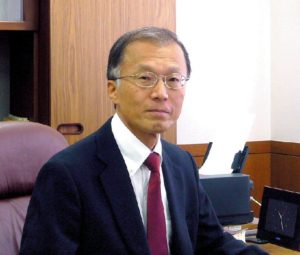
 Prof. Dr. Sadamichi Maekawa, Director of the Advanced Science Research Center (ASRC), Japan Atomic Energy Agency (JAEA), has been invited to talk about a completely new field in which he has started recently.
Spin Mechatronics-Mechanical Generation of Spin and Spin Current-
Sadamichi Maekawa
Advanced Science Research Center,
Japan Atomic Energy Agency, Tokai, 319-1195 Japan.
A. Einstein and W.J. de Haas discovered experimentally the equivalence of magnetic moment and mechanical rotation in 1915 [1]. In the same year, S.J. Bernett showed that the mechanical rotation can generate a magnetic field, i.e., the so-called Bernett field, even in a body with no electric charge [2]. These phenomena are caused by the angular momentum conservation between electron spin and mechanical rotation, which has been proved in the general relativistic quantum mechanics [3]. We introduce mechanical effects in spintronics and propose a variety of novel spintronics phenomena. In particular, the coupling between nuclear spin and mechanical rotation is demonstrated [4]. Since the Bernett field is enhanced more than three orders of magnitudes in nuclei than electron spins, the mechanical nuclear-magnetic-resonance (NMR) may provide new applications of NMR. We also observe the generation of spin current by the flow of liquid metals. Combining this effect with the spin Hall effect [5], the spin-hydrodynamic generation of electricity is obtained [6]. The mechanical generation of spin and spin current opens a door from “Spintronics” to "Spin-Mechatronics". [1] A.Einstein and W.J.de Haas, Verhandl.Deut.Physik.Ges, 17,154 (1915). [2] S.J.Bernett, Phys. Rev. 6, 239 (1915). [3] M.Matuo, J.Ieda and S.Maekawa, Phys. Rev. Lett. 106, 076601 (2011). [4] H.Chudo,M.Ono, K.Harii, M.Matsuo, J.Ieda, R.Haruki,S.Okayasu, S.Maekawa, H.Yasuoka and E.Saitoh, Appl. Phys. Express 7, 063004 (2014). [5] Spin Current, eds. S. Maekawa et al. (Oxford University Press, 2012). [6] R.Takahashi, M.Ono, K.Harii, S.Okayasu, M.Matsuo, J.Ieda, S.Takahashi, S.Maekawa and E.Saitoh, to be published.
Related news
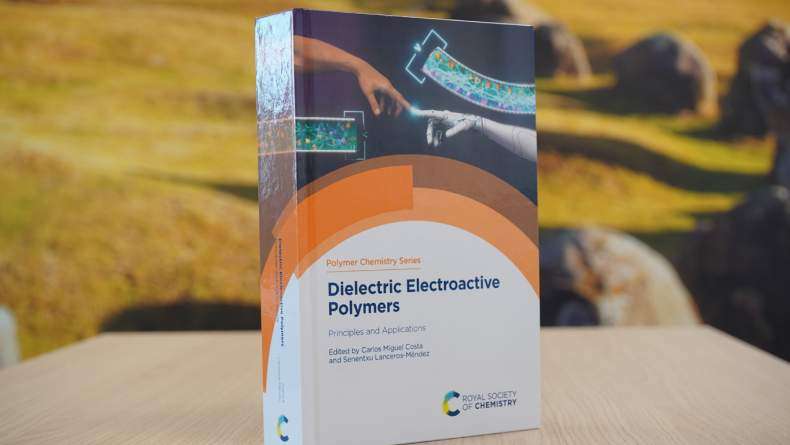
Nuevo libro de BCMaterials sobre avances en polímeros electroactivos dieléctricos
La Royal Society of Chemistry ha publicado "Dielectric Electroactive Polymers: Principles and Applications", un volumen coeditado por Senentxu Lanceros-Méndez, director científico de BCMaterials, y...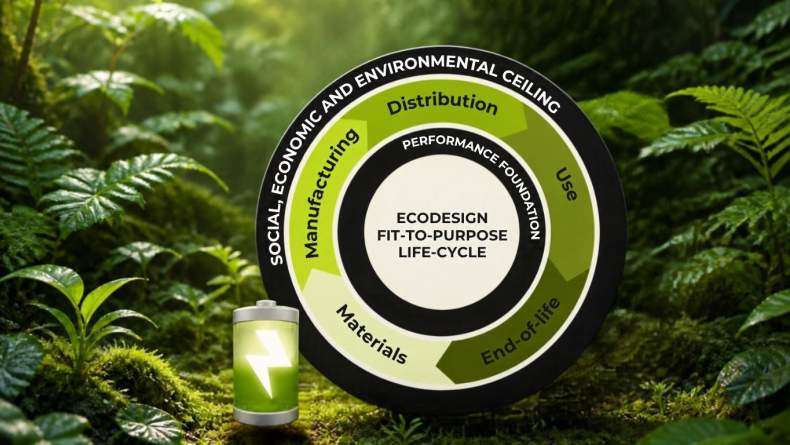
Nuevo artículo en Zientzia Kaiera: baterías portátiles respetuosas con los límites del planeta
La digitalización ha acortado la vida útil de los dispositivos y ha disparado los residuos electrónicos: 53,6 millones de toneladas en 2019, según Naciones Unidas, con una previsión de 110 millones...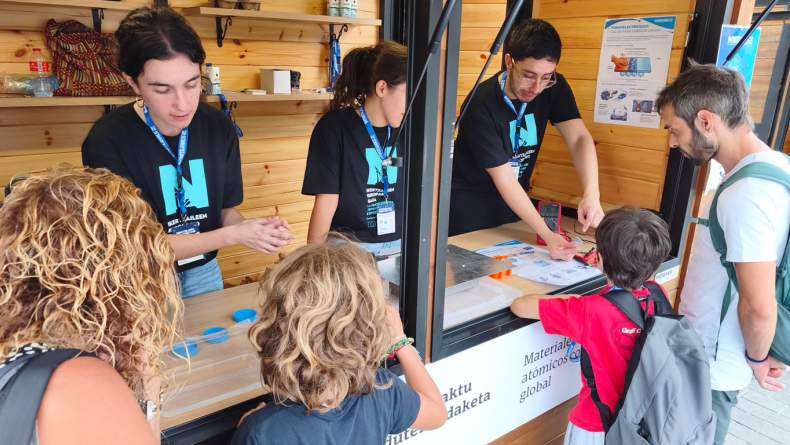
Ciencia y diversión en la Noche Europea de los Investigadores e Investigadoras de Bilbao
El pasado 25 de septiembre, BCMaterials participó en una nueva edición de la Noche Europea de los Investigadores e Investigadoras, organizada por la Universidad del País Vasco en El Arenal de Bilbao...
La investigación de BCMaterials, portada de Journal of Materials Chemistry A
Un estudio liderado por la investigadora de BCMaterials Maibelin Rosales, junto con Senentxu Lanceros-Méndez, Javier del Campo y Jorge Saiz, ha sido publicado en la revista Journal of Materials...