
BCMaterials Fortnightly Seminars #35
ADRIANA HUÍZAR
(UPV/EHU)
MAGNETIC ANISOTROPY IN ASSEMBLIES OF MAGNETITE NANOPARTICLES EXTRACTED FROM MAGNETOTACTIC BACTERIA MAGNETOSPIRILLUM GRYPHISWALDENS
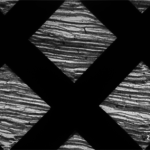
Self-assembly is the autonomous organization of components into patterns and structures due to balance between electrostatic forces, surface tension, entropy, substrate affinity and size, shape and concentration of the particles.1 In addition, the self-assembly process in magnetic materials is also related with intrinsic exchange coupling energy, anisotropy energy and dipolar interactions. The magnetic interaction becomes then an important issue, dominating the collective magnetic behavior. In this work, we carried out a magnetic study on assemblies of magnetite nanoparticles biomineralized by magnetotactic bacteria Magnetospirillum gryphiswaldense2, called magnetosomes. These magnetosomes are magnetite nanoparticles surrounded by a lipid bilayer with a thickness ≈ 2 - 4 nm, present truncated-cuboctahedral shape and a mean diameter of ≈ 36 nm. The magnetosomes were deposited by drop coating technique under an applied magnetic field ≈ 0.4 T, onto silicon substrate for magnetic measurements, and on top of a grid covered by amorphous carbon for Transmission Electron Microscopy image (figure 1a) and Off-axis Electron Holography to map the magnetic field of the nanoparticle assemblies (figure 1b). The magnetosomes are arranged in wide bands forming large strings in the direction of the applied magnetic field and covering a big area of the substrate. The hysteresis loops of the linear patterns were measured by Magneto-optical Kerr Effect (MOKE) magnetometer at different angles with respect to the applied magnetic field direction (figure 1c). Magnetization rotation of particles under the external magnetic field oriented at different angles matches well with the simulations. The evolution of the coercive field and remanence verified the presence of well-defined patterns.
1Varón, L. Peña, L. Balcells, V. Skumryev, B. Martinez, V. Puntes, Langmuir, 2010, 26, 109-116. 2L. Fdez-Gubieda, A. Muela, J. Alonso, A. Garcia-Prieto, L. Olivi, R. Fernandez-Pacheco, J. M. Barandiarán, ACS Nano, 2013, 7, 3297-3305.
   |
XABIER LASHERAS
(BCMaterials)
UNDERSTANDING THE IMPACT OF MAGNETIC NPS AND NANOCAPSULES UPON A SIMPLIFIED IN VITRO MODEL OF THE HUMAN BLOOD VESSEL
One of the most important research areas nowadays is focused on developing and testing different kind of nanomaterials, as magnetic, gold and polymeric nanoparticles, to be applied as therapeutic mediators to treat different kind of cancer. In the specific case of magnetic nanoparticles, the main objective is to develop a mechanism to treat the cancer by the magnetic hyperthermia effect of these nanoparticles. In this way, a lot of previous work has been performed to obtain magnetic nanoparticles with high saturation magnetization and magnetic anisotropy, in order to achieve an optimum response in magnetic hyperthermia treatments. However, to consider the obtained nanomaterials suitable candidates for biomedical applications, some tests have to be previously performed. In order to check the possibility to use some nickel ferrite based nanomaterials in humans, the effects of some magnetic nanomaterials in a simplified in vitro model of the human blood vessel have been tested. This model is based on a endothelial cell-macrophage co-culture, which simulates the structure and the contact of real human blood vessel with the blood. The aim of this project is to check the effects that the intravenous injections of nanoparticles could produce in the blood vessels. This work has been carried out based on the method and model developed in the Adolphe Merkle institute (Fribourg, Switzerland) under the supervision of Dr. Martin J. D. Clift, Dr. Alke Fink and Dr. Barbara Rothen-Rutishauser.Related news
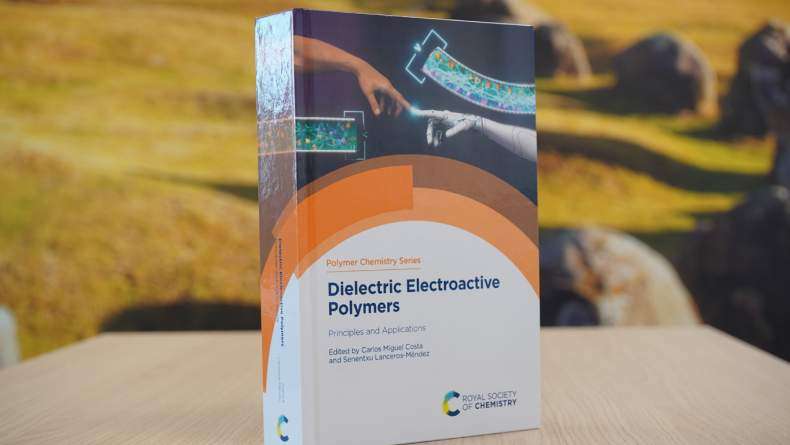
Nuevo libro de BCMaterials sobre avances en polímeros electroactivos dieléctricos
La Royal Society of Chemistry ha publicado "Dielectric Electroactive Polymers: Principles and Applications", un volumen coeditado por Senentxu Lanceros-Méndez, director científico de BCMaterials, y...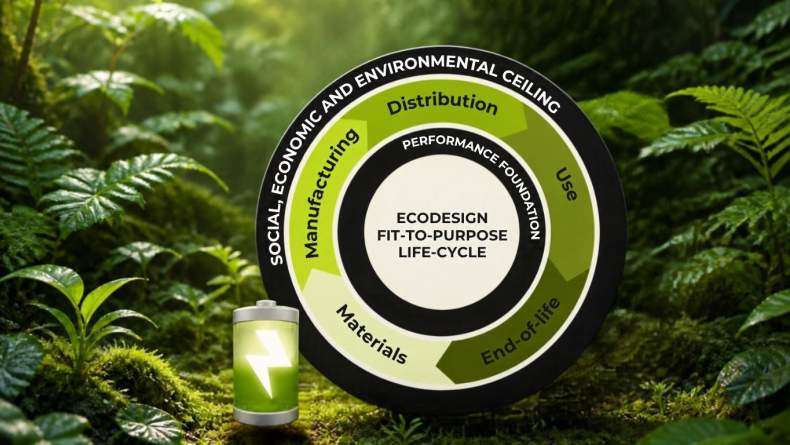
Nuevo artículo en Zientzia Kaiera: baterías portátiles respetuosas con los límites del planeta
La digitalización ha acortado la vida útil de los dispositivos y ha disparado los residuos electrónicos: 53,6 millones de toneladas en 2019, según Naciones Unidas, con una previsión de 110 millones...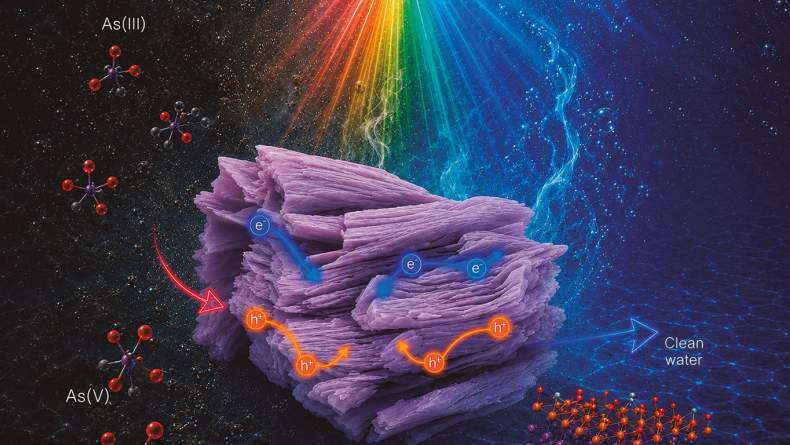
La investigación de BCMaterials, portada de Journal of Materials Chemistry A
Un estudio liderado por la investigadora de BCMaterials Maibelin Rosales, junto con Senentxu Lanceros-Méndez, Javier del Campo y Jorge Saiz, ha sido publicado en la revista Journal of Materials...
Ciencia y diversión en la Noche Europea de los Investigadores e Investigadoras de Bilbao
El pasado 25 de septiembre, BCMaterials participó en una nueva edición de la Noche Europea de los Investigadores e Investigadoras, organizada por la Universidad del País Vasco en El Arenal de Bilbao...