
Bioinspired active systems assembled from the bottom-up

We are pleased to announce the invited talk given by Isabella Guido, Group Leader at Max Planck Institute for Dynamics and Self-Organization, entitled “Bioinspired active systems assembled from the bottom-up”
“In nature, the self-assembly of biopolymers and motor proteins in the complex intracellular environment leads to interesting emergent behaviour that is crucial for cellular organisation and motility. Reducing the complexity of these subcellular processes to a tractable set of basic building blocks is a fascinating experimental challenge for the study of fundamental biological mechanisms.
An example of such self-organisation is the rhythmic bending of cilia and flagella that promotes fluid transport or propels swimming organisms. We study the mechanical interplay of ciliary components by analysing a minimal synthetic system consisting of one or two microtubules and different types of motor proteins. Alongside the investigation of synthetic cilia, we also focus on microtubule-motor protein active networks. By combining passive components that produce entropic forces and extensile and contractile forces exerted by motors, the networks exhibit nematic organization.
The evolution of the system over time is particularly interesting and unique. It undergoes 3D to 2D transition, wrinkling pattern formation, and active turbulence. These minimal synthetic structures can serve as new model systems for the quantitative understanding of fundamental questions about cilia beating and cytoskeletal self-organisation”.
The talk will be on December 1st at 11:00.
The event is free and open for everybody, it will be at the Martina Casiano Auditorium and also online via TEAMS with the following link:
https://teams.microsoft.com/l/meetup-join/19%3ameeting_ZTBiY2U4M2UtZWY4ZC00YzE3LTk2ZDUtNzIyODY2YjQ3ZTBl%40thread.v2/0?context=%7b%22Tid%22%3a%222f54ab68-83af-4d70-8895-a0d1e95ec899%22%2c%22Oid%22%3a%22bf8c59fd-187e-4a18-ac49-c2a36f44723c%22%2c%22IsBroadcastMeeting%22%3atrue%7d&btype=a&role=a
Related news
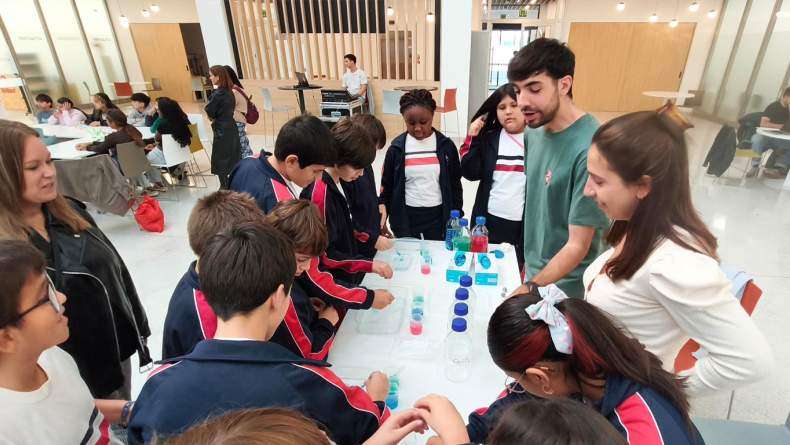
BCMaterialsek MOFak eta hidrogelak eraman zituen BeZientzia 2026 zientzia-azokara
BCMaterialsek BeZientzia zientzia-azokan hartu zuen parte urriaren 26an eta 27an. Azoka Bilboko Ensanche eraikinean egin zen, eta Bizkaiko bost BERC zentroak bildu zituen: Achucarro, BC3, BCAM,…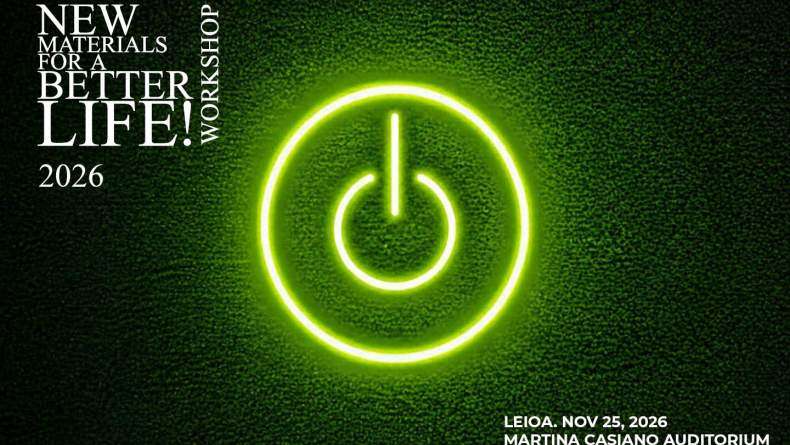
BCMaterialsen urteko workshopak trantsizio berderako katalisia jarriko du erdigunean
BCMaterials, Basque Center for Materials, Applications and Nanostructures zentroak, urteko workshoparen edizio berria egingo du: “New Materials for a Better Life”. 2026ko azaroaren 25ean, asteazkena…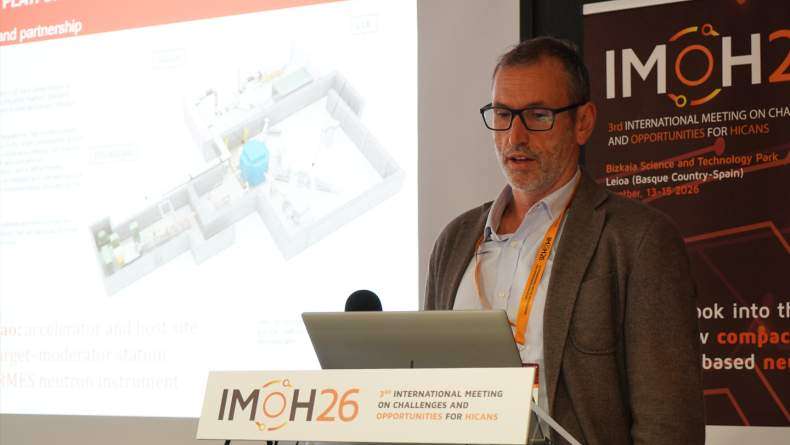
IMoH 2026-k neutroi-iturri trinkoen nazioarteko komunitatea bildu du BCMaterialsen
Neutroien zientziako ehun bat espezialista inguru, Europako eta Ipar Amerikako hamabi bat herrialdetatik etorriak, bildu ziren Leioan urriaren 13tik 15era, International Meeting on Challenges and…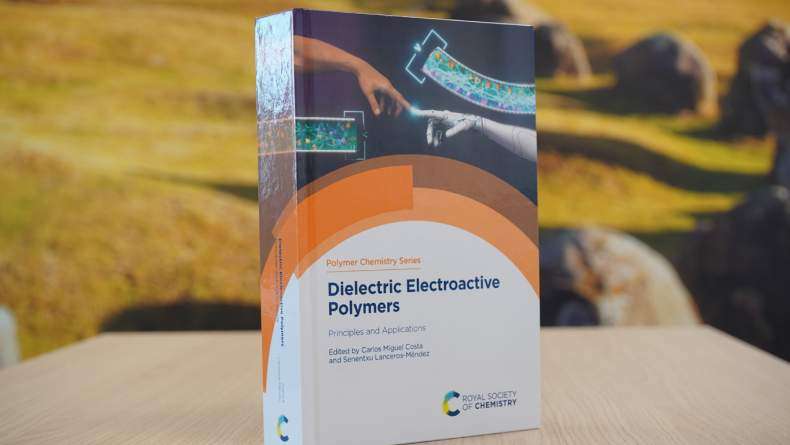
BCMaterials-en liburu berri batek polimero elektroaktibo dielektrikoen inguruan
Royal Society of Chemistry argitaletxeak “Dielectric Electroactive Polymers: Principles and Applications” liburua argitaratu du, Polymer Chemistry Series bildumaren barruan. BCMaterialseko zuzendari…