
BCMaterials Fortnightly Seminars #30

"Permanent Porosity in a Robust Hybrid Framework Formed by Decavanadate Clusters and Copper(II) Complexes of Macrocyclic Polyamines"
Jagoba Martin
(BCMATERIALS)
The crystal engineering of metal−organic hybrid materials with novel extended structures remains an important goal in synthesis and crystal growth. In this sense, the construction of coordination compounds with permanent porosity have attracted important attention due to their potential use in fields like gas storage, separation, and catalysis. In this work, a decavanadate-based porous supramolecular hybrid have been synthetized and characterized, namely, [{Cu(cyclam)}3(V10O28)2]·12H2O (1) (cyclam = 1,4,8,11–tetraazacyclotetradecane). The dehydration process was followed by single-crystal X-ray diffraction and the resulting anhydrous structure 1a proved to be virtually identical to that of the parent 1 which evidenced a MOF-type behaviour for the latter compound. The permanent nature of the porosity of 1 in conjunction with the reversibility of the dehydration–rehydration process could render potential catalytic, sensing or guest-absorption applications for this hybrid compound.
“Fabrication and Study of Static and Dynamic Characteristics of Metal-Ferroelectric-Metal Nanoscale Film Capacitor Structures”
Hovhannes Dashtoyan
(National Polytechnic University of Armenia)
In order to meet the strict requirements of modern information systems materials and structures with new and improved features are needed. In this regard the structures based on ferroelectrics (FEs) have a great potential. Interest in FE thin films has been considerable over the last 20 years, driven by the possibility of using them for non-volatile memory applications and new microelectromechanical systems (MEMS), FE FETs, photosensitive bio-medical sensors, solid-oxide fuel cell (SOFC) electrodes, voltage-tunable capacitors, microwave electronic components, Film Bulk Acoustic Wave Resonators [1-3], etc.
We have already investigated methods of fabrication of FE based (Ba0.25Sr0.75TiO3, Ba0.31Sr0.69TiO3, ZnO) nanoscale film capacitor structures [4, 5], their dark and photo J(V), I(V) characteristics, charge transport and conduction mechanisms in FE thin films, etc. in the framework of my PhD thesis.
In the framework of ERASMUS MUNDUS BACKIS grant program at the UPV/EHU it is planned to fabricate diverse FE based thin film capacitor structures (mainly metal-ferroelectric-metal) and develop the efficient technologies of fabrication, experimentally investigate different static and dynamic characteristics of fabricated structures and compare these results with the theory already developed by our research group in the framework of my PhD thesis.
Related news
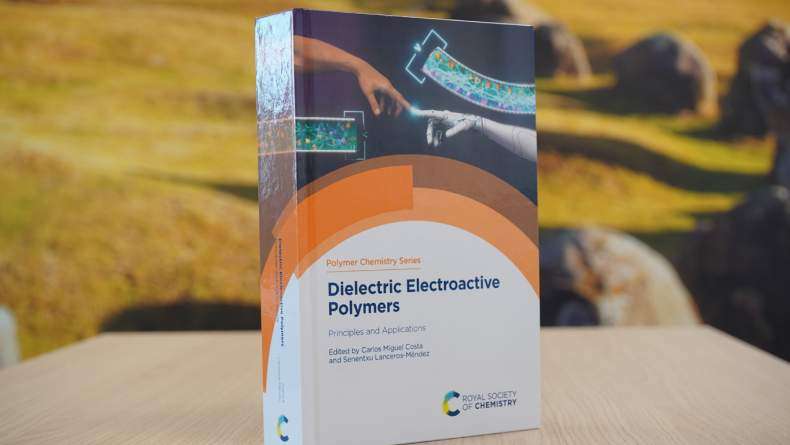
BCMaterials-en liburu berri batek polimero elektroaktibo dielektrikoen inguruan
Royal Society of Chemistry argitaletxeak “Dielectric Electroactive Polymers: Principles and Applications” liburua argitaratu du, Polymer Chemistry Series bildumaren barruan. BCMaterialseko zuzendari…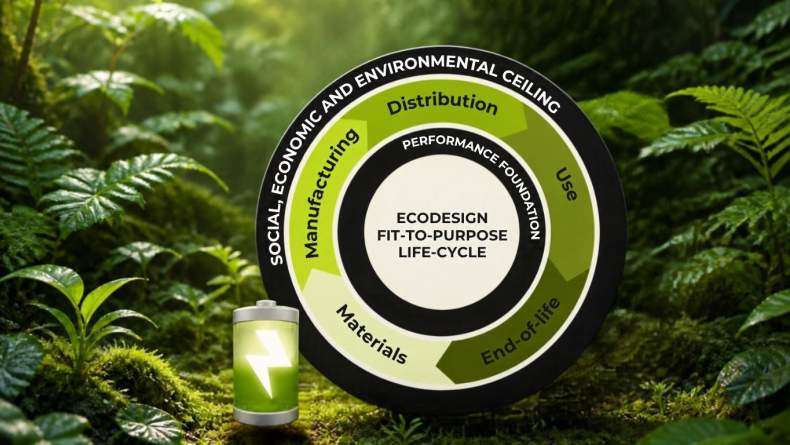
Artikulu berria Zientzia Kaieran: planetaren mugak errespetatzen dituzten bateria eramangarriak
Digitalizazioak gailuen bizitza baliagarria laburtu eta hondakin elektronikoak areagotu ditu: 53,6 milioi tona 2019an, Nazio Batuen arabera, eta 110 milioi tona aurreikusten dira 2050erako.…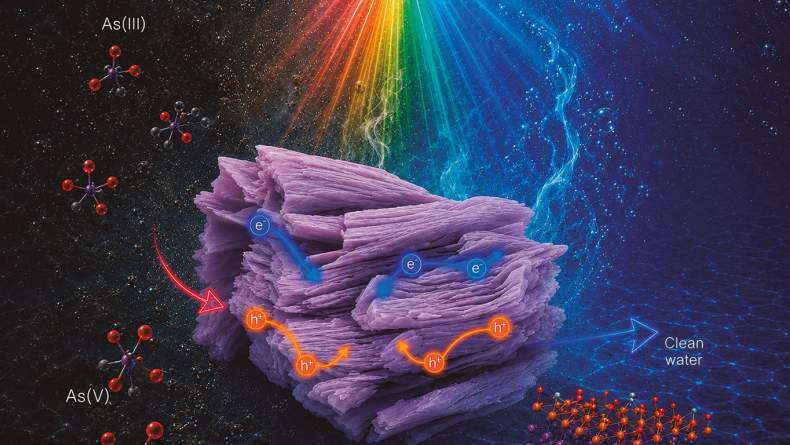
BCMaterials-en ikerketa, Journal of Materials Chemistry A aldizkariaren azalea
Maibelin Rosales BCMaterials-eko ikertzaileak gidatutako ikerketa bat, Senentxu Lanceros-Méndez, Javier del Campo eta Jorge Saiz ikertzaileekin batera egina, Journal of Materials Chemistry A…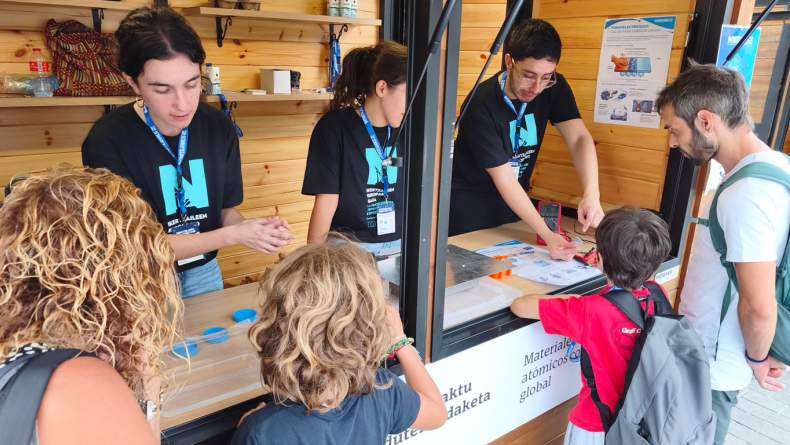
Zientzia eta dibertsioa Bilboko Ikertzaileen Europako Gauean
Joan den irailaren 25ean, BCMaterialsek Ikertzaileen Europako Gauaren edizio berri batean parte hartu zuen. Euskal Herriko Unibertsitateak antolatutako ekimena Bilboko Arenalean egin zen. Adin…