
BCMaterials Fortnightly Seminars #43

DANIEL SALAZAR
(BCMaterials)
DIRECT AND INDIRECT MEASUREMENT OF MAGNETOCALORIC EFFECT IN LA-SR,BA MANGANITES
Perovskite manganites materials R1-xAxMnO3 (R = La, Nd, Pr; A = Ca, Ba, Sr…) are interesting materials as they exhibit a vast variety of physical phenomena; for instance, some perovskite manganites present large magnetocaloric effect (MCE) with a magnetic entropy change (DSM) even comparable to that of Gd.1 Besides, changes in the dopant A or the rare earth modify their magnetic and MCE properties, a compelling feature that allows tuning the working temperature range.2 In this work, we studied the MCE in three microcrystalline manganites of compositions La7Ba0.3MnO3, La0.7Sr0.3MnO3, and La0.8Sr0.2MnO3 , which experience a second-order magnetic phase transition close to room temperature (between 300 and 350K) by direct and indirect techniques. We determined DSM(T) from the specific heat curves at constant pressure measured at zero magnetic field and under magnetic fields of 1 and 2T, reaching a maximum around Curie point (TC) of 3.1, 2.0, and 2.4J/(kg·K) under a field of 2T for La0.8Sr0.2MnO3, La0.7Sr0.3MnO3, and La0.7Ba0.3MnO3 respectively, with refrigerant capacities up to 85J/kg. Direct measurement of adiabatic temperature change, DTad, were performed in a homemade system3 with a maximum magnetic field change of 1.9T and a temperature range between 220K and 450K. To monitor DTad, a thermocouple type T was embedded in the sample under test and the temperature was read during the experiment. DTad maximum was measured close to TC for all specimens, with values ~1.5K for m0DH=1.9T, in agreement to the results obtained indirectly from the specific heat (1.7, 1.2, and 1.5K for La0.8Sr0.2MnO3, La0.7Sr0.3MnO3, and La0.7Ba0.3MnO3 respectively under a magnetic field change of 2T).4 1 M.-H. Phan and S.-C. Yu, J. Magn. Magn. Mater. 308, 325 (2007). 2 I.K. Kamilov, et.al., J. Phys. D: Appl. Phys. 40, 4413 (2007). 3 P. Álvarez-Alonso, J. López-García, G. Daniel-Perez, D. Salazar, P. Lázpita, J.P. Camarillo, H. Flores-Zuñiga, D. Rios-Jara, J.L. Sánchez-Llamazares, and V.A. Chernenko, Key Eng. Mater. 644, 215 (2015). 4 D. Salazar, P. Álvarez-Alonso, M.A. López de la Torre, J.M. Barandiarán, 13th Joint MMM-Intermag Conference, San Diego CA, January 2016.
IRATI RODRIGO
(BCMaterials)
DEVELOPMENT OF EXPERIMENTAL TECHNIQUES FOR MAGNETIC HYPERTHERMIA THERAPY
Magnetic hyperthermia is a cancer therapy, where magnetic nanoparticles placed inside the tumour act as heat sources activated by an externally applied magnetic field. These nanoparticles increase the temperature of tumour cells and induces the…. The increment of tumour`s temperature is a very important parameter to control during the hyperthermia treatment. An overheating of the tumour can result in serious damage to the surrounding healthy cells or in an uncontrolled necrosis. On the contrary, with an insufficient temperature increment, the desired therapeutic effects cannot be achieved. The SAR (Specific Absorption Rate) is a crucial parameter to determine the tissue temperature during the hyperthermia treatment. So, in order to understand the heating mechanism of the nanoparticles, accurate measurements of the SAR of nanoparticles are necessary. Our group has developed an accurate AC magnetometer which allow the quantification of SAR. In order to prove the effectivity of the treatment, is important to do in vitro and in vivo essays. We are part of a big collaboration group focus in magnetic hyperthermia treatment in colorectal cancer. Our work is to measure the SAR with an AC magnetometer and control the electromagnetic applicator that generates de magnetic field during the hyperthermia.
Related news
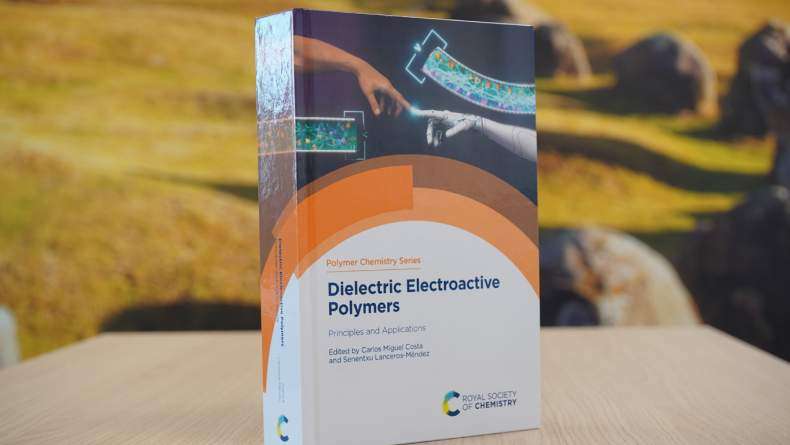
Nuevo libro de BCMaterials sobre avances en polímeros electroactivos dieléctricos
La Royal Society of Chemistry ha publicado "Dielectric Electroactive Polymers: Principles and Applications", un volumen coeditado por Senentxu Lanceros-Méndez, director científico de BCMaterials, y...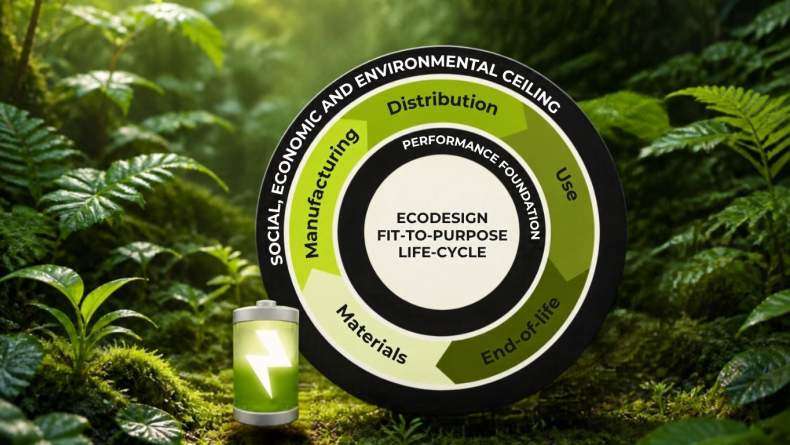
Nuevo artículo en Zientzia Kaiera: baterías portátiles respetuosas con los límites del planeta
La digitalización ha acortado la vida útil de los dispositivos y ha disparado los residuos electrónicos: 53,6 millones de toneladas en 2019, según Naciones Unidas, con una previsión de 110 millones...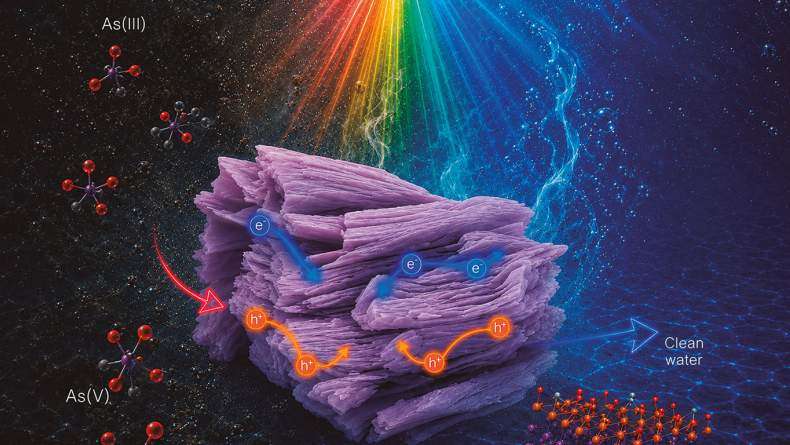
La investigación de BCMaterials, portada de Journal of Materials Chemistry A
Un estudio liderado por la investigadora de BCMaterials Maibelin Rosales, junto con Senentxu Lanceros-Méndez, Javier del Campo y Jorge Saiz, ha sido publicado en la revista Journal of Materials...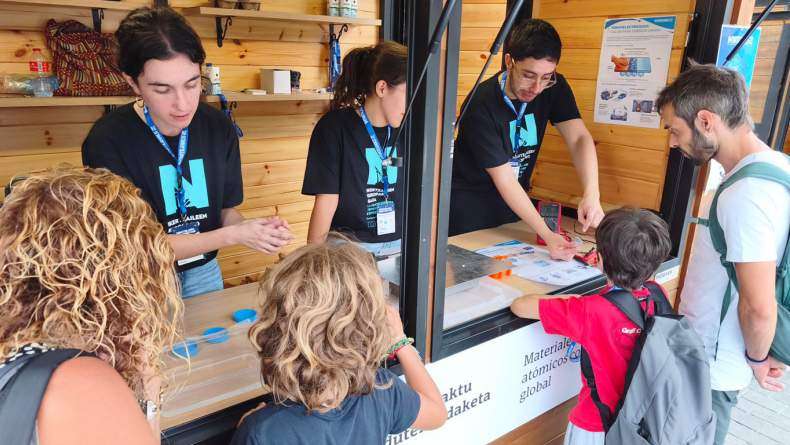
Ciencia y diversión en la Noche Europea de los Investigadores e Investigadoras de Bilbao
El pasado 25 de septiembre, BCMaterials participó en una nueva edición de la Noche Europea de los Investigadores e Investigadoras, organizada por la Universidad del País Vasco en El Arenal de Bilbao...