
BCMaterials Fortnightly Seminars #29
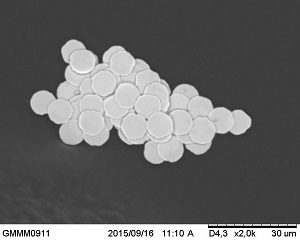
"Detachment and recovery of permalloy nanodiscs for applications"
MAITE GOIRIENA
(BCMaterials)
Magnetic nanoparticles are extensively studied for biomedical applications because their size are comparable to biological entities, while providing remote capabilities of actuation. Disc shaped ferroma gnetic nanostructures display an attractive alternative to chemically-synthetized oxide nanoparticles that are used normally. First, Permalloy (Py) nanodiscs display much higher saturation magnetization and second, with the appropriate dimensions, they can present a spin vortex magnetic configuration, which leads to net zero magnetization at remanence, eliminating the problem of particle agglomeration. Therefore, Py nanodiscs present a huge potential for biomedical applications, ranging from cancer cell destroy by hyperthermia or mechanical actuation to MRI contrast enhancement and drug delivery. In fact, micrometric discs has been shown to produce cell apoptosis by their mechanical oscillation under a low ac field. Discs in the nanometer scale might cross cell membrane expanding the biomedical possibilities.
We propose Hole-Mask Colloidal Lithography (HCL) technique, an evolution of Nanosphere Lithography, to prepare Py nanodiscs. Actually, magnetic vortex state Py nanodiscs have already been prepared with different diameter (60 and 125 nm) and thickness (from 30 to 50 nm). Moreover, HCL has been proved to provide a high production yield (about 0.1 mg in a 2" wafer) assessing, at a laboratory scale, the suitability and performance of vortex nanodiscs for biomedical applications. For that, nanodiscs must be detached from the substrate and dissolved in water. Detachment methods have been tested using lithographically defined 10 mm in diameter Permalloy microdiscs, to easily observe the experimental steps. Microdiscs have been successfully detached using either a sacrificial layer of copper or germanium, and later recovered to be dissolved in water. The detachment technique has been reproduced with the nanodiscs and the results are promising.
"Cationic Metal Organic Frameworks: Crystal Structure Determination and Description"
ROBERTO FERNANDEZ
(BCMaterials)
Metal organic frameworks (MOFs) are crystalline and well-ordered materials with potential applications in gas storage, as molecular sieves, catalysis, gas sensing, protonic conductivity… Three dimensional MOFs constructed by cationic frameworks, and more concretely by cationic layers pillared by anionic linkers are scarce. Usually, the positive charge of the cationic layers is compensated by anionic species such as, NO3-, PF6-, ClO4-, or metal-anion complexes encapsulated within the pores or channels of the crystal structures. In other cases, the anion species are linked to the metal centres, but they do not act as linkers.
The synthesis and crystal structure resolution and refinement of two new three dimensional cationic MOFs will be described. Concretely, we have synthesized two MOFs based on (CuBpy)2+ and Cu(Bpa)2+ cationic metal-organic layers pillared by disordered nitrate groups acting as linkers between the metal centres. The cationic frameworks possess large channels in which the tetrahloroethane solvent molecules are guest encapsulated. The crystal structure determination process and the effect of the disordered anion groups and guest molecules in the structural refinement process will be discussed in detail.
Related news
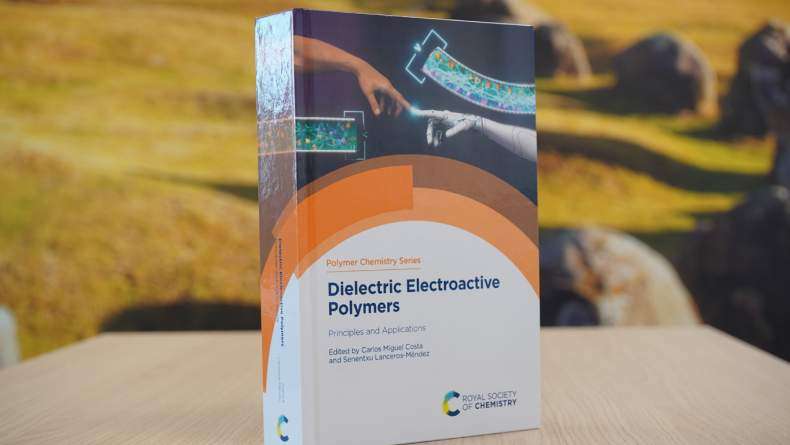
Nuevo libro de BCMaterials sobre avances en polímeros electroactivos dieléctricos
La Royal Society of Chemistry ha publicado "Dielectric Electroactive Polymers: Principles and Applications", un volumen coeditado por Senentxu Lanceros-Méndez, director científico de BCMaterials, y...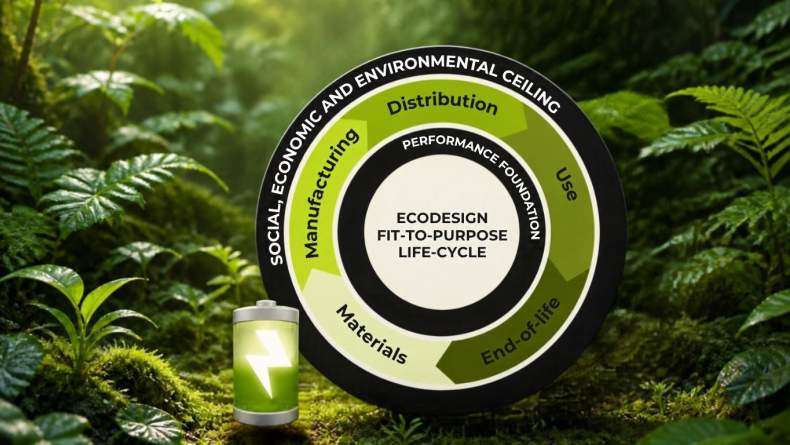
Nuevo artículo en Zientzia Kaiera: baterías portátiles respetuosas con los límites del planeta
La digitalización ha acortado la vida útil de los dispositivos y ha disparado los residuos electrónicos: 53,6 millones de toneladas en 2019, según Naciones Unidas, con una previsión de 110 millones...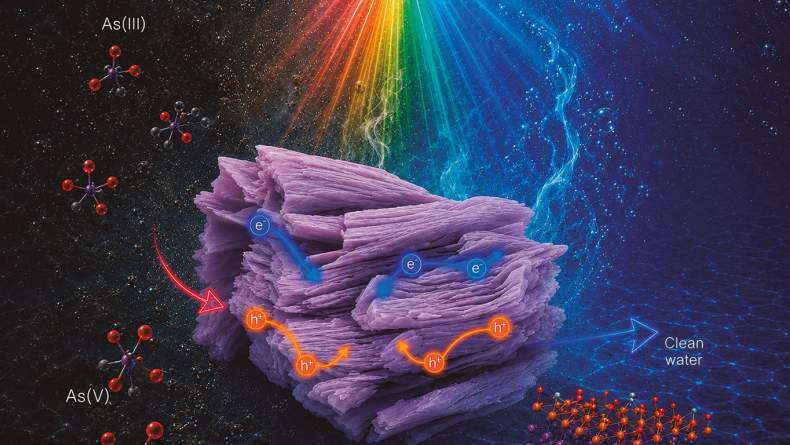
La investigación de BCMaterials, portada de Journal of Materials Chemistry A
Un estudio liderado por la investigadora de BCMaterials Maibelin Rosales, junto con Senentxu Lanceros-Méndez, Javier del Campo y Jorge Saiz, ha sido publicado en la revista Journal of Materials...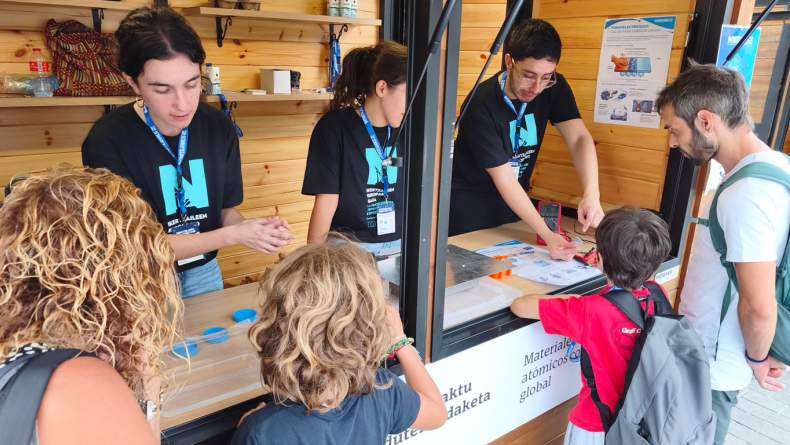
Ciencia y diversión en la Noche Europea de los Investigadores e Investigadoras de Bilbao
El pasado 25 de septiembre, BCMaterials participó en una nueva edición de la Noche Europea de los Investigadores e Investigadoras, organizada por la Universidad del País Vasco en El Arenal de Bilbao...