
BCMaterials Fortnightly Seminar #57: Jagoba Martín y Alberto Maceiras

JAGOBA MARTÍN
(BCMATERIALS)
Superficial Characterization of Polyoxometalate/Polymer Hybrid Composites using Low Energy Ion Scattering (LEIS) and Time-of-Flight Secondary Ion Mass Spectrometry (ToF-SIMS) advanced surface analysis techniques
Different types of hybrid polymer/polyoxometalate (POM) surface composites have been prepared and characterized. The potential anchoring of several POM clusters to different tailored polymeric surfaces has been evaluated by Low Energy Ion Scattering (LEIS) and Time-of-Flight Secondary Ion Mass Spectrometry (ToF-SIMS) techniques. LEIS is an exquisitely surface sensitive analytical tool that provides the elemental composition of the outermost atomic layer of a surface. Since these final atoms of a surface often govern the chemical interaction with other materials, LEIS is a powerful tool for understanding the relationship between surface composition and important phenomena including but not limited to catalysis, wetting, diffusion, adhesion, and contamination issues. It consists on the bombardment of surfaces with low energy noble gas ions, the scattering of which is well described classically. In contrast, ToF-SIMS is based on the mass spectrometric detection of the secondary ions emitted from the surface as a consequence of ion bombardment, providing information about both elemental and molecular compositions within 2 or 3 atomic layers of the immediate surface. The latter is one of the most sensitive surface analysis techniques with limits of detection in the range of ppm–ppb levels with spatial resolutions in the order of the sub-micron (lateral) and nanometre (depth) scales. The combination of both ToF-SIMS and LEIS constitutes a powerful approach to characterize the surface of new hybrid composites which could potentially influence their final applicability.ALBERTO MACEIRAS
(BCMATERIALS)
Polymer hybrid electrolytes based on Poly(ethylene) Oxide (PEO)
In a Li-ion battery the electrolyte is an indispensable element, because enables the electrode reactions and affects the battery performance. Normally the electrolytes are based on mixed solvent systems (liquid electrolytes), exactly lithium salts, such as LiPF6, LiBF4 or LiClO4 in an organic solvent, such as ethylene carbonate, dimethyl carbonate, and diethyl carbonate. However, they are flammable compounds that present risks related to thermal runaway. Therefore, there is a great interest in the industry to develop different alternatives and strategies in order to avoid risk and add safety factors to the batteries. Apart from liquid electrolytes, there are also solid electrolytes which are ion conductors that should have a high ionic conductivity, low electronic conductivity, an low activation energy. Solid polymer electrolyte and ceramic solid state electrolyte are possible solutions to the safety of Li-ion batteries. However, their high process cost and relatively low ionic conductivity make them unsuitable for the large size Li-ion batteries. As a possible solution we proposed the preparation of hybrid solid electrolytes based on ceramic-organic compounds, exactly a ceramic garnet and polyethylene oxide) (PEO) as organic compound, because PEO provides a relatively stable interface. In addition, we investigated alternative methods for the preparation of hybrid electrolytes by the electrospinning technique. The objective was to increase the specific surface using the nanoscale. By increasing the specific surface area it could be possible an improvement of electrical conductivity and electrochemical stability.Related news
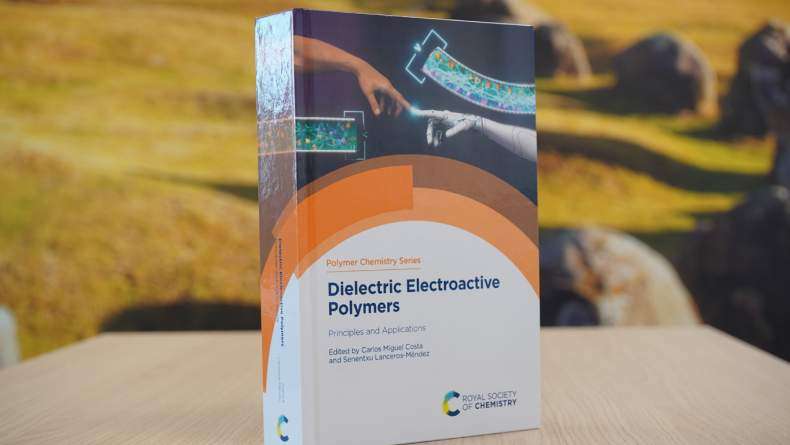
Nuevo libro de BCMaterials sobre avances en polímeros electroactivos dieléctricos
La Royal Society of Chemistry ha publicado "Dielectric Electroactive Polymers: Principles and Applications", un volumen coeditado por Senentxu Lanceros-Méndez, director científico de BCMaterials, y...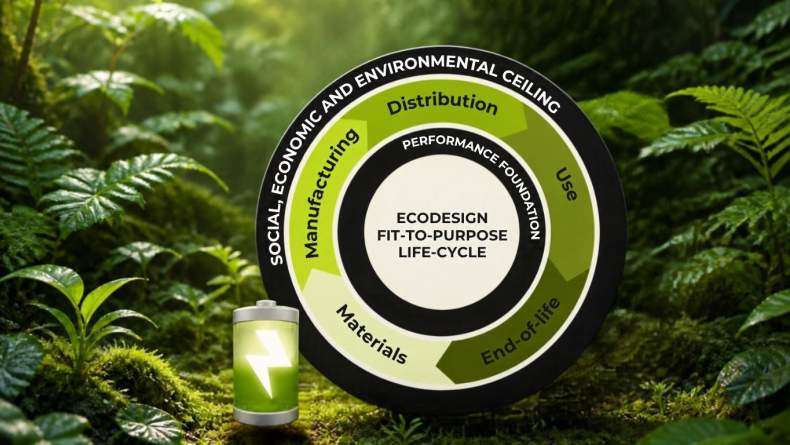
Nuevo artículo en Zientzia Kaiera: baterías portátiles respetuosas con los límites del planeta
La digitalización ha acortado la vida útil de los dispositivos y ha disparado los residuos electrónicos: 53,6 millones de toneladas en 2019, según Naciones Unidas, con una previsión de 110 millones...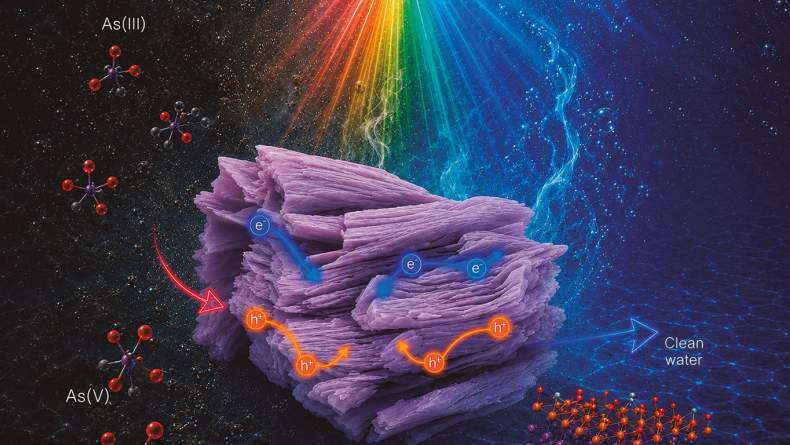
La investigación de BCMaterials, portada de Journal of Materials Chemistry A
Un estudio liderado por la investigadora de BCMaterials Maibelin Rosales, junto con Senentxu Lanceros-Méndez, Javier del Campo y Jorge Saiz, ha sido publicado en la revista Journal of Materials...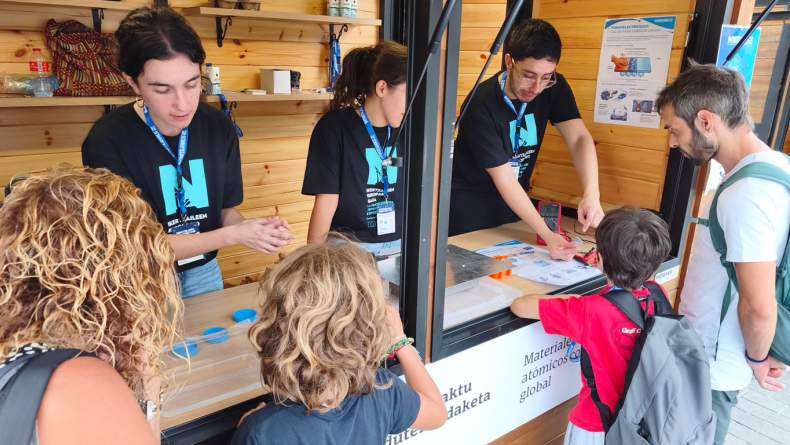
Ciencia y diversión en la Noche Europea de los Investigadores e Investigadoras de Bilbao
El pasado 25 de septiembre, BCMaterials participó en una nueva edición de la Noche Europea de los Investigadores e Investigadoras, organizada por la Universidad del País Vasco en El Arenal de Bilbao...