
IEEE Distinguished Lecturers in BCMaterials Invited Talks

Next friday 20th BCMaterials and ZTF-FCT University of Leioa presents a IEEE Distinguished Lecturer:
Rudolf Schaefer
Leibniz Institute for Solid State and Materials Research (IFW), Dresden, Germany

Magneto-Optic Analysis of Magnetic Microstructures
The rich world of magnetic microstructure or magnetic domains, extending from visible dimensions down to the nano-scale, forms the mesoscopic link between the fundamental physical properties of a magnetic material and its macroscopic properties and technical applications, which range from films for computer storage technology to magnetic cores for electrical machinery. Hysteresis phenomena, energy loss in inductive devices, noise in sensors, or the magnetoresistive properties of modern spintronic devices can be decisively determined by the peculiarities of the underlying magnetic microstructure, especially by irreversibilities in the magnetization process. Therefore any development and optimization of magnetic materials, which is usually accompanied by the measurement of magnetization curves, requires an understanding of the underlying domains and their reaction to magnetic fields, which, in most cases, can only be gained by direct imaging. The presentation will address different aspects of magnetic microstructure adapted, where possible, to the interest of the audience and supported by domain observation using Kerr microscopy. This may include domains and magnetization processes in bulk magnetic material like oriented and non-oriented electrical steel, amorphous and nanocrystalline ribbons or permanent magnets, as well as thin films and multilayers. Fast magnetization processes can also be considered. Most challenging is the analysis of hidden (internal) domains and processes in bulk material. They are relevant for material performance and their analysis requires surface imaging in combination with domain modeling and some volume-sensitive imaging method. Aside from their scientific and technical relevance, magnetic microstructures are also aesthetically appealing, an aspect that will be part of the presentation. Biography Rudolf Schaefer received the diploma degree in Materials Science and the Ph.D. degree in Engineering from the University of Erlangen-Nuernberg (Germany) in 1985 and 1990, respectively. He then joined the IBM Research Center in Yorktown Heights (USA) and the Forschungszentrum Juelich (Germany) as a Postdoc in 1991 and 1992, respectively. In 1993 Rudolf Schaefer moved to the IFW Dresden (now the Leibniz Institute for Solid State and Materials Research Dresden, Germany) where he became head of the department “Magnetic Microstructures” in 2002. In 2011, Dr. Schaefer was appointed honorary professor for Magnetic Materials at the Institute for Materials Science at Technical University Dresden. His areas of interest span magnetic materials with a focus on magnetic microstructures and domain imaging by Kerr microscopy. He has published more than 130 technical articles in peer-reviewed journals, including book chapters, and together with Alex Hubert he has coauthored the textbook “Magnetic Domains”. Prof. Schaefer currently chairs the technical committee for “Magnetic Imaging” of the IEEE Society.Related news
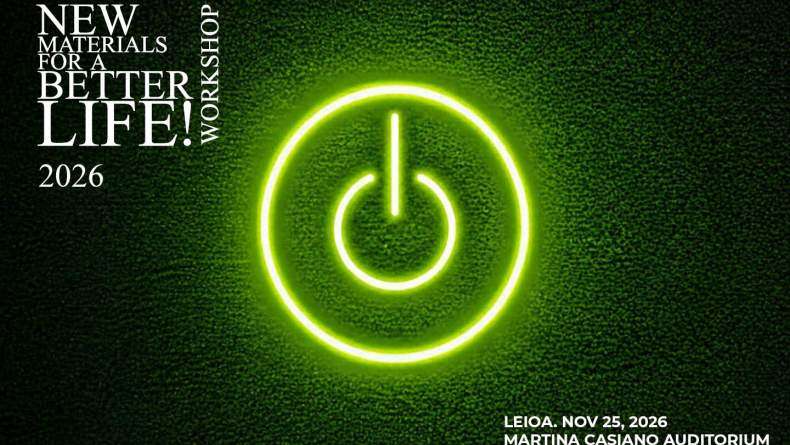
El workshop anual de BCMaterials pone el foco en la catálisis para la transición verde
BCMaterials, el Basque Center for Materials, Applications and Nanostructures, celebrará la nueva edición de su workshop anual “New Materials for a Better Life” el miércoles 25 de noviembre de 2026,...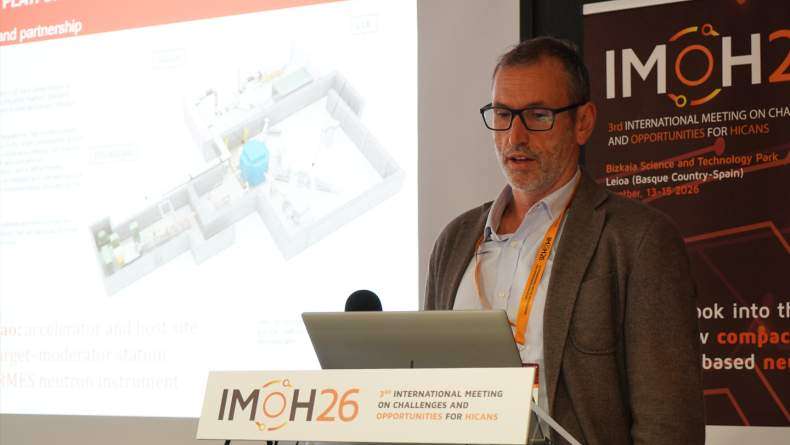
IMoH 2026 reúne en BCMaterials a la comunidad internacional de fuentes compactas de neutrones
Cerca de un centenar de especialistas en ciencia de neutrones, procedentes de una docena de países de Europa y Norteamérica, se reunieron del 13 al 15 de octubre en Leioa en la tercera edición del...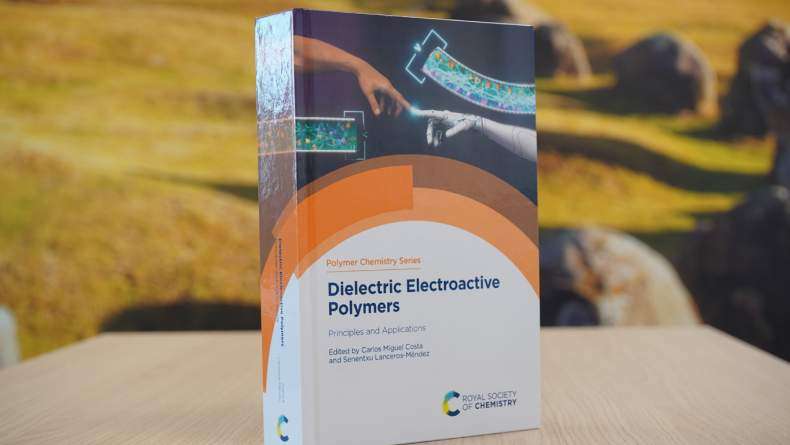
Nuevo libro de BCMaterials sobre avances en polímeros electroactivos dieléctricos
La Royal Society of Chemistry ha publicado "Dielectric Electroactive Polymers: Principles and Applications", un volumen coeditado por Senentxu Lanceros-Méndez, director científico de BCMaterials, y...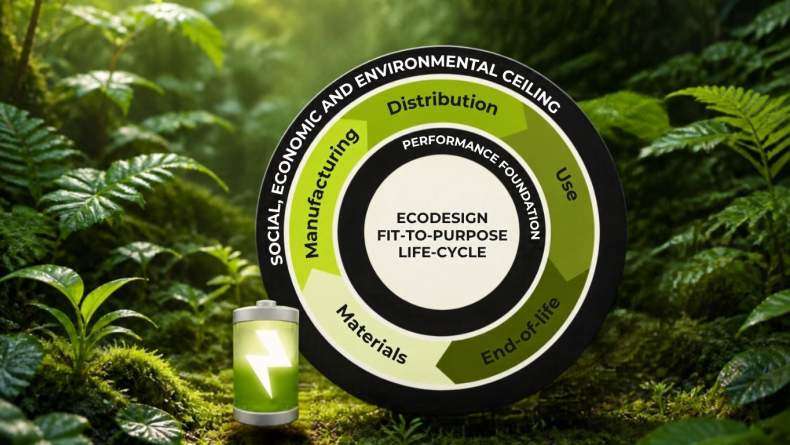
Nuevo artículo en Zientzia Kaiera: baterías portátiles respetuosas con los límites del planeta
La digitalización ha acortado la vida útil de los dispositivos y ha disparado los residuos electrónicos: 53,6 millones de toneladas en 2019, según Naciones Unidas, con una previsión de 110 millones...