
Fortnightly seminar online: Architectures and materials for low cost chalcogenides based photovoltaic solar cells by David Payno & Magnetorheological elastomer-based materials and devices by Ander García
Architectures and materials for low cost chalcogenides based photovoltaic solar cells by David Payno
Over the last decades, significant progress has been made in inorganic materials to enable them as next generation photovoltaic materials that can fulfil the green energy requirements. Cu2ZnSn(S,Se)4 (CZTS) stands out as a p-type absorber material due to exemption from scarce and strategic elements and its similarities with Cu2InGaSe4 (CIGS).
The high absorption coefficient allows using it in the form of ultra-thin films, and bandgap energy close to the ideal value of Shockley-Queisser make them suitable as light absorbers for their use in PV. CZTS thin films can be deposited at adequate temperatures (500 to 600 ºC), by wet chemistry methods, making it an ideal candidate for large-scale PV production.
Advances made on CZTS technology are mostly focused on the substrate architecture, adopted from its counterpart CIGS. For this architecture, the use of CdS as buffer layer present a limiting factor for the efficiency due to interface problems. In parallel, organic materials such as fullerenes and its derivatives have emerge as effective n-type semiconductors with electron transport properties. From the combination of this two technologies, a promising way to substitute the classical buffer layers emerge, opening new ways for improvements in the efficiency. I will show how the usage of n-type fullerenes materials with different kesterite-based absorbers in a thin film polycrystalline solar cells allows a partial replacement of the CdS buffer layer with C60 fullerenes.
Alternative, the developing a superstrate architecture using kesterite as an absorber could be the key to a better performance, which allows new ways of engineering the formation of a kesterite thin film. Superstrate structure based on fluorine tin oxide (FTO) coated glass is currently one of the most studied architecture due to its good thermal and chemical stability, preventing at the same time the use of scarce indium used in indium tin oxide (ITO) as a transparent conductive layer. It will be shown how was developed solar cells devices prepared by using only wet chemistry methods such as spin and spray coating for the active layers, and the huge possibilities for improvements.
Magnetorheological elastomer-based materials and devices by Ander García
Magnetorheological elastomers are a combination of a polymeric matrix with magnetic fillers that allow the possibility of controlling their mechanical properties when an external magnetic field is applied. This effect can be exploited for several applications, ranging from engineering to biomedical devices. In this seminar, I will give a brief state-of-the-art on the field of magnetorheological materials, as well as future perspectives and the work I am currently carrying out in this field and other magnetoactive composites.
The seminar will be online due to COVID restrictions.
https://teams.microsoft.com/l/meetup-join/19%3ameeting_ZjM2MDBiY2UtNmU2ZS00MGViLTkwMmEtYjUxOGNlNTNjOTIx%40thread.v2/0?context=%7b%22Tid%22%3a%222f54ab68-83af-4d70-8895-a0d1e95ec899%22%2c%22Oid%22%3a%22be6b543c-6fb5-479c-a18a-873811ce9240%22%2c%22IsBroadcastMeeting%22%3atrue%7d&btype=a&role=a
Related news
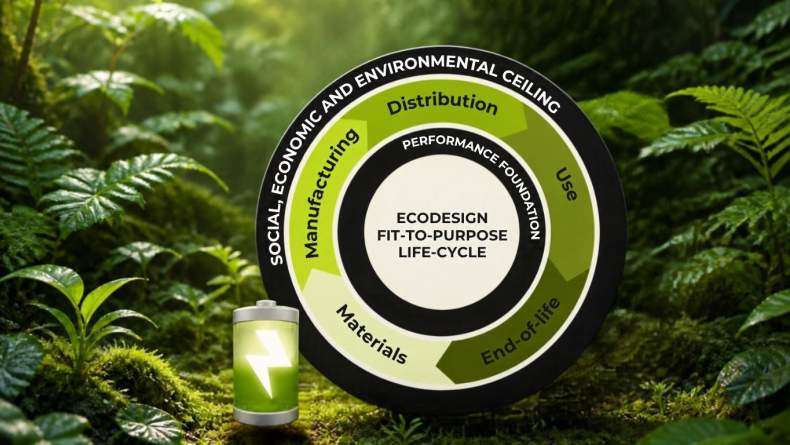
Nuevo artículo en Zientzia Kaiera: baterías portátiles respetuosas con los límites del planeta
La digitalización ha acortado la vida útil de los dispositivos y ha disparado los residuos electrónicos: 53,6 millones de toneladas en 2019, según Naciones Unidas, con una previsión de 110 millones...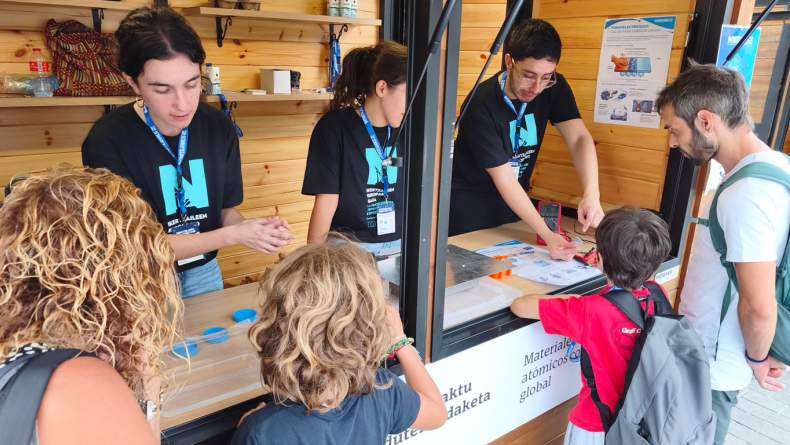
Ciencia y diversión en la Noche Europea de los Investigadores e Investigadoras de Bilbao
El pasado 25 de septiembre, BCMaterials participó en una nueva edición de la Noche Europea de los Investigadores e Investigadoras, organizada por la Universidad del País Vasco en El Arenal de Bilbao...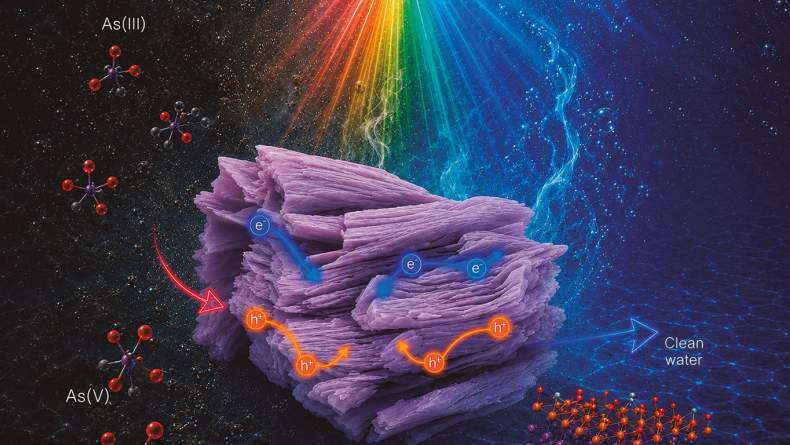
La investigación de BCMaterials, portada de Journal of Materials Chemistry A
Un estudio liderado por la investigadora de BCMaterials Maibelin Rosales, junto con Senentxu Lanceros-Méndez, Javier del Campo y Jorge Saiz, ha sido publicado en la revista Journal of Materials...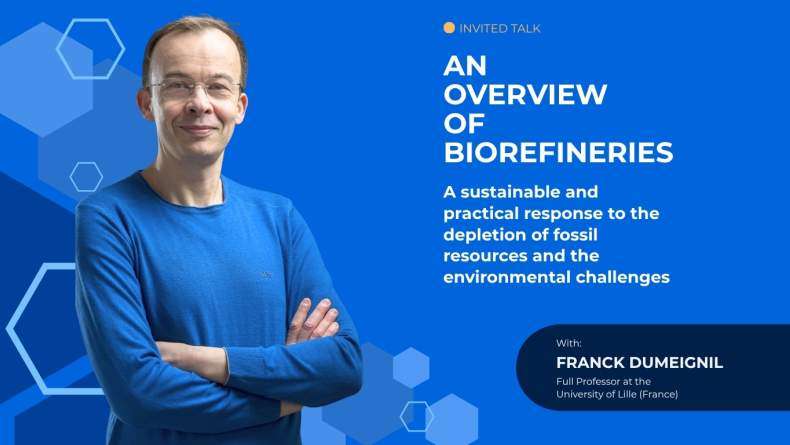
Charla invitada con Franck Dumeignil sobre biorrefinerías (1 de octubre)
El próximo jueves 1 de octubre, Franck Dumeignil, catedrático de la Universidad de Lille (Francia), presentará una charla invitada en BCMaterials titulada 'An Overview of Biorefineries'. La ponencia...